Pentagon Expands Blacklist to Include Alibaba, BYD and Baidu in Escalation of ‘Military-Civil Fusion’ Crackdown
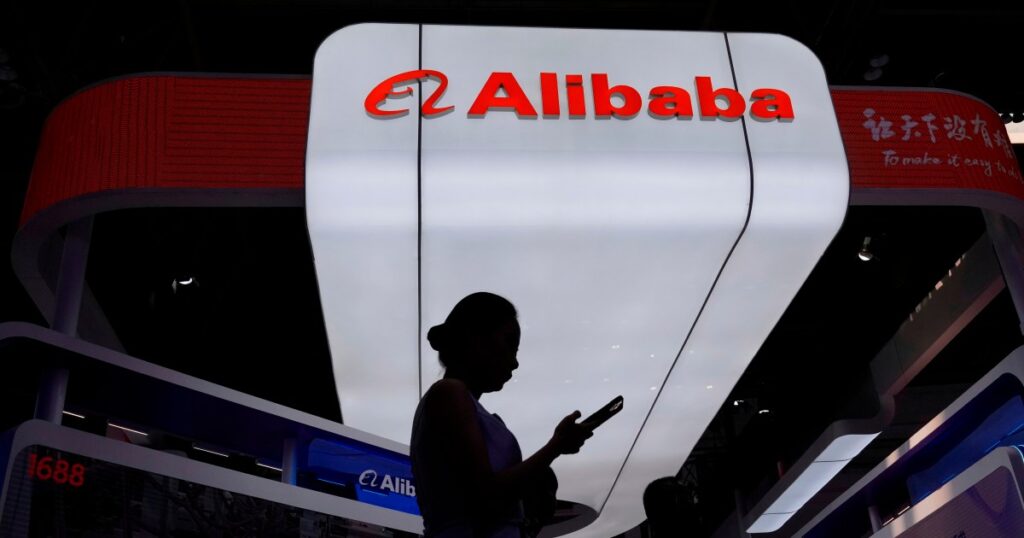
Table of Contents
A New Phase of Tech Decoupling
The U.S. Department of Defense has significantly broadened its scope of national security concerns, designating three of China’s most prominent commercial titans—Alibaba, BYD, and Baidu—as companies that support the Chinese military. The updated list, released Monday, marks a pivot from targeting specialized defense contractors to encompassing household names in e-commerce, electric vehicles, and internet search.
The move effectively weaponizes the Pentagon’s definition of “military-civil fusion,” a Beijing-led strategy designed to blur the lines between commercial innovation and state military advancement. By including these firms, Washington is signaling that any company contributing to China’s broader technological ecosystem may be viewed as a security risk, regardless of whether they produce weapons or traditional defense hardware.
The Mechanics of the Blacklist
The “Chinese military companies” list, first established in 2021, has grown aggressively. The current roster now includes 188 firms, a sharp increase from the 134 listed in 2025. Under the new rules set to take effect later this month, these entities—and any companies under their control—are barred from being considered for U.S. defense contracts.
To be designated, a company must meet two primary criteria: it must be owned or controlled by the People’s Liberation Army (PLA), or contribute to the state’s military-civil fusion efforts, and it must maintain active operations within the United States. The Pentagon specifically cited affiliations with the state-owned Assets Supervision and Administration Commission and the Ministry of Industry and Information Technology as the catalysts for the inclusion of Alibaba, BYD, and Baidu.
The Corporate Response
The reaction from Beijing and the affected firms has been swift and dismissive. A spokesperson for the Chinese embassy in Washington, D.C., characterized the move as “discriminatory,” arguing that the U.S. is overextending the concept of national security to stifle legitimate commercial competition.
Alibaba, in particular, has taken a combative stance, stating there is “no basis” for its inclusion. A company spokesperson asserted that Alibaba is not part of any military-civil fusion strategy and threatened legal action against attempts to misrepresent the company’s role in the Chinese economy.
Beyond the Big Three: Robotics and AI
While the headlines focus on the giants, the updated list reveals a deeper focus on emerging autonomy and AI. The Pentagon has added RoboSense Technology and Unitree Robotics—both based in Shenzhen and Hangzhou respectively. These additions mirror the 2025 designation of Tencent, suggesting that the U.S. is systematically mapping the entire Chinese AI and robotics supply chain to identify points of vulnerability and influence.
This systemic approach has drawn criticism from some national security veterans. Dennis Wilder, a former CIA and National Security Council official, suggests that such “broad-brush” designations may be more performative than practical. Wilder argues that many U.S. firms have relationships with these entities that are too deep to sever without severe, direct penalties on commercial deals.
Political Pressure and Market Volatility
The timing of the announcement is particularly fraught. It follows a high-profile summit between President Donald Trump and Chinese leader Xi Jinping in Beijing, which was intended to lower tensions in the ongoing trade war. However, the domestic political pressure in Washington remains high.
Representative John Moolenaar, chair of the House committee on strategic competition with the CCP, has called for even more drastic measures. Moolenaar suggested that any company on this list that is publicly traded on U.S. exchanges should be immediately delisted, and their products purged from critical American supply chains. This indicates that the Pentagon’s list may serve as the foundational evidence for future SEC actions or broader import bans on EV and AI hardware.


