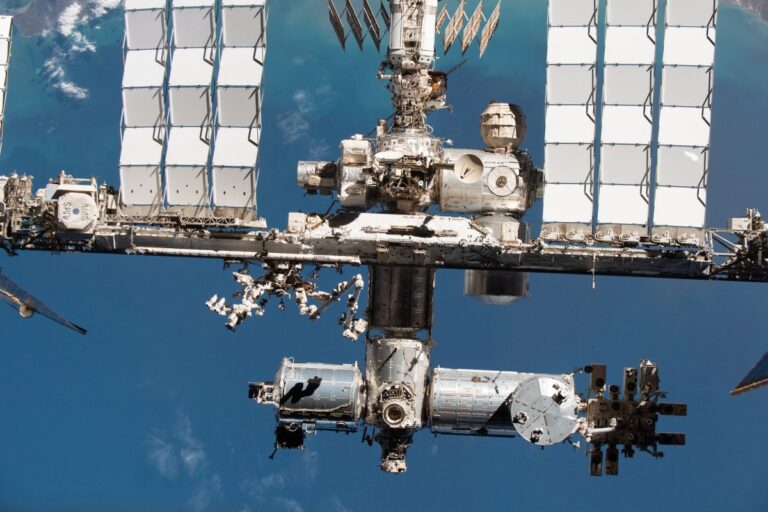
NASA Crew Shelters in SpaceX Dragon as Roscosmos Battles ISS Service Module Leaks
Table of Contents
A Brief Retreat to the Dragon
The precarious nature of life in low Earth orbit was on full display this Friday when NASA ordered five astronauts to abandon their posts on the International Space Station (ISS) and seek refuge inside a docked SpaceX Crew Dragon spacecraft. The sudden shift to an “elevated safety posture” came after Russia’s space agency, Roscosmos, identified fresh leaks within one of the station’s critical service modules.
The evacuation was not a full-scale emergency but a calculated precautionary measure. According to NASA spokesperson Bethany Stevens, the move was triggered by Roscosmos’ decision to initiate an “extensive repair operation” to address the structural failures. For the four members of the SpaceX Crew-12 mission and NASA astronaut Chris Williams, the Dragon capsule served as a pressurized lifeboat, isolating them from the main station while Russian cosmonauts attempted to stabilize the leaking module.
The Volatility of Aging Infrastructure
The tension lasted roughly an hour before the situation shifted. In a follow-up communication, Stevens noted that Roscosmos had paused the repair efforts to gather more telemetry and measurements, allowing the crew to end safe-haven procedures and resume normal operations. While the immediate threat subsided, the incident underscores a growing anxiety regarding the ISS’s physical integrity.
The Russian service module has been a recurring point of failure. Stevens acknowledged that the cracks in the module have “always been a concern that NASA watches very closely,” suggesting that this is not an isolated anomaly but part of a chronic degradation process. When hardware is subjected to the extreme thermal cycling and vacuum of space for decades, the margins for error shrink.
The Commercial Pivot
This latest leak arrives at a pivotal moment for the future of human presence in space. The ISS is an aging behemoth, and the appetite for maintaining it is waning. Under the leadership of NASA Administrator Jared Isaacman, the agency is accelerating a strategic pivot away from government-owned orbital infrastructure.
NASA is now aggressively pushing to transition toward commercially produced modules. The goal is to replace the sprawling, state-funded station with a network of private habitats later this decade. This transition is not merely about cost-saving; it is a necessity driven by the reality that the current station is reaching the end of its certified lifespan. Every leak in a Russian module or failure in a US segment serves as a data point in the argument for private-sector replacements.
Current Orbital Composition
The incident highlighted the complex international choreography required to keep the station inhabited. There are currently 10 people aboard the ISS, split between two primary transport systems. Four members, including a mix of NASA, ESA, and Roscosmos personnel, arrived in February via the Crew-12 Dragon. The remaining six, including three NASA and two Russian cosmonauts, arrived last November via the traditional Soyuz missions.
While SpaceX did not immediately respond to requests for comment, the efficiency with which the Dragon capsule functioned as a safe haven reinforces why NASA is leaning so heavily into the SpaceX partnership. The ability to quickly pivot a crew into a separate, autonomous vehicle provides a layer of redundancy that the aging ISS modules simply cannot offer on their own.