Clockwork Revolution is Betting on a ‘Butterfly Effect’ Narrative to Shake Up the Immersive Sim
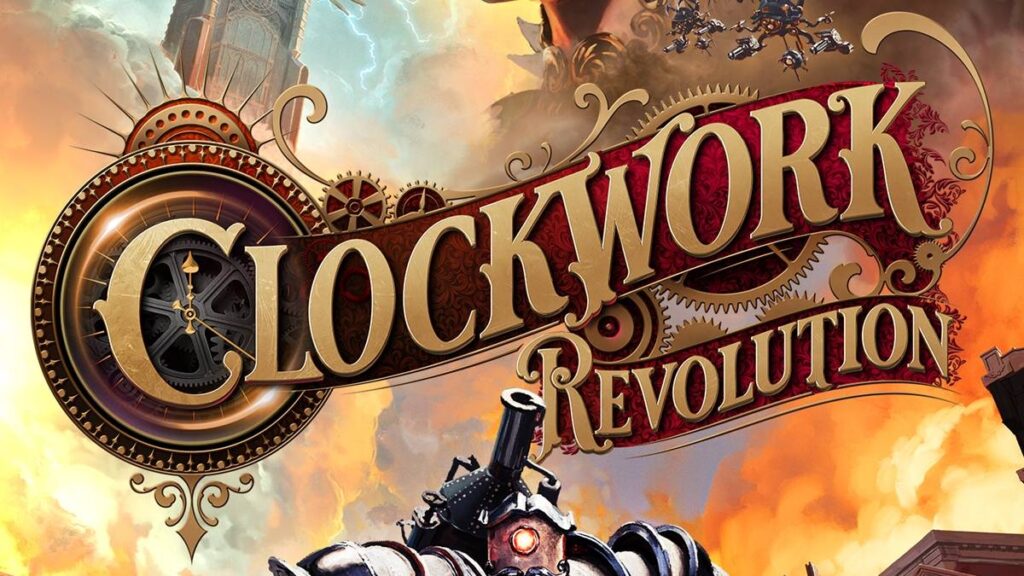
Table of Contents
A City Built on Altered History
The immersive sim genre has long been defined by player agency and systemic complexity—think Dishonored or Prey. However, Clockwork Revolution is attempting to push that agency into a new dimension: the temporal one. Set in the sprawling, steam-powered metropolis of Avalon, the game isn’t just asking players how they will navigate the city, but when they will choose to change it.
At its core, Clockwork Revolution is a first-person RPG that centers on a singular, disruptive piece of technology: a device capable of transporting the player into the past. Unlike typical time-travel narratives that treat the past as a static level to be visited, Clockwork Revolution treats history as a living blueprint. The premise is straightforward but mechanically ambitious: by traveling back to key historical moments and altering the environment or the fate of specific NPCs, players trigger a ‘butterfly effect’ that ripples forward into the present-day Avalon.
This means the architecture of the city, the political alliances of its factions, and the personal trajectories of its citizens are not fixed. A choice made in a decade-old skirmish could theoretically turn a slum into a palace or a friendly ally into a bitter enemy by the time the player returns to the present.
The Technical Challenge of Temporal Persistence
From a design perspective, this level of reactivity is a monumental task. Most RPGs handle choice through branching dialogue trees or binary flags (e.g., ‘Saved the Village’ vs. ‘Destroyed the Village’). Clockwork Revolution appears to be aiming for something more systemic. The game’s world-state must track a vast array of variables that can be toggled across different time periods, requiring a level of persistence and state-tracking that pushes the boundaries of traditional level design.
The aesthetic is unapologetically steampunk, blending Victorian industrialism with high-concept fantasy. Avalon is presented as a vibrant, dense hub that serves as both a playground and a puzzle. The integration of first-person combat and exploration suggests a loop where players gather intelligence in the present, travel to the past to remove an obstacle or create an advantage, and then witness the immediate manifestation of those changes in the current timeline.
Beyond the Mechanics: The Identity of Avalon
What distinguishes Clockwork Revolution from other steampunk titles is the focus on the ‘crafted’ nature of its world. The game suggests that Avalon didn’t just happen; it was carefully engineered through the manipulation of time. This adds a meta-layer to the gameplay: the player is not just observing a world, but actively participating in the ongoing ‘editing’ of a city.
Industry analysts are watching closely to see how the developers handle the potential for game-breaking paradoxes. In a world where you can change the past, the risk of creating narrative contradictions is high. Whether the game employs a ‘fixed timeline’ theory or a ‘multiverse’ approach remains to be seen, but the ambition to link narrative choice directly to environmental transformation is a bold move in a market currently dominated by open-world formulas.
As the project continues to develop, the focus remains on whether the ‘butterfly effect’ is a core systemic pillar or a series of curated narrative switches. If the former, Clockwork Revolution could redefine how we perceive consequence in RPGs; if the latter, it remains a high-style homage to the immersive sim’s golden era.