The Ghost in the Machine: How Gregg Popovich is Shadow-Coaching the Spurs’ Cinderella Run
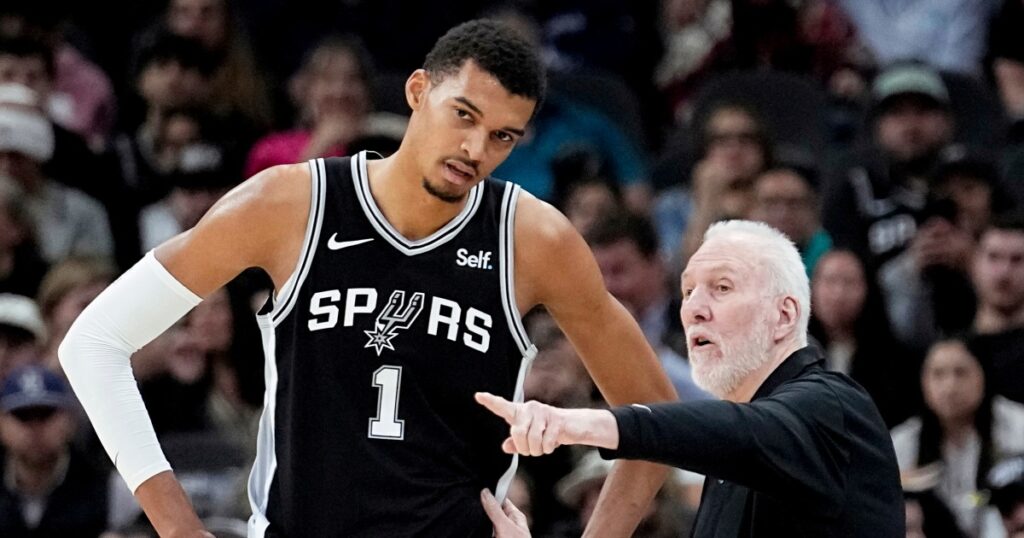
Table of Contents
A Closed-Door Intervention
The atmosphere in the San Antonio Spurs locker room following Game 3 of the Western Conference finals was less like a professional sports facility and more like a war room. After a demoralizing 15-point loss to Oklahoma City that pushed them to a 2-1 series deficit, the team didn’t just hold a meeting—they locked the doors. In a departure from standard post-game protocol, front office executives and training staff crowded the room, creating a vacuum of secrecy.
Then, the door opened, and Gregg Popovich walked in. For a man who stepped away from the primary helm of the team following a stroke in November 2024, his presence was an immediate kinetic shift in the room. According to guard De’Aaron Fox, Popovich didn’t mince words: “That’s BS. That’s not how we play basketball.”
It was a moment of visceral leadership that served as a catalyst. The Spurs didn’t just recover; they surged, eventually defeating the Thunder in seven games to secure their first NBA Finals appearance since 2014. While the headlines focus on the meteoric rise of Victor Wembanyama and the emergence of Stephon Castle and Dylan Harper, the internal architecture of this success is being designed by a man who is no longer technically the coach, but who remains the undisputed ‘El Jefe.’
The Architecture of Shadow Coaching
The current Spurs roster is an anomaly in the NBA—a hyper-young core centered around players in their early 20s, led by 39-year-old head coach Mitch Johnson. On paper, the experience gap is wide. In practice, that gap is being bridged by Popovich’s peripheral involvement. He isn’t pacing the sidelines or drawing up the final play, but he is embedded in the team’s daily operational flow.
Popovich’s mentorship has evolved into a hybrid of traditional coaching and modern psychological support. He lingers at the practice facility, audits film sessions, and maintains a constant stream of communication via text—small, surgical adjustments that target specific player anxieties. This isn’t generic motivation; it is technical precision. Fox noted that Popovich’s feedback ranges from the minutiae of boxing out on a free throw to the strategic timing of an extra pass.
This ‘shadow coaching’ model allows Mitch Johnson to manage the day-to-day tactical execution while Popovich handles the emotional and mental fortitude of the squad. When Wembanyama was ejected in the second round against Minnesota, Popovich didn’t wait for a scheduled meeting; he met the young star at the airport. The gesture was as much about psychological stability as it was about basketball, ensuring Wembanyama remained composed for the remainder of the series.
Managing the Mental Hurdle
The efficacy of this arrangement is being tested in real-time as the Spurs face the New York Knicks in the NBA Finals. After dropping the first two games at home, the team is grappling with the specific brand of pressure that only accompanies a 0-2 deficit. For a team this young, the risk isn’t a lack of talent, but a potential collapse in confidence.
The response has been a series of targeted interventions. Following a shooting slump for Wembanyama in Game 1, a text from Popovich reminded the forward that he was ‘better than this.’ For Dylan Harper, who struggled with a 5-point outing in the Western Conference finals, Popovich’s message was more direct: ‘You’ve got to find a way to get the job done.’ The result was a 30-point surge over the next two games.
As the Spurs prepare for Game 3 in New York, Popovich’s directive has been a study in compartmentalization: forget the losses and focus exclusively on the next 48 minutes. By distilling the overwhelming scale of the Finals into manageable, singular goals, Popovich is essentially installing the mental operating system that defined his legendary 16-season tenure.
The San Antonio experiment proves that leadership doesn’t always require a title or a spot on the bench. By transitioning from the tactical demands of a head coach to the strategic role of a mentor, Popovich has created a safety net for the next generation of Spurs stars, ensuring that while the faces on the court are new, the philosophy remains timeless.