Impulse Space Secures $500 Million to Scale Hardware Engineering Over AI Hype
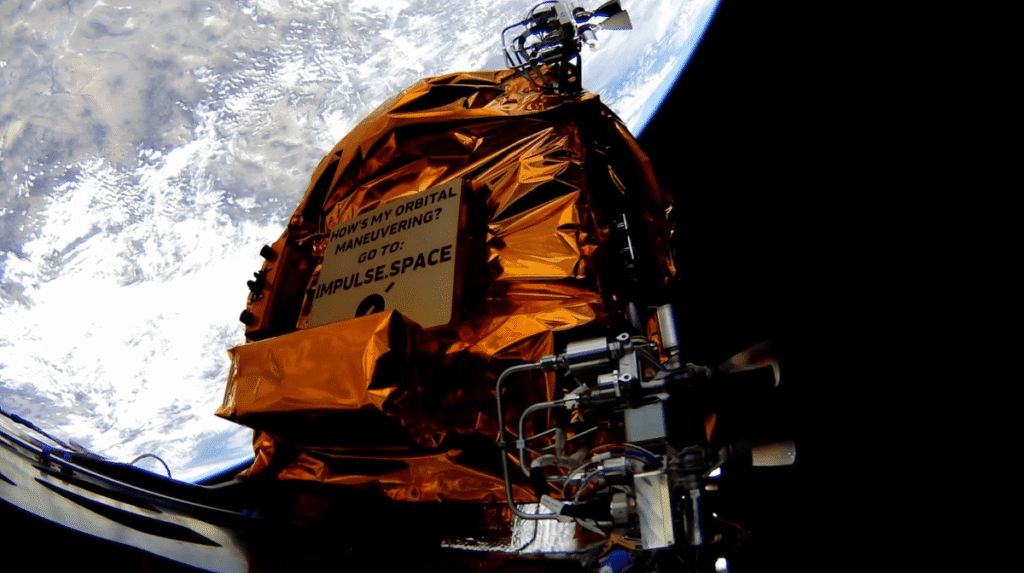
Table of Contents
A Half-Billion Dollar Bet on Physicality
In an era where venture capital is almost exclusively chasing the promise of generative AI, Impulse Space is placing a massive bet on the opposite: human expertise and the stubborn realities of hardware. The startup, founded by Tom Mueller—the propulsion mastermind who served as a foundational engineer at SpaceX—has announced a $500 million Series D funding round designed to aggressively scale its workforce.
The round was led by 137 Ventures and BANNER VC, with significant participation from Founders Fund, Lux Capital, and Linse Capital. While the capital injection is substantial, the strategic objective is straightforward. Impulse intends to hire up to 200 new employees to accelerate the development of its in-space mobility platforms, signaling a conviction that the most critical bottlenecks in the new space race are not algorithmic, but structural and mechanical.
The Limits of the LLM in Orbit
The timing of this raise coincides with a broader industry trend where software teams are rapidly integrating AI coding assistants to speed up development. However, according to Impulse President and COO Eric Romo, there is a hard ceiling to what these tools can achieve when the objective is a physical object that must survive the vacuum of space.
Romo, who joined SpaceX as its 13th employee in 2003, recalls a time when computer simulations were rudimentary tools. He notes that while simulation fidelity has improved, it remains a pale substitute for the iterative process of building, breaking, and testing on a stand. The fundamental issue, Romo suggests, is a data deficit. While Large Language Models (LLMs) have the entirety of the public internet to learn from, the same cannot be said for proprietary aerospace engineering.
“If you want to go, say, find the best designs for a turbo pump seal package in the world, you’re not going to find those online,” Romo points out. The critical blueprints for high-performance propulsion systems are locked behind corporate firewalls or government classifications, leaving AI without the training data necessary to replace a seasoned engineer’s intuition.
Mira, Helios, and the Logistics of Low Earth Orbit
The funding arrives as Impulse doubles down on two primary vehicles: Mira and Helios. Mira is a highly maneuverable platform specifically tailored for the requirements of the U.S. Space Force, serving as a critical tool for national security and orbital logistics. Helios, meanwhile, is designed to solve the “last mile” problem of satellite deployment, carrying payloads to high orbits after they have been released from a primary launch vehicle.
The path to perfection has not been linear. The Mira spacecraft’s third flight late last year was marred by a navigation system glitch that caused the vehicle to expend its propellant prematurely. Rather than relying on a software patch to solve the underlying physical challenge, Impulse is preparing a new Mira mission slated for launch before the end of the year, relying on a growing team of structural and flight computer engineers to refine the system.
The War for Aerospace Talent
The decision to expand into Colorado is a tactical move in a shifting labor market. For decades, the aerospace industry was concentrated in a few hubs like Los Angeles and Houston. Today, the ecosystem is more fragmented and competitive, with talent distributed across Seattle, Denver, and Texas.
By diversifying its geographic footprint and investing heavily in human capital, Impulse is positioning itself not just as a service provider for the Space Force, but as a primary competitor in the emerging orbital economy. As SpaceX continues its trajectory toward an eventual IPO, the ripple effects are creating a fertile environment for spin-off ventures led by the original architects of the Falcon era.


