Apple’s Third Act: Can a Gemini-Powered Siri Finally Deliver on the AI Promise?
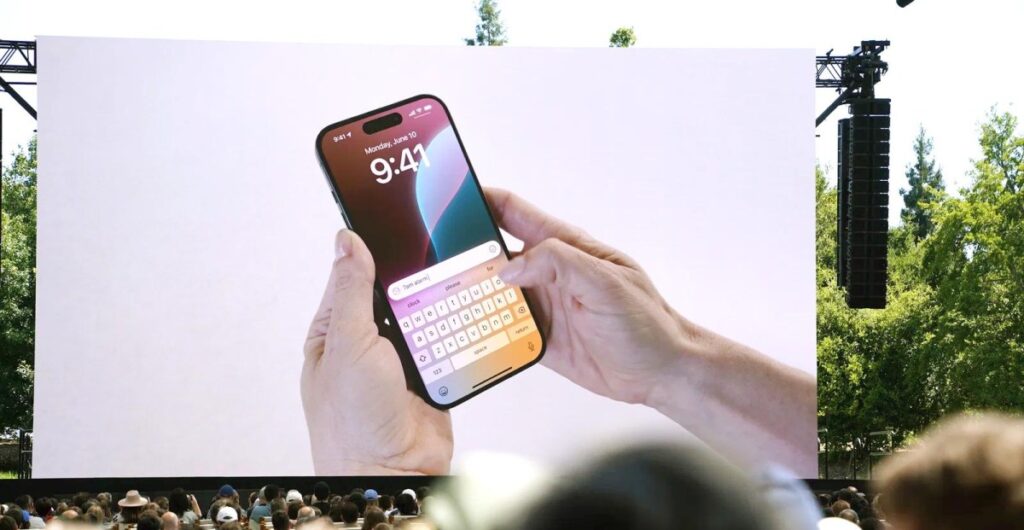
Table of Contents
The Cycle of Re-introductions
Apple is preparing to introduce the world to Siri—again. For those keeping track, this marks the third major attempt to redefine the voice assistant since the initial ‘Apple Intelligence’ push at WWDC 2024. That first iteration promised a paradigm shift in how users interact with their iPhones, featuring a glowing edge-light and a hand-off to ChatGPT for complex queries. However, the reality failed to match the marketing. The rollout was so fragmented and the missing features so numerous that Apple found itself settling a class-action lawsuit over promises that never materialized for a significant portion of its user base.
Now, heading into WWDC 2026, Apple is attempting to pivot from a position of weakness into a strategic advantage. While competitors have spent the last two years racing to deploy raw power, Apple is banking on the growing ‘AI fatigue’ and a deepening public distrust of invasive assistants.
Outsourcing the Intelligence
The core of the new Siri is reportedly built upon Google’s Gemini models. While the specifics of the licensing agreement remain private, the strategic trade-off is clear: Apple is paying for Google’s heavy lifting in Large Language Model (LLM) development to avoid the infrastructure headaches associated with it. By integrating Gemini, Apple can offer the high-level reasoning and multimodal capabilities that Google has already refined—such as managing calendars and interacting with third-party services—without having to build the massive, controversial data center footprints that have plagued Google’s public image in several regions.
This ‘arms-length’ approach allows Apple to keep its brand detached from the environmental and social friction of AI scaling, while still providing a Siri that can actually execute a multi-step task without crashing. It is a pragmatic admission that Apple lost the initial race to general intelligence, but it positions them to win the race of implementation.
The Privacy Play as a Product Feature
To differentiate this version of Siri from the omnipresent ‘sparkles’ of Gemini and Copilot, Apple is doubling down on its most reliable narrative: privacy. Expect a heavy emphasis on Private Cloud Compute, a system designed to ensure that data processed in the cloud remains as secure as if it were handled on-device.
Internal reports suggest the new Siri may include more aggressive data-purge options, allowing users to automatically delete chat histories after set intervals. This isn’t just a technical feature; it’s a direct shot at Google. While Gemini is powerful, its integration into the Google ecosystem often feels predatory to the average user. By framing Siri as the ‘safe’ AI, Apple is targeting the segment of the population that finds the predictive nature of current AI assistants more ‘creepy’ than convenient.
Beyond the Voice Assistant
The scope of Siri’s integration is also expanding. According to reporting from Bloomberg, Siri is no longer confined to a voice-trigger or a hidden background process. The assistant is expected to permeate the OS, appearing within the Dynamic Island and integrating deeply into the Photos app and other core utilities. There is even speculation regarding a dedicated Siri application, signaling a move toward an AI-first interface rather than a voice-command add-on.
However, the risk remains high. The industry is currently saturated with ‘AI buttons’ that users are increasingly ignoring. If Apple pushes Siri too aggressively into every corner of the UI, they risk the same fate as the Gemini-integrated Workspace apps—becoming a nuisance rather than a tool.
Apple has successfully cast its slow rollout as a ‘responsible’ approach, contrasting its patience with Google’s tendency to ship unfinished features. But the window for this narrative is closing. After two false starts, the 2026 iteration of Siri cannot be another beta test; it has to be a finished product.


