Gigabyte’s Aero X16 Hits a Price Floor: High-Capacity RAM and RTX 5070 for Under $1,400
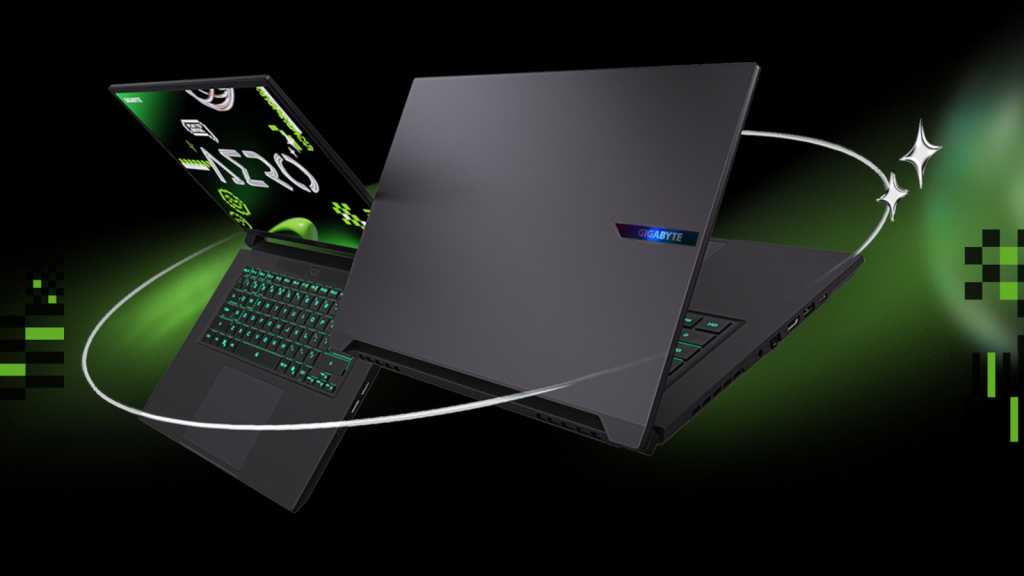
Table of Contents
A rare hardware configuration for under $1,400
In a market where 16GB of RAM has remained the stubborn baseline for mid-range gaming laptops, Gigabyte is currently disrupting the pricing curve. The Aero X16, originally positioned as a premium creator and gaming hybrid with an MSRP of $1,999.99, has plummeted to $1,389.99. While the machine has spent much of its lifecycle hovering around the $1,800 mark, this latest dip represents a genuine shift in value, bringing an RTX 5070 and 32GB of memory into a price bracket typically reserved for RTX 4060 or 4070 configurations.
The core appeal here isn’t just the sticker price, but the specific hardware headroom. 32GB of DDR5 RAM is becoming increasingly critical as modern AAA titles and creative suites push memory limits. More importantly, unlike many ultra-thin competitors that solder their memory to the motherboard to save space, the Aero X16 maintains replaceable RAM and SSD slots. This modularity is a significant win for longevity, allowing users to scale their storage or memory as their workloads evolve without needing to replace the entire chassis.
Balancing efficiency with raw power
Under the hood, the Aero X16 utilizes the AMD Ryzen AI 7 350. It is important to frame this chip correctly: it is not a raw performance monster like the Ryzen 9 HX series. Instead, it is designed for efficiency, aiming to bridge the gap between thin-and-light portability and the thermal demands of a gaming rig. When paired with the RTX 5070, the machine hits a specific “sweet spot” for enthusiasts who need a mobile workstation that can handle 1440p gaming without weighing as much as a traditional desktop replacement.
At 4.19 pounds, the Aero X16 is remarkably lean for a 16-inch chassis. This portability is complemented by a 2560×1600 IPS display. While it doesn’t offer the infinite contrast or deep blacks found in high-end OLED panels, the IPS implementation provides the color accuracy and wide viewing angles necessary for digital artists and video editors. With a pixel density of roughly 189 PPI, the image is crisp, though some may find it lacks the “retina” sharpness of smaller 14-inch displays.
The trade-off: Battery anxiety and thermal reality
The primary caveat to this deal is the power draw. Gigabyte’s marketing claims a 12-hour battery life, but real-world telemetry tells a different story. In mixed-use scenarios—combining web browsing, productivity apps, and streaming video—users are seeing closer to 9 hours. However, the moment a game is launched, the battery life collapses to roughly 2 hours. This is a standard characteristic of high-wattage GPUs, but it means the Aero X16 is essentially a “portable desktop'” rather than a truly untethered gaming machine.
For those who spend most of their time plugged into a wall, this is a non-issue. But for students or remote workers who need to hop between meetings and gaming sessions without a charger, the discrepancy between official claims and actual performance is a critical detail.
Market positioning and value
Comparing the Aero X16 to the current landscape, it competes directly with the Asus Zephyrus and Razer Blade lineups, though those brands often command a significant “lifestyle tax.” By pricing the X16 under $1,400, Gigabyte is targeting the pragmatist—the user who wants the GPU power of a high-end rig and the memory capacity of a workstation without paying for the brand prestige of the market leaders.
Given the current volatility in memory pricing and the shift toward AI-integrated processors, securing a 32GB machine with an RTX 5070 at this price point is a rarity. It transforms the Aero X16 from a moderately overpriced luxury laptop into one of the most competitive value propositions in the current gaming laptop cycle.


