Asus Ascent QN10 Debuts as the First Mini-PC Driven by Snapdragon X2 Elite
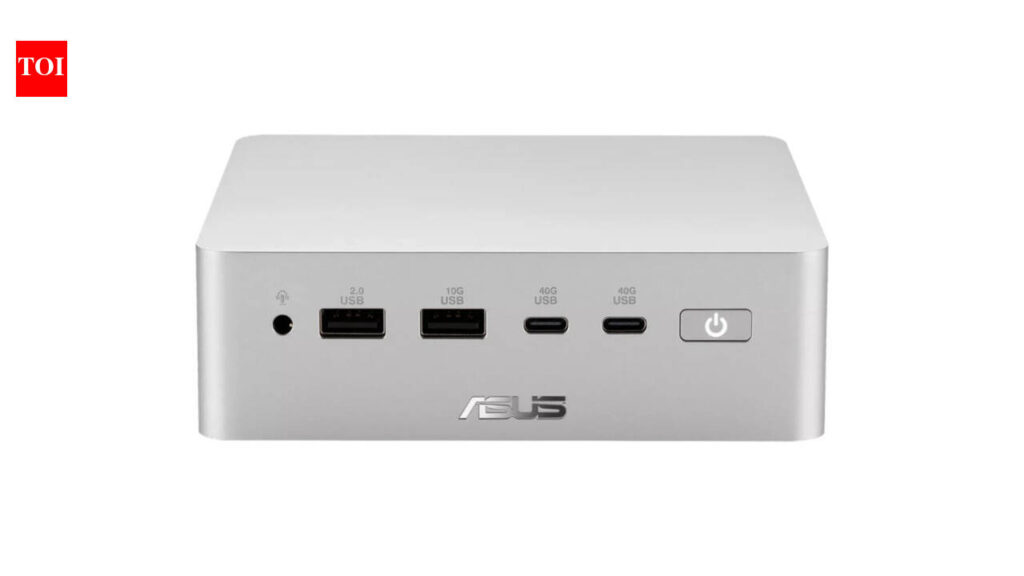
Table of Contents
A New Baseline for Edge AI
The miniaturization of the workstation has hit a new performance ceiling. Asus has officially unveiled the Ascent QN10, a compact form-factor PC that marks the first commercial deployment of Qualcomm’s Snapdragon X2 Elite chipset in a mini-PC. While the industry has been steadily integrating Neural Processing Units (NPUs) into laptops, the QN10 shifts that focus to the desktop, delivering a staggering 80 TOPS (Tera Operations Per Second) of dedicated AI compute.
For the average user, the TOPS figure is a marketing abstraction, but for developers and power users, it represents a fundamental shift in where AI workloads are processed. By offloading generative tasks from the CPU and GPU to the NPU, the Ascent QN10 is designed to run large language models (LLMs) and complex image generation locally, reducing reliance on cloud latency and subscription-based API calls.
The Silicon Shift: Snapdragon X2 Elite
At the heart of the QN10 is the Snapdragon X2 Elite, an ARM-based processor that prioritizes efficiency without sacrificing the burst speeds required for professional software. Unlike previous attempts at ARM-based Windows machines, the X2 Elite is built specifically for the “AI PC” era, featuring an architecture optimized for the Copilot+ framework. This allows the QN10 to handle real-time translation, advanced noise cancellation, and local indexing of files through semantic search with minimal impact on battery or power draw.
The transition to ARM in a desktop environment is a calculated risk. While compatibility has improved significantly via Prism—Microsoft’s new translation layer—some legacy x86 applications may still struggle. However, Asus is positioning the QN10 not as a general-purpose home PC, but as a specialized AI hub for creators and engineers who need a low-footprint machine capable of heavy lifting.
Thermal Management in a Tiny Chassis
One of the primary hurdles for any mini-PC is heat. Pushing 80 TOPS of AI performance generates significant thermal energy, which typically leads to aggressive throttling in smaller devices. Asus has addressed this in the QN10 with a redesigned vapor chamber system and a high-static-pressure blower fan, allowing the X2 Elite to maintain its peak clock speeds for longer durations during AI rendering or data processing tasks.
The chassis is stripped of unnecessary bulk, focusing instead on connectivity. The QN10 includes dual Thunderbolt 4 ports, 2.5Gb Ethernet, and Wi-Fi 7 support, ensuring that the bottleneck is never the network, but rather the complexity of the AI model being run. It also supports expandable LPDDR5x memory, which is critical because NPUs are only as fast as the data being fed to them from the RAM.
Market Implications and the ARM Push
The launch of the Ascent QN10 is a clear signal that Qualcomm is no longer content with just powering tablets and laptops. By partnering with Asus, Qualcomm is challenging the dominance of Intel’s NUC lineage and AMD’s Ryzen Mini-PCs. The 80 TOPS benchmark effectively doubles the NPU performance seen in many first-generation AI PCs, creating a new competitive tier.
As Microsoft continues to bake AI deeply into Windows 11, the hardware requirement for a dedicated NPU is moving from “nice-to-have” to “essential.” The Ascent QN10 is less of a gadget and more of a litmus test for whether the professional market is ready to abandon the x86 architecture in favor of the power-per-watt advantages of ARM.


