Lenovo Bets Big on Modular Hardware and Foldable Gaming at MWC 2026
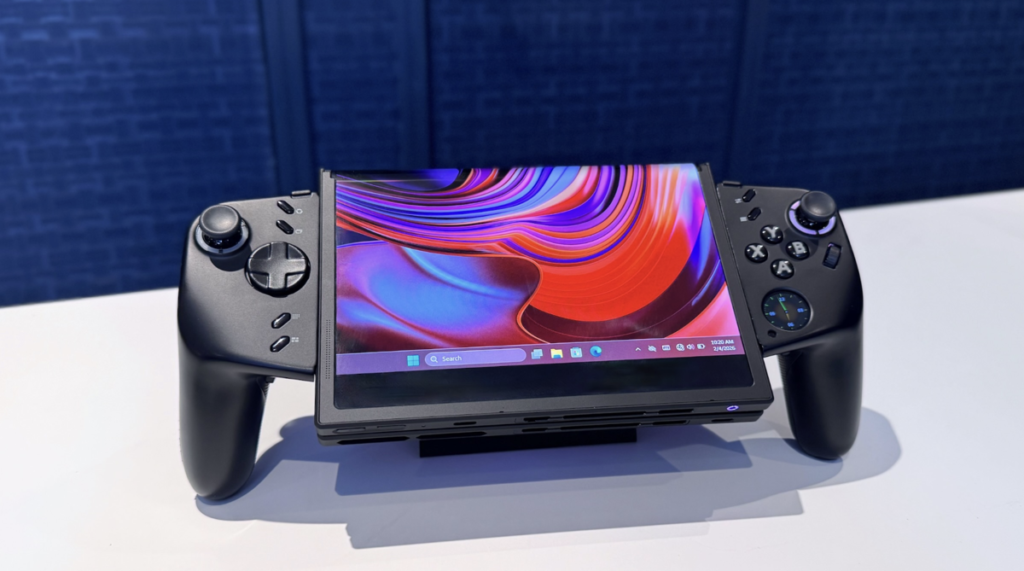
Table of Contents
A Pivot Toward Flexibility and Repair
Lenovo arrived at Mobile World Congress 2026 not just to refresh its existing product lines, but to signal a fundamental shift in how it views the longevity and form factor of the PC. Following a dominant showing at CES earlier this year—where the company debuted its Qira AI agent—Lenovo is now leaning heavily into modularity and experimental displays, attempting to solve the ‘disposable’ nature of modern computing.
The most significant signal of this shift is the ThinkBook Modular AI PC Concept. While Lenovo has previously focused on monolithic designs for its enterprise line, this prototype borrows a philosophy similar to Framework, allowing users to swap ports and hardware modules on the fly. The device features integrated pogo-pin connectors for power and data transfer, supporting a detachable secondary display and keyboard. By decoupling the screen from the chassis, Lenovo is exploring a world where a laptop’s lifecycle is extended by replacing components rather than the entire unit.
The Convergence of Handhelds and Laptops
While the modular PC appeals to the pragmatic enterprise user, the Legion Go Fold Concept is aimed squarely at the gaming enthusiast. Confirming leaks from the previous week, Lenovo unveiled a handheld that bridges the gap between a portable console and a full-fledged workstation. The device features a 7.7-inch POLED display that unfolds into a massive 11.6-inch canvas.
Unlike previous folding attempts in the mobile space, the Legion Go Fold includes a detachable wireless keyboard, effectively turning the handheld into a clamshell Windows laptop. To handle the demands of a larger screen and gaming workloads, Lenovo has equipped the prototype with an Intel Lunar Lake chip and 32GB of RAM. While Lenovo cautioned that the device remains a concept, the inclusion of specific internal specs suggests the company is further along in the production pipeline than it typically is with MWC prototypes.
Expanding the 3D and AI Footprint
For creators, Lenovo introduced the Yoga Book Pro 3D Concept. The dual-display machine utilizes eye-tracking technology to render 3D objects without the need for specialized glasses. Powered by an Intel Core Ultra 7 and an Nvidia GeForce RTX 5070, the device is positioned as a workstation for 3D artists. A unique addition is a set of snap-on pads for the lower touchscreen that trigger contextual menus, blending physical tactile inputs with a digital canvas.
Parallel to these hardware shifts is Lenovo’s attempt to move AI off the screen and onto the desk. The company showcased two distinct AI companions: the consumer-focused AI Work Companion and the enterprise-grade AI Workmate. The former acts as a productivity hub, managing schedules and monitoring screen time to mitigate burnout. The latter, a more anthropomorphic device capable of spatial interaction, processes AI inputs locally to summarize documents and project content onto physical surfaces.
The Production Line: Yoga 9i and ThinkPad Refresh
Beyond the conceptual fireworks, Lenovo is shipping tangible updates to its core fleet. The Yoga 9i 2-in-1 Aura Edition leads the consumer charge, featuring an Intel Core Ultra Series 3 chip and a return of the headphone jack—a move that acknowledges growing user frustration with the removal of legacy ports. This model, which includes a magnetically attached Yoga Pen Gen 2, is slated for a May release at $1,949.
The enterprise side sees a comprehensive refresh of the ThinkPad T-Series. Continuing the trend started with the ThinkPad X1 Carbon Gen 14 Aura Edition’s ‘Space Frame’ design, the new T-Series models prioritize repairability with redesigned internals that are easier to service. These models also feature upgraded 5MP cameras and improved audio hardware, targeting the permanent hybrid-work reality of the modern corporate office.
With Qira AI rolling out to over 20 devices in the coming weeks, Lenovo is effectively attempting to build a closed-loop ecosystem: AI-driven software, modular and repairable hardware, and hybrid form factors that challenge the traditional definition of a laptop.


