Nvidia’s RTX Spark Superchip Aims to Move the AI Agent from the Cloud to the Local Desktop
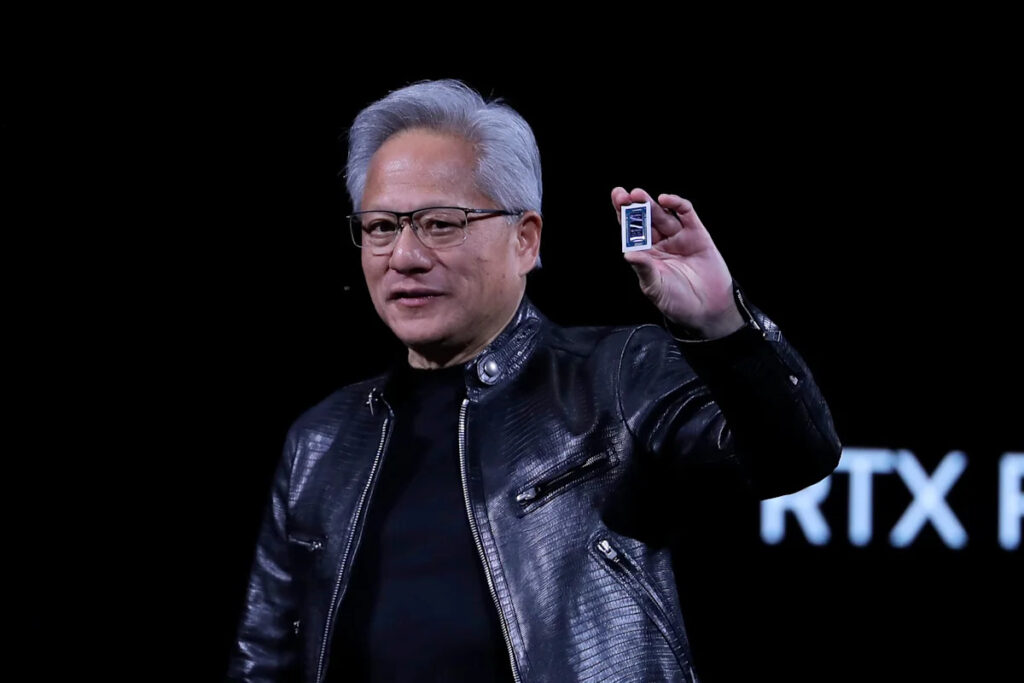
Table of Contents
A Pivot from Tools to ‘Teammates’
At the Computex event in Taipei, Nvidia CEO Jensen Huang unveiled the RTX Spark, a “superchip” designed to fundamentally shift how users interact with personal computers. While the industry has spent the last year racing toward “AI PCs” that largely rely on cloud-based processing or small, efficient NPUs, the Spark takes a different approach: bringing massive memory and compute power directly onto the motherboard to facilitate local, frontier-level AI agents.
The ambition is to move beyond the mouse-and-keyboard paradigm. According to Huang, the goal is to transform the PC from a tool into a “teammate,” allowing users to engage with complex AI agents that operate entirely on-device. This isn’t just about faster chatbots; it’s about local execution of creative workflows and complex system tasks that previously required a round-trip to a data center.
The Architecture: Blackwell Meets Grace
The technical core of the RTX Spark is a hybrid integration of Nvidia’s Blackwell GPU and Grace CPU. This architecture is essentially a miniaturized version of the infrastructure powering the world’s largest AI data centers, repackaged for the consumer chassis. The most striking specification is the memory: the Spark can support up to 128GB of memory, a figure that dwarfs almost every consumer laptop on the market.
Memory capacity is the primary bottleneck for local Large Language Models (LLMs). To run a sophisticated AI agent with high reasoning capabilities locally, the model’s weights must reside in memory to avoid the latency of swapping data. By pushing the ceiling to 128GB, Nvidia is positioning the Spark as the first chip capable of running high-parameter “frontier” models without relying on a cloud subscription or an internet connection.
The Microsoft Alliance and the ‘Ultra’ Surface
Nvidia isn’t attempting this hardware push in a vacuum. Huang emphasized a deep partnership with Microsoft to create a “robust, secure Windows platform” specifically for on-device agents. This suggests a deeper integration than simple driver support, likely involving a specialized API layer that allows Windows to manage the Spark’s resources more efficiently than a standard GPU.
This partnership is most visible in the upcoming Surface Laptop Ultra. While Microsoft has kept the detailed spec sheet under wraps, the device is being marketed as the most powerful Surface ever built. With a 15-inch touchscreen and the Spark superchip under the hood, the Ultra is clearly aimed at the high-end professional market—specifically those who need AI capability in environments where cloud connectivity is unreliable or security concerns prohibit uploading data to external servers.
Market Displacement and Hardware Partners
The RTX Spark represents a bold move by Nvidia to compete more directly with Apple’s unified memory architecture. Apple’s M-series chips have long held an advantage in AI workloads due to their high-bandwidth shared memory; the Spark is Nvidia’s answer to that advantage, leveraging MediaTek’s expertise in mobile silicon to package this power into “slim” form factors.
The rollout is already gaining momentum across the OEM ecosystem. Asus has confirmed that its ProArt P16 and P14 laptops, as well as its Mini PC line, will utilize the Spark chip. MSI is also expected to integrate the hardware into its Prestige N16 Flip AI Plus. Meanwhile, Dell, Lenovo, and HP are expected to announce their respective Spark-powered machines in the coming months.
Despite the technical bravado, two critical questions remain unanswered: price and power. While Huang promised “all-day battery life,” the energy requirements of a Blackwell-based GPU and a Grace CPU are historically high. Whether Nvidia can maintain the thermal envelope of a slim laptop without aggressive throttling remains to be seen.


