The Hollow Middle: Computex 2026 Reveals a Fractured Laptop Market
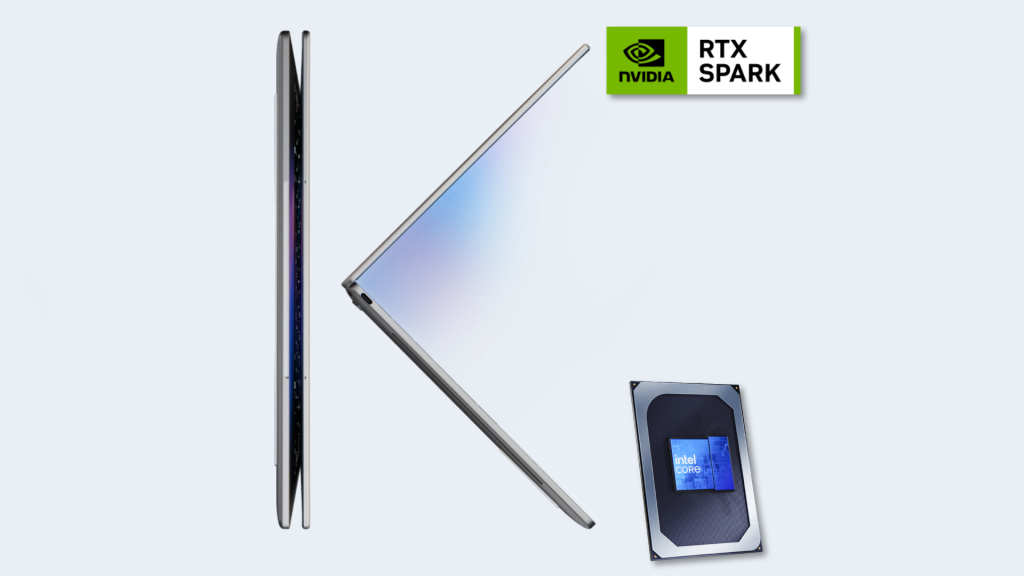
Table of Contents
The disappearance of the mid-range PC
Walking the floor at Computex 2026, the atmosphere is one of frantic innovation, but for the average consumer, the reality is sobering. We are witnessing the emergence of a ‘K-shaped’ laptop market. The industry is splitting into two distinct, diverging paths: ultra-affordable, compromised machines on one end, and prohibitively expensive AI workstations on the other. The middle ground—the reliable, $800 to $1,100 performance laptop that once served as the backbone for students and professionals—is effectively vanishing.
This divide isn’t just about price points; it’s about a fundamental shift in what defines a ‘functional’ computer in the age of generative AI. As local LLMs and AI-integrated OS features become the standard, the hardware requirements are shifting upward, leaving budget hardware in the dust.
The 8GB Trap and the MacBook Neo Effect
Apple has managed to seize the low end of the market with a strategic masterstroke: the MacBook Neo. By repurposing older iPhone silicon into a $600 entry-level Mac, Apple has created a device that is not only affordable but performant enough for basic tasks. Because macOS handles memory management with significantly more efficiency than Windows, the Neo remains usable even with 8GB of RAM.
Windows OEMs, however, are struggling to compete on the same terrain. The most telling example is the revived Dell XPS 13. Once the gold standard for Windows ultrabooks, the new entry-level XPS 13 arrives at a $700 price point, powered by Intel’s Core Series 3 ‘Wildcat Lake’ processors. While the chassis is premium aluminum, the internals are a compromise. Base models are shipping with 8GB of LPDDR5 RAM—memory that is soldered and non-upgradable.
The problem is that Windows 11 is increasingly allergic to 8GB of RAM. Microsoft’s own Copilot+ program requires a minimum of 16GB to unlock its primary AI features. For a user on a budget, buying a Windows machine with 8GB in 2026 is essentially buying a device that is obsolete upon arrival, unable to run the very AI tools the manufacturer is using to market the product.
The Premium Pivot and the $1,300 Floor
If you move up the pricing ladder, the vacuum becomes even more apparent. The $1,000 mark, which used to buy a high-spec mid-range machine, is now a ghost town. Recent releases featuring Intel Core Ultra Series 2, AMD’s latest Ryzen chips, and Qualcomm’s Snapdragon X2 are almost universally priced north of $1,300.
To get a machine that feels ‘modern’—meaning 32GB of RAM and a 1TB SSD—consumers are now looking at a starting point of $1,500. This shift is being driven by the increased cost of AI-capable silicon and the industry’s pivot toward ‘premium craftsmanship,’ a narrative Google is leaning into heavily with its new Android-based hardware. For the vast majority of users, this isn’t a purchase made with cash; it’s a financing decision.
Nvidia and the High-End Frontier
At the top of the ‘K,’ the market is booming. While the middle class of laptops dies, the high-end professional segment is expanding. Nvidia is aggressively entering the fray with its RTX Spark chips, targeting corporate clients and power users who can comfortably drop $2,000 or more on a device capable of heavy local AI processing and media production.
The result is a market where you can either buy a basic tool that struggles to keep up with a few browser tabs, or a powerhouse that costs as much as a used motorbike. For the journalist, the student, or the casual coder, the ‘reasonable’ laptop is becoming a relic of the past.