Diplomatic Friction and Border Logistics: Iran’s World Cup Path Shifts to Mexico
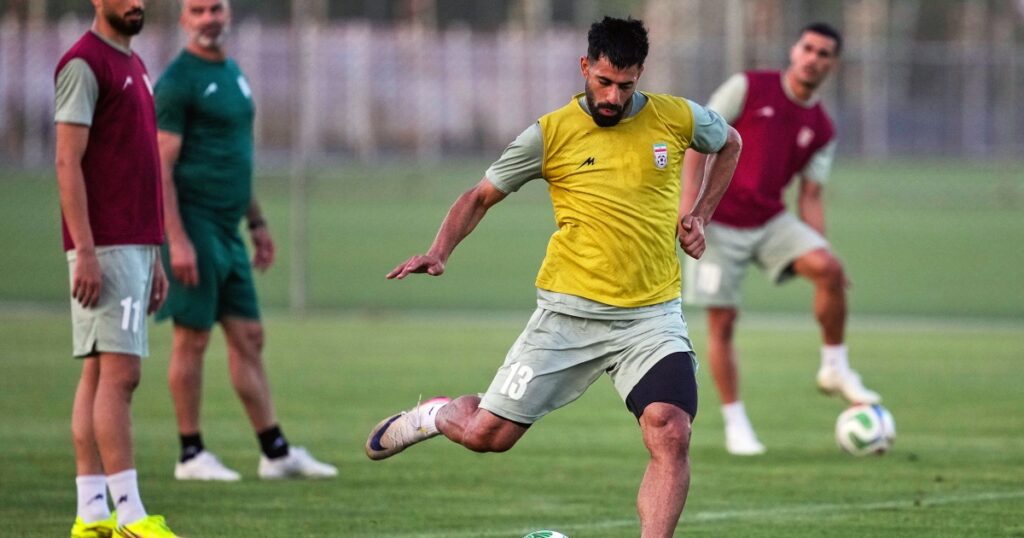
Table of Contents
A Tactical Retreat in Antalya
The Football Federation Islamic Republic of Iran (FFIRI) has confirmed that the national team’s final warm-up match against Mali this Thursday will take place behind closed doors in Turkey. The decision, according to an official statement from the FFIRI, is driven by the ‘tactical objectives’ of the head coach, effectively shielding the team’s final strategic preparations from media scrutiny and public view before they depart for North America on Saturday.
This closed-door session marks the end of two intensive training camps in Antalya, where the squad has navigated a volatile lead-up to the tournament. Their recent form has been inconsistent, recording wins against Costa Rica and Gambia, but suffering a loss to Nigeria. With the tournament clock ticking, the match against Mali serves as the final litmus test for a squad that has spent as much time navigating geopolitical instability as it has practicing set pieces.
The Tijuana Pivot
The most striking aspect of Iran’s preparation isn’t the tactical secrecy in Turkey, but the logistical overhaul of their tournament residence. In a move approved by FIFA, the FFIRI successfully petitioned to move its base of operations from Tucson, Arizona, to Tijuana, Mexico.
The shift is less about luxury and more about the friction of border crossings. By basing themselves in Tijuana, the Iranian delegation can manage their environment in Mexico before commuting across the border for their opening group stage fixtures. Iran is slated to face New Zealand and Belgium in Los Angeles, before concluding their Group G campaign against Egypt in Seattle.
The decision to abandon Tucson suggests a desire to minimize the time spent under the direct administrative and security apparatus of the U.S. interior until the moments immediately preceding their matches.
The IRGC Vetting Process
The logistical shift to Mexico coincides with a strict security ultimatum from Washington. Secretary of State Marco Rubio clarified on Tuesday that while the U.S. government has “no problem” with the athletes themselves entering the country, there is a hard line regarding the accompanying delegation.
Rubio, speaking during a House of Representatives committee hearing, emphasized that the U.S. will not permit officials or support staff with ties to the Islamic Revolutionary Guard Corps (IRGC) to enter. “What we’re not going to allow is for them to embed in their delegation a bunch of people that we know have nothing to do with athletics and have ties to the IRGC,” Rubio stated, noting that the vetting process will be conducted “very closely.”
This stance aligns with the official designations of both the United States and Canada—who are co-hosting the tournament with Mexico—which classify the IRGC as a terrorist entity. This diplomatic wall has already manifested in tangible setbacks for the FFIRI; President Mehdi Taj was recently denied entry into Canada for the FIFA Congress in late April, specifically cited for his links to the elite military force.
Navigating the North American Corridor
For the Iranian players, the journey to June 15—their opening match against New Zealand—is now a complex exercise in diplomatic navigation. The reliance on a Mexican base as a springboard into the U.S. highlights the precarious nature of sports diplomacy when colliding with national security mandates.
As the team prepares to fly out on Saturday, the focus remains on whether the security screenings at the border will disrupt the squad’s cohesion or if the Tijuana workaround provides the necessary breathing room to focus on the pitch rather than the passport control desk.