Nvidia’s RTX Spark aims to turn the PC into a ‘teammate’ with a 128GB local AI superchip
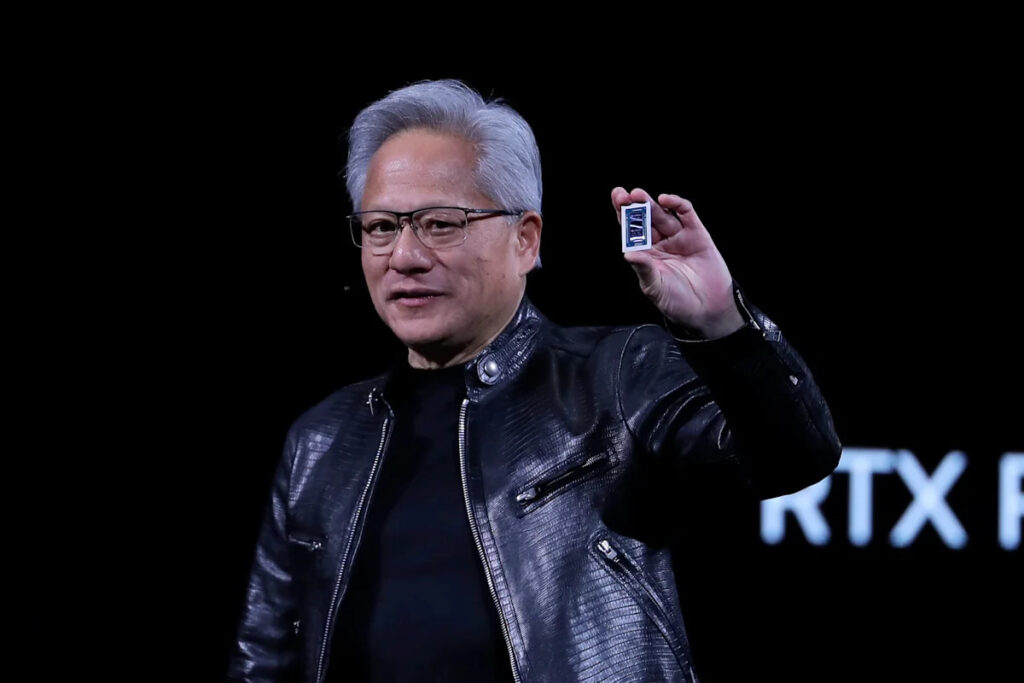
Table of Contents
A Shift from Tool to Teammate
At Computex in Taipei, Nvidia CEO Jensen Huang didn’t just announce a new piece of silicon; he pitched a fundamental shift in how humans interact with personal computing. The center of this pivot is the RTX Spark, a “superchip” designed to move AI processing out of the cloud and directly onto the local hardware of laptops and desktops.
The ambition behind Spark is to replace the traditional mouse-and-keyboard interface with an AI agent that lives locally on the machine. According to Huang, the goal is to evolve the PC from a passive “tool” into a proactive “teammate.” During the presentation, Huang demonstrated this by showing a local AI agent generating complex architectural blueprints for a house in real-time, operating without the latency or privacy concerns associated with cloud-based LLMs.
The Hardware: Blackwell Meets Grace
Under the hood, the RTX Spark isn’t a traditional GPU update. It is a highly integrated system-on-chip (SoC) that marries Nvidia’s Blackwell GPU architecture with its Grace CPU. This combination is intended to handle the immense computational load required for “frontier models”—the largest, most capable AI models—which typically require data-center grade hardware.
The most striking specification is the memory capacity. The Spark supports up to 128GB of memory, a figure that dwarfs the standard 16GB or 32GB found in the vast majority of consumer laptops. While Apple’s high-end MacBook Pro configurations have pushed into higher unified memory tiers, the Spark is designed specifically to optimize the massive KV cache requirements of local AI agents. Without this level of memory, running a high-parameter model locally often results in sluggish token generation or “hallucinations” caused by aggressive quantization.
The Ecosystem Play and Microsoft Partnership
Nvidia isn’t attempting to build the laptops themselves, but it is positioning Spark as the gold standard for the next generation of “AI PCs.” The company revealed that the chip was developed in partnership with MediaTek, signaling a strategic alliance to capture the mobile and portable computing market.
A critical component of this rollout is a deep integration with Microsoft. Huang noted that Nvidia and Microsoft are collaborating on a “robust, secure Windows platform for on-device agents.” This suggests that the RTX Spark will likely serve as the hardware foundation for specialized Windows AI features that go beyond the current Copilot+ PC requirements.
The first wave of hardware targets includes several heavy hitters. Microsoft is teasing the Surface Laptop Ultra—which the company describes as the most powerful Surface ever—though specific benchmarks remain elusive. Meanwhile, Asus has already integrated Spark into its ProArt P16 and P14 lines, as well as its Mini PC offerings. MSI is expected to follow with the Prestige N16 Flip AI Plus, while Dell, Lenovo, and HP are slated to announce their respective Spark-powered models shortly.
The Practical Trade-offs
Despite the performance claims, Nvidia left several key questions unanswered. There was no mention of the manufacturing process (though TSMC is the logical candidate) or the expected retail pricing for these machines. Furthermore, the promise of “all day battery life” in a slim chassis while powering a Blackwell-grade GPU and 128GB of memory remains a significant engineering hurdle.
If Nvidia can balance the thermal output of such a dense chip, the RTX Spark could effectively decouple professional AI workflows from the internet. For developers, architects, and creative professionals, the ability to run a secure, private, and instantaneous AI agent locally would represent the most significant upgrade to the PC architecture since the introduction of the GPU itself.


