Microsoft’s Project Solara Aims to Kill the App with ‘Just-in-Time’ AI Interfaces
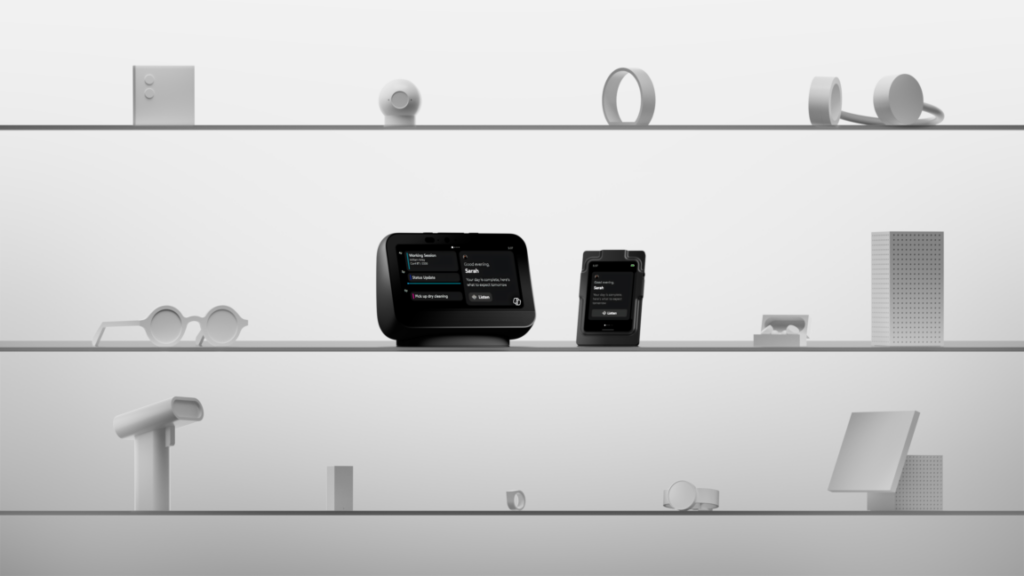
Table of Contents
A Shift From Applications to Agents
Microsoft is betting that the future of computing isn’t found in a grid of colorful app icons, but in a fluid, invisible layer of AI agents. At Build 2026, the company pulled back the curtain on Project Solara, a conceptual software platform that fundamentally reimagines the relationship between a user and their device. Rather than launching a specific application to complete a task, Solara is designed to let AI agents orchestrate the experience, generating the necessary interface on the fly based on the user’s immediate context.
At its core, Project Solara is built upon the Android Open Source Project (AOSP). Because it lacks the proprietary licensing of Google’s full Android suite, Microsoft is officially branding the underlying architecture as the Microsoft Device Ecosystem Platform. This framework integrates Microsoft’s existing enterprise toolsets with a new shell capable of interacting with multiple autonomous AI agents, effectively treating the OS as a canvas for generative content rather than a container for static software.
The Concept of ‘Just-in-Time UI’
The most ambitious technical claim within Project Solara is the introduction of “just-in-time UI.” For decades, software developers have had to manually design distinct interfaces for different screen sizes—optimizing one version for a smartwatch and another for a desktop monitor. Microsoft argues that this process is an expensive bottleneck that hampers hardware innovation.
Solara proposes a world where the UI doesn’t exist until the moment it is needed. Using LLMs to interpret intent and environment, the OS would dynamically render a minimal interface for a small wearable or a data-rich dashboard for a large display, all while performing the same underlying function. In theory, this removes the need for “app parity” across devices; the agent simply provides the right tool for the specific form factor in use.
Hardware Prototypes: From Desk Displays to Smart Badges
To illustrate this vision, Microsoft showcased two hardware concepts. The first, the Desk Concept, is a MediaTek-powered smart display equipped with a camera and touchscreen. It functions as a command center for a user’s AI agents, serving as a secondary monitor or a gateway to a cloud-based Windows 365 instance. It is designed to be the “home base” where agents provide status updates and handle complex multitasking.
The second prototype is considerably more experimental: the Badge Concept. This Qualcomm-based device is essentially a high-tech employee ID, featuring 5G connectivity, a fingerprint scanner, and a small touchscreen. Microsoft envisions this as a biometric key to a user’s personal AI ecosystem. A user could tap the sensor to authenticate their identity and then dictate commands to an agent that can “take action on the environment”—a vague promise that suggests integration with IoT office sensors or real-time meeting summarization via the onboard microphone.
The Road to Implementation
It is important to note that Project Solara is currently a conceptual exercise. Microsoft has been transparent about the fact that the system is not yet a functional consumer product. Instead, the company is using these prototypes to demo the “agent-first” workflow with a select group of industry partners, including Target, CVS Health, Best Buy, AccuWeather, and Levi’s.
This move is a strategic pivot for a company that has historically struggled to find its footing in the mobile OS market. After the failure of Windows Phone, Microsoft shifted its focus to the cloud and enterprise software. Now, with the rise of generative AI, the company sees an opportunity to leapfrog the traditional app-store model entirely. This trajectory mirrors movements at Google, which has recently previewed agentic search tools capable of building instant dashboards in response to complex queries.
If Project Solara ever moves beyond the lab, it could represent a genuine departure from the 2007 smartphone paradigm. However, the success of the platform depends entirely on the reliability of the underlying models; if the “just-in-time” interfaces are clunky or hallucinated, the convenience of an agent-first OS will be overshadowed by the reliability of the apps it seeks to replace.


