Encryption and Extremism: The Digital Battlefield Securing the 2021 Inauguration
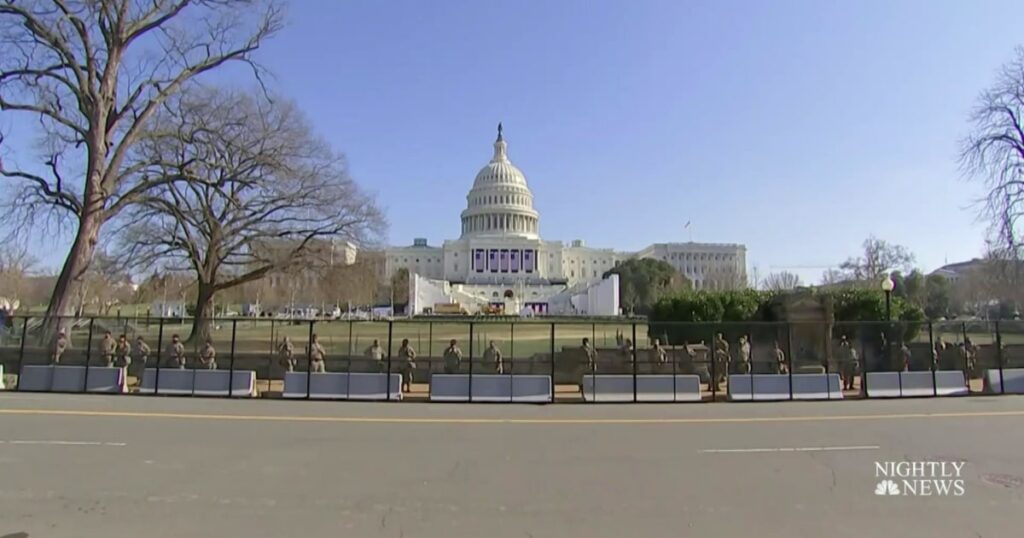
Table of Contents
The Invisible Perimeter
While the physical fortifications of Washington D.C. are becoming visible—concrete barriers, checkpoints, and the mobilization of thousands of National Guard troops—a more complex battle is being fought in the digital ether. As the city prepares for Inauguration Day, federal law enforcement agencies are grappling with a surge of coordination occurring within encrypted communication channels, marking a shift in how political violence is organized in the modern era.
The scale of the security operation is unprecedented. Local, state, and federal law enforcement have converged on the capital, but the primary concern for intelligence officers isn’t just the physical crowd, but the digital footprints leading up to the event. Authorities have issued stark warnings regarding violent, right-wing extremist plots that are no longer being discussed on public forums like Facebook or Twitter, but have migrated to platforms specifically designed to evade surveillance.
The Migration to Darker Channels
The shift toward encrypted chat rooms—ranging from Signal and Telegram to more niche, decentralized platforms—has created a significant “intelligence gap.” Traditionally, law enforcement could monitor public sentiment and identify threats through keyword alerts on social media. However, end-to-end encryption (E2EE) ensures that only the sender and receiver can read the messages, leaving intelligence agencies to rely on human infiltration or metadata analysis rather than direct interception.
These digital spaces act as echo chambers where extremist rhetoric can escalate into actionable plans without the moderating influence of platform guidelines or the prying eyes of monitors. The anonymity provided by these tools allows disparate groups to synchronize their movements, share tactical maps of the city, and coordinate logistics in real-time, all while remaining virtually invisible to standard digital dragnets.
The Technical Challenge of Attribution
For agencies like the FBI and the Department of Homeland Security, the challenge is twofold: detection and attribution. When a threat is articulated in a public tweet, the identity of the user is often linked to a traceable account. In encrypted rooms, users often operate under pseudonyms and utilize VPNs to mask their IP addresses. This makes it incredibly difficult to distinguish between “keyboard warriors” engaging in performative aggression and actual operatives planning a kinetic attack.
The current security posture in D.C. is, in many ways, a response to this uncertainty. Because authorities cannot fully “clear” the digital space, they are forced to over-index on physical security. The deployment of the National Guard is not just a deterrent for those already in the city, but a necessary hedge against the unknown variables emanating from these encrypted networks.
A New Paradigm of Urban Security
This intersection of technology and civil unrest represents a new paradigm in urban security. The 2021 inauguration is serving as a case study in how the democratization of high-level encryption tools—once the sole province of intelligence agencies and dissidents—is now being leveraged by domestic extremist groups to outpace state surveillance.
As the event approaches, the focus remains on the tension between privacy and security. The very tools that protect journalists and activists are the ones currently being used to coordinate potential disruptions to the peaceful transfer of power. For now, the response is brute force: more boots on the ground to compensate for the lack of visibility in the cloud.


