Google Pivots Toward ‘Intelligence Systems’ With Unveiling of the Googlebook
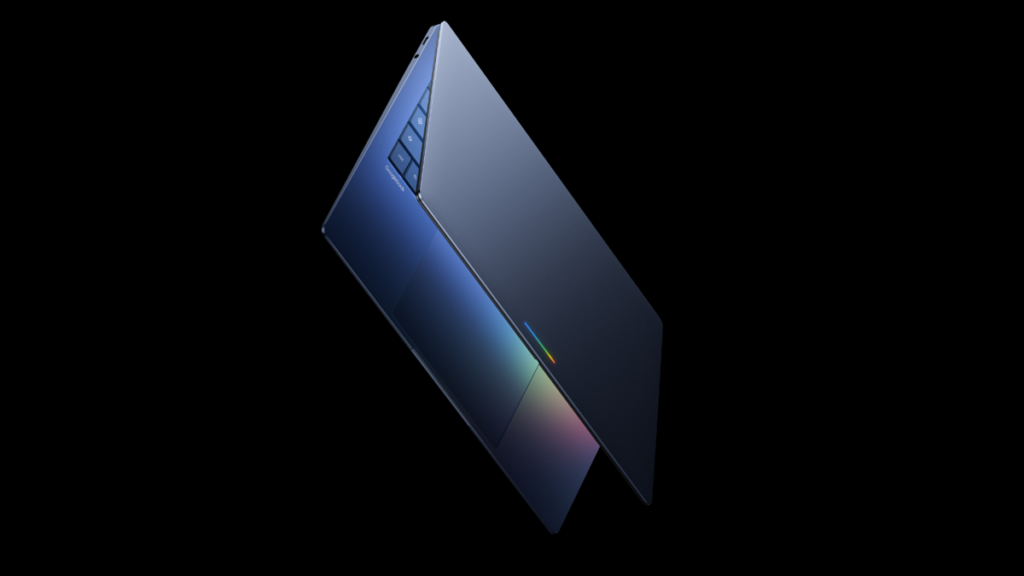
Table of Contents
A Departure from the Chromebook Era
At the Android Show: I/O Edition on Tuesday, Google signaled a fundamental shift in its hardware strategy with the introduction of the Googlebook. While the company has spent over a decade refining the Chromebook as the gold standard for cloud-first computing, the Googlebook represents an attempt to redefine the laptop not as a vehicle for an operating system, but as an “intelligence system.”
The announcement suggests that Google is moving beyond the browser-centric model of ChromeOS to compete directly with Microsoft’s Copilot+ PCs. According to Alex Kuscher, Google Senior Director, the shift is a response to the evolving way users interact with computers. “Over 15 years ago, we introduced the Chromebook, a laptop built for a cloud-first world,” Kuscher stated in an official blog post. “Now, as computing shifts from an operating system to an intelligence system, we see an opportunity to rethink laptops again.”
The OS Mystery: Project Aluminum?
Perhaps the most disruptive detail of the announcement is the implication that Googlebooks will not run ChromeOS. Kuscher described the software as “a modern OS that’s designed for Intelligence,” though he stopped short of naming it. This closely aligns with industry rumors regarding Project Aluminum, a long-speculated merger of ChromeOS and Android intended to streamline Google’s ecosystem and eliminate the friction between mobile and desktop environments.
While the Googlebook will support Android apps—a feature already present in many Chromebooks—the integration appears deeper. The hardware is designed from the ground up to facilitate Gemini, Google’s large language model, moving AI from a sidebar assistant to the core of the user experience.
AI-Driven Interaction: The ‘Magic Pointer’
The centerpiece of the Googlebook’s interface is the Magic Pointer. Unlike a traditional cursor that merely selects text or clicks buttons, the Magic Pointer uses Gemini to interpret on-screen context in real-time. By wiggling the cursor, users can trigger AI actions based on what they are looking at.
Google provided several use cases to illustrate this: pointing at a date within an email to automatically schedule a calendar event, or selecting two separate images—such as a photo of a living room and a product shot of a sofa—to generate a composite visualization of the furniture in the space. This indicates a move toward multimodal interaction, where the AI understands the spatial and semantic relationship between different on-screen elements.
Ecosystem Synergy and Customization
Beyond the cursor, Google is introducing a “Create your Widget” tool, allowing users to build custom functional modules on their desktop using natural language prompts via Gemini. The hardware also aims to erase the boundary between the laptop and the Android smartphone. A “Quick Access” feature allows users to search and manipulate files on their phone directly from the laptop, and a casting feature enables users to run mobile apps on the Googlebook screen without a dedicated installation.
Hardware Partnerships and Market Positioning
While Google has yet to release a full specification sheet, the company confirmed that the first wave of devices will be produced by a consortium of longtime partners: Acer, Asus, Dell, HP, and Lenovo. The only distinct hardware tell mentioned is a “glowbar” lightstrip on the lid, which likely serves as a visual indicator for Gemini’s activity.
The marketing language—describing a “Featherweight Design” with “Heavyweight Power”—suggests Google is targeting the premium ultraportable market. This puts the Googlebook in direct competition with the MacBook Air and the Surface Pro. Given that high-end Chromebooks already retail between $750 and $1,000, it is expected that the Googlebook will push further into the premium price bracket, reflecting its specialized AI hardware and new OS architecture.
The first models are slated for a fall release, marking a gamble for Google: whether consumers are ready to move past the familiarity of the traditional OS in favor of an AI-native experience.


