Nature’s Bio-Weapon: New ‘Killer Fungus’ Discovered Tackling Invasive Moss in the UK
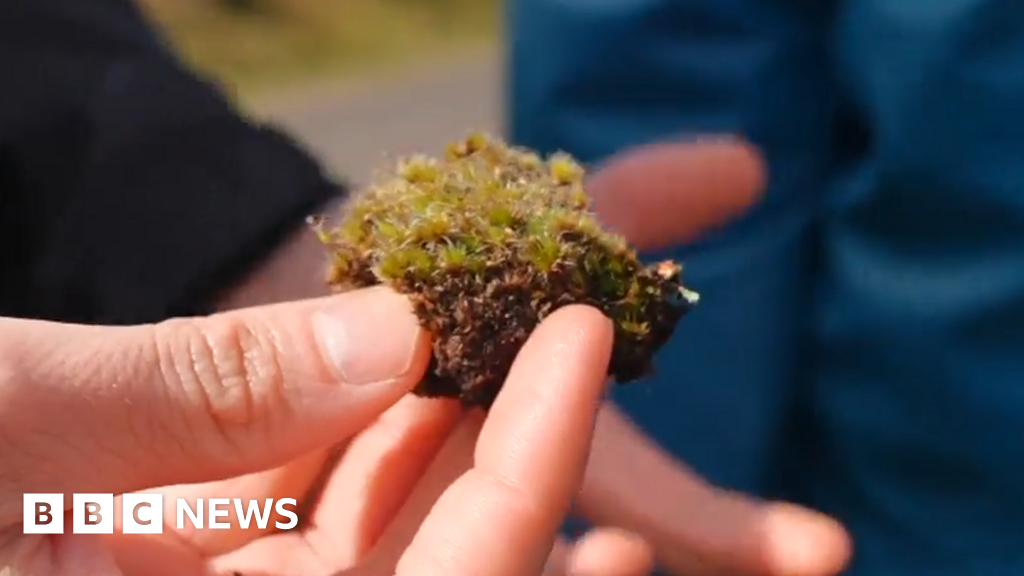
Table of Contents
A Natural Counter-Attack in the Undergrowth
In a rare instance of an ecosystem effectively fighting back against colonization, scientists have identified a new species of fungus in Britain that specifically targets and destroys one of the region’s most aggressive invasive plants. The discovery, led by researchers at Amgueddfa Cymru museum, could provide a scalable, natural solution to restoring native habitats that have been suffocated by non-native flora.
The target of this ‘killer fungus’ is the heath-star moss, a resilient and opportunistic species believed to have arrived from the southern hemisphere around the 1940s. By the 1990s, the moss had exploded across the UK, colonizing everything from coastal sand dunes and hillsides to urban tarmac, effectively turfing out native mosses that form the foundation of critical carbon-storing peatlands and temperate rainforests.
The Discovery of ‘Fairy Rings of Death’
The breakthrough began four years ago on the Isle of Wight, where Dr. George Greiff first noticed unusual patches of decaying moss on a cliffside. While the initial sightings were subtle, Greiff observed a recurring pattern of decay—what he describes as ‘fairy rings of death’—where the invasive moss was being systematically wiped out in circular patterns.
Working with a network of scientists across the UK and France, Greiff utilized advanced DNA sequencing to identify the culprit. The resulting discovery was a potent, previously unknown fungus now referred to as ‘moss die-back.’ Under a microscope, the fungus appears as a candy-floss-like structure that clings to the moss stem and penetrates the cellular walls of the plant, leading to rapid necrosis.
A Genetic Link to Ash Die-back
The technical analysis reveals a sobering genetic connection: the moss die-back fungus is a close relative of the fungus responsible for ash die-back, a blight that has devastated an estimated 80 million ash trees across Britain. While the relationship is genetically close, the current findings suggest a high level of host specificity. Preliminary data indicates the fungus primarily targets heath-star moss, with only limited impact on one other moss species, though researchers caution that more longitudinal study is required to rule out broader ecological risks.
The Value of Biological Control
For conservationists, the discovery represents a shift from resource-heavy human intervention to autonomous biological control. Historically, managing invasive species—such as the Japanese knotweed or the North American grey squirrel—has required expensive, labor-intensive efforts, ranging from chemical treatments to contraceptive initiatives.
“To have a natural biological control agent doing it for us is really valuable,” says Greiff. He notes that manual removal of the heath-star moss is virtually impossible given its spore-based reproduction and sheer ubiquity. The fungus, however, spreads organically, creating gaps in the invasive carpet that allow native heather and other indigenous plants to reclaim the soil.
Mapping the Timeline of Infection
At Amgueddfa Cymru museum, Dr. Nathan Smith and his team are now using the UK’s oldest collection of moss samples, some dating back to the 1880s, to trace the origin of the fungus. By testing these historical envelopes for the presence of the die-back agent, the team hopes to determine if the fungus is a native species that evolved to combat the invader or a secondary introduction that happened to find a perfect host.
As Britain’s nature is currently ranked among the most depleted globally, with one in six species facing extinction, the emergence of a natural predator for invasive moss provides a rare optimistic data point for biodiversity recovery. If the fungus continues to spread without jumping to native hosts, it may serve as a blueprint for how ecosystems adapt to survive anthropogenic biological shifts.