Samsung Aggressively Prices New Mini LED Range in India to Combat Budget OLED Growth
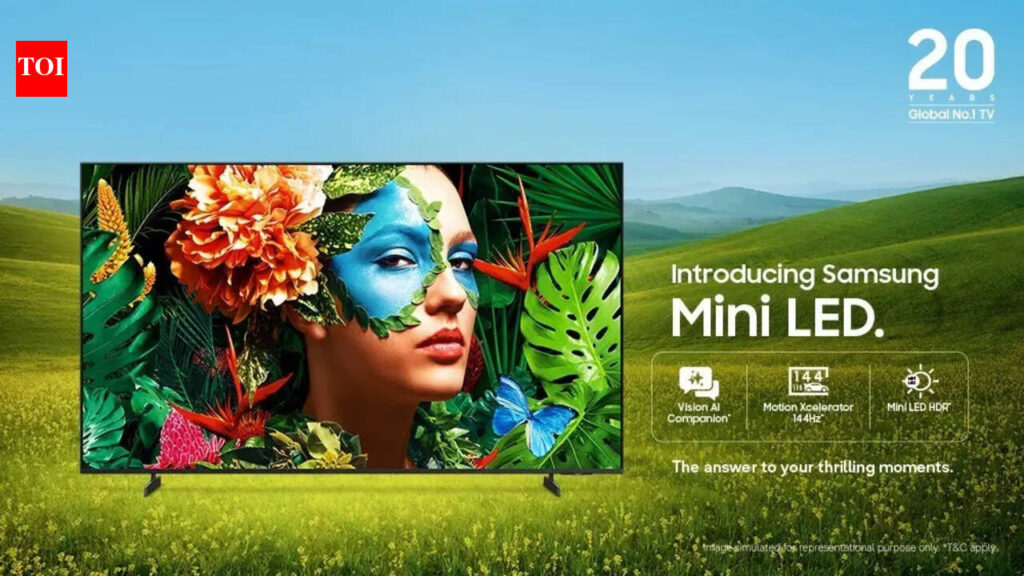
Table of Contents
A Strategic Pivot Toward Mid-Range Premium
Samsung is making a concerted push into the Indian living room with the launch of a new series of AI-powered Mini LED televisions, starting at a surprisingly aggressive price point of ₹42,990. While Samsung has long dominated the high-end luxury segment with its Neo QLEDs, this latest rollout signals a shift in strategy: bringing high-contrast, high-brightness technology to a demographic that previously had to choose between basic LED panels and expensive OLEDs.
The move comes as the Indian market sees a surge in demand for larger screens—specifically in the 55-inch to 75-inch range—where traditional edge-lit LEDs often struggle with “blooming” and poor black levels. By leveraging Mini LED technology, which uses significantly smaller diodes to allow for more precise local dimming zones, Samsung is attempting to bridge the gap between value and performance.
The Role of AI in Visual Processing
Central to this new lineup is the integration of an AI-driven processing engine. Rather than just a marketing buzzword, the AI here is focused on dynamic tone mapping and upscaling. The processors are designed to analyze content in real-time, identifying the difference between a dark scene in a cinematic movie and a brightly lit sports broadcast, adjusting the Mini LED clusters accordingly to prevent the “halo effect” common in cheaper LED TVs.
For users streaming content in 1080p—which still accounts for a massive portion of Indian viewership via set-top boxes and budget streaming sticks—the AI upscaling is intended to synthesize missing pixels to approximate a 4K experience. This is a direct response to the fragmented content ecosystem in India, where 4K native content is still not the universal standard.
Pricing and Market Positioning
The entry price of ₹42,990 puts Samsung in direct competition with aggressive Chinese manufacturers like Xiaomi and TCL, who have used Mini LED technology to undercut established brands. However, Samsung is banking on its brand equity and its wider service network across Tier 2 and Tier 3 cities to justify the purchase.
Industry analysts suggest that this pricing strategy is less about margins and more about ecosystem lock-in. A Samsung TV serves as the central hub for the company’s SmartThings ecosystem, pulling in users who may later purchase Galaxy smartphones or wearables. By lowering the barrier to entry for Mini LED, Samsung ensures that its proprietary Tizen OS remains the dominant interface in Indian households.
Technical Trade-offs
While the jump to Mini LED is a significant upgrade over standard LEDs, it doesn’t entirely replace the need for OLED. Users seeking absolute perfect blacks for high-end gaming or professional color grading may still find the Mini LED panels prone to slight light leakage in extremely dark rooms. However, for the typical Indian living room—which often features high ambient light and multiple light sources—the superior peak brightness of Mini LED is actually a functional advantage over OLED, which can struggle with glare.
The new range will be available through major electronics retailers and Samsung’s own online store, with various promotional offers likely to trigger during the upcoming festive sale cycles.


