The Physical Toll of the Perfect Shot: Owain Scullion’s Award-Winning Ascent of Aoraki
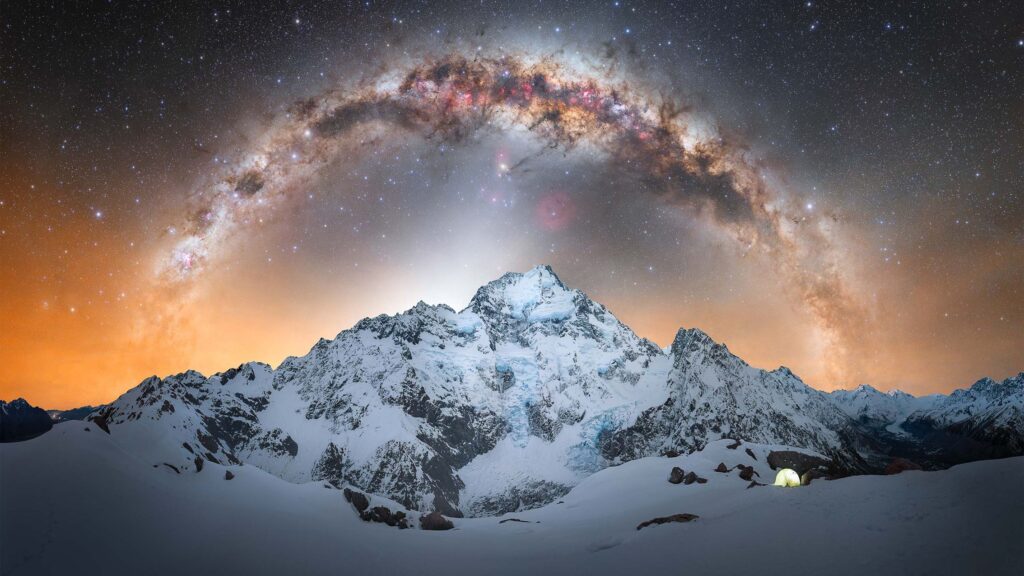
Table of Contents
Beyond the Shutter: The Logistics of High-Altitude Astrophotography
For most photographers, the ‘challenge’ of a shot is measured in lighting or composition. For Owain Scullion, it was measured in unstable snow, mountain washouts, and the thin air of the New Zealand Southern Alps. Scullion’s recent recognition in Capture the Atlas’ 2026 Milky Way Photographer of the Year collection isn’t just a win for his eye for composition, but a testament to the sheer physical endurance required to place a camera in the right spot at the exact right second.
The target was Aoraki/Mount Cook, the highest peak in New Zealand. While the mountain is a frequent subject for tourists, Scullion’s approach was far from conventional. To achieve the specific scale and intensity of the western arc of the Milky Way aligning perfectly with the peak, he had to navigate steep, rocky terrain and snow-covered slopes during the dead of winter. The effort involved more than just hiking; it required high-altitude winter camping and a calculated gamble with solar radiation-affected snow that can shift without warning.
“Capturing the Milky Way arch above Aoraki / Mount Cook, the central peak of the national park, became one of the most demanding challenges I had set for myself,” Scullion noted, emphasizing that the window for the shot was incredibly narrow. In astrophotography, timing is dictated by the celestial clock; once the galactic core moves out of alignment with the terrestrial landmark, the opportunity is gone for the season.
The Technical Stack: Modified Sensors and Star Trackers
While the physical journey provided the access, the technical execution relied on a highly specialized kit designed to overcome the limitations of standard digital sensors. Scullion utilized a Fujifilm X-T30, but not a stock version—the camera is ‘astro-modified.’ In these modifications, the internal IR-cut filter is typically removed or replaced to allow the sensor to capture more light in the H-alpha spectrum, which is critical for bringing out the deep reds and pinks of interstellar nebulae within the Milky Way.
To combat the earth’s rotation—which causes stars to ‘streak’ during long exposures—Scullion employed an MSM Nomad star-tracker. This device allows the camera to move in synchronization with the stars, enabling longer exposure times without sacrificing sharpness. The complexity of the shot is further highlighted by his use of a two-part exposure strategy: one for the celestial canopy and another for the rugged foreground.
| Element | Gear/Settings | Exposure Detail |
|---|---|---|
| Sky | Fujifilm XF 23mm / Viltrox 27mm | 60s, f/1.4, ISO 800 |
| Ground | Fujifilm X-T30 Astro-mod | 60s, f/2.0, ISO 1600 |
| Filters | Kase Star Glow & Nantong H-alpha | Specialized spectral filtering |
The addition of a Nantong H-alpha filter is a professional touch that allows the photographer to isolate specific wavelengths of light, reducing light pollution and increasing the contrast of the galactic core against the black of space.
The Intersection of Adventure and Art
Scullion’s work represents a growing trend in ‘adventure photography,’ where the technical skill of the artist is secondary to their ability to survive the environment. The risk of large washouts along the mountainside and the volatility of winter weather in the Southern Alps create a barrier to entry that prevents these locations from becoming oversaturated in digital galleries.
This specific image, which has now joined the elite ranks of the 2026 Milky Way Photographer of the Year collection, serves as a case study in precision. When the western arc of the galaxy finally aligned with the silhouette of Aoraki, Scullion had a momentary window to execute a sequence of exposures that combined preparation and luck. For the modern astrophotographer, the gear—from the star-tracker to the modified sensor—is merely the tool; the real work happens in the miles of unstable terrain traversed before the first shutter click.