The Orbit War: Why Propulsion Is the Invisible Pivot for the ‘Golden Dome’ Missile Defense
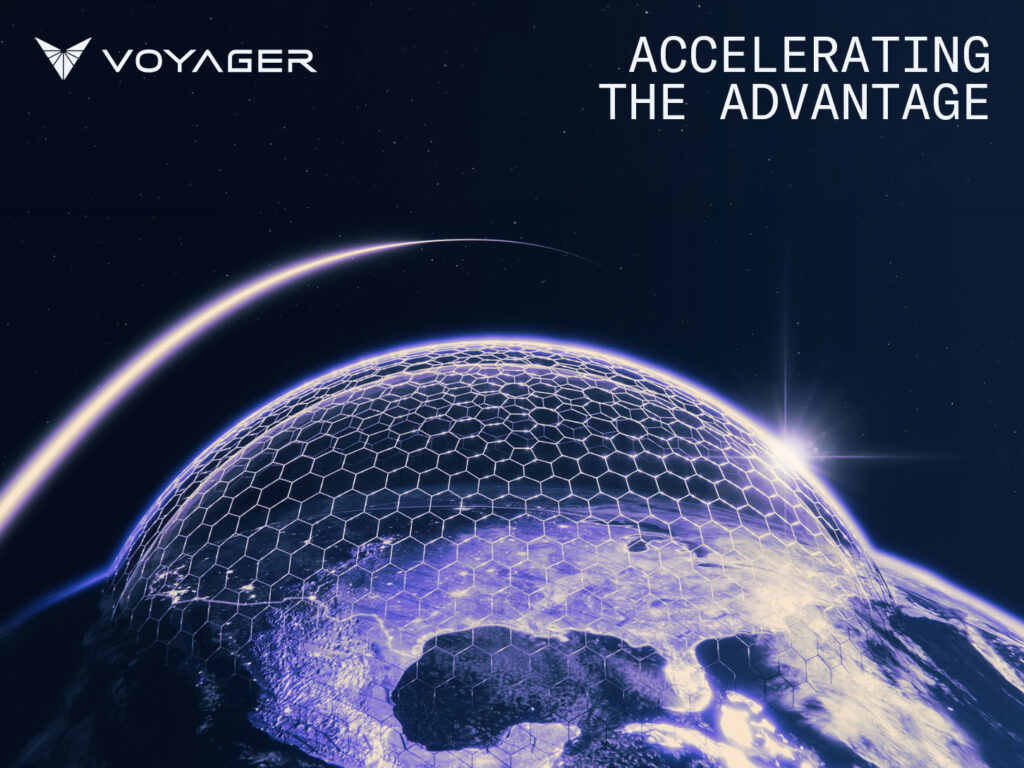
Table of Contents
A Paradigm Shift in Orbital Defense
For decades, the doctrine of missile defense has been a linear exercise in detection, tracking, and interception. The goal was simple: see the threat early enough to hit it with a kinetic interceptor. However, the emergence of the ‘Golden Dome’ architecture signals a fundamental shift in this calculus, moving away from isolated interceptors toward a massive, distributed infrastructure of sensors and weapons in orbit.
Golden Dome envisions a constellation of thousands of satellites, integrating high-fidelity sensors with orbital interceptors. This would represent a significant escalation in U.S. space capabilities, placing the first dedicated space-based weapons in orbit. To manage this scale, the system relies on space-borne data centers and a cross-domain, AI-enabled network for automated command and control. Yet, while the AI and sensor fusion capture the headlines, the actual viability of the system hinges on a less glamorous but more critical physical constraint: propulsion.
The Maneuverability Gap
In a contested space environment, a satellite that cannot move is merely a target. The operational reality of Golden Dome requires a level of persistence and agility that traditional satellite buses weren’t designed for. Satellites must be able to reposition rapidly to maintain coverage, evade counter-space threats, and ensure that interceptors are positioned for the most efficient strike trajectory.
“There’s a clear signal from the government that they want to tap into commercial innovation for Golden Dome,” says Matt Magaña, president of Space, Defense and National Security at Voyager. According to Magaña, the program isn’t just another procurement cycle, but a “strategic thrust” designed to force a leap in the capabilities required to actually execute the mission in a high-threat environment.
For interceptors, the requirements are even more stringent. Success is measured in fractions of a second. Maintaining precise control and stability during the terminal phase of an engagement requires propulsion systems that can fire with extreme accuracy and reliability, often after long periods of dormancy in the vacuum of space.
Scaling the Industrial Base
The technical challenge of building a single high-performance interceptor is well-understood. The systemic challenge, however, is scale. A constellation of thousands of units requires an industrial base capable of producing advanced propulsion systems at a tempo previously reserved for consumer electronics, not aerospace hardware.
Voyager is positioning itself as the bridge for this gap, focusing on controllable solid propulsion and high-efficiency electric systems. While electric propulsion provides the long-term efficiency needed for orbital station-keeping and agility, controllable solid propulsion is essential for the high-thrust, rapid-response maneuvers required for actual interception.
The risk for the U.S. government is that the ‘Golden Dome’ remains a theoretical architecture if the supply chain cannot keep up. As Magaña notes, the system only becomes operational if the industry can deliver at an operational tempo, necessitating a synthesis of energetics, electronics, and propulsion that can be mass-produced without sacrificing precision.
Beyond the Engine
While propulsion provides the movement, the effectiveness of the Golden Dome architecture relies on a tightly coupled stack of technologies. The propulsion systems must integrate seamlessly with sophisticated sensor fusion and real-time tracking algorithms. If a satellite maneuvers to avoid a threat, the AI-enabled network must instantaneously update the targeting data for the rest of the constellation to ensure no gaps in the defensive shield.
As the program transitions from conceptual design to deployment, the focus is shifting toward real-world performance. The success of this multi-layer space architecture will not be determined by the sophistication of its AI, but by whether its physical components—specifically the propulsion systems—can survive and operate in the increasingly crowded and contested environment of Low Earth Orbit (LEO).


