Impulse Space Secures $500 Million to Double Down on Human Engineering Over AI
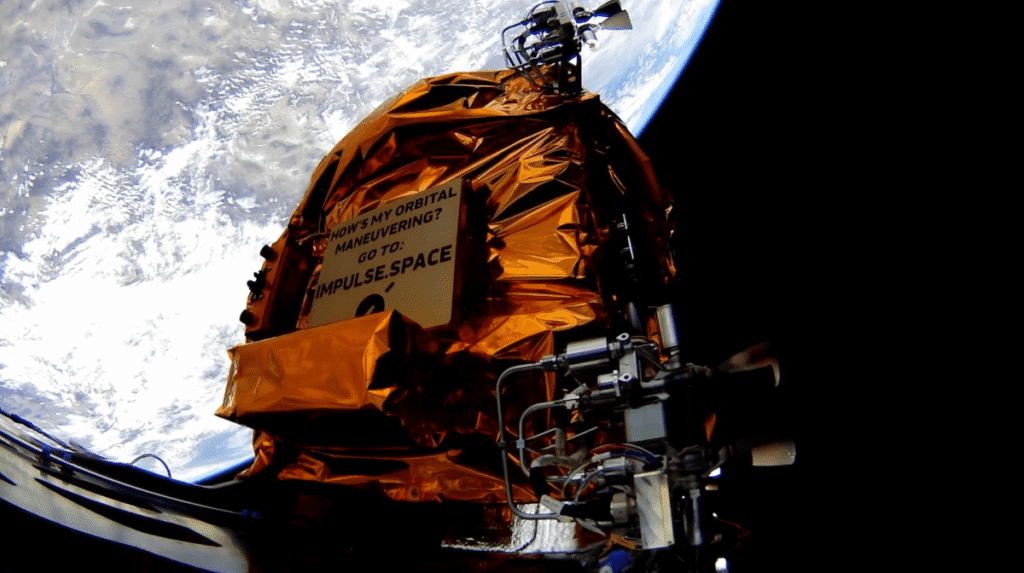
Table of Contents
Betting on the Test Stand
In an era where venture capital is almost exclusively chasing Large Language Models and autonomous agents, Impulse Space is placing a massive, half-billion-dollar bet on the traditional, gritty reality of aerospace engineering. The startup, founded by Tom Mueller—the propulsion architect behind SpaceX’s early success—has closed a $500 million Series D funding round aimed at aggressively scaling its workforce and refining its fleet of highly maneuverable spacecraft.
The round was led by 137 Ventures and BANNER VC, with significant participation from Founders Fund, Lux Capital, and Linse Capital. The capital injection comes at a pivotal moment for the orbital economy. As the U.S. government accelerates spending on national security space assets and SpaceX edges closer to a potential public offering, the demand for “last-mile” delivery in orbit—the ability to move satellites from a drop-off point to a specific, precise location—has become a strategic priority.
The Limits of Digital Twins
While Impulse is not Luddites—its software teams utilize AI coding assistants to speed up development—the company is drawing a hard line at hardware design. President and COO Eric Romo, who joined SpaceX as its 13th employee in 2003, argues that the current state of AI is insufficient for the high-stakes physics of rocket propulsion.
Romo recalls the early days of SpaceX simulations, noting that a 20% margin of error was once considered a success. While simulations have improved, they remain approximations. For Impulse, the only true source of truth is the test stand. The company’s philosophy is grounded in the belief that there is no substitute for the iterative cycle of designing, building, and physically testing hardware to failure.
The bottleneck, Romo suggests, is a data problem. Unlike the vast oceans of text and code used to train models like GPT-4 or Claude, the world’s most critical aerospace designs—such as the intricacies of a turbo pump seal package—are guarded as corporate secrets or classified government data. Without access to this high-fidelity training data, AI tools for hardware design remain largely speculative.
Mira, Helios, and the Orbital Logistics Gap
The funding will accelerate the development of two core platforms. The first is Mira, a highly maneuverable spacecraft specifically targeted at U.S. Space Force requirements. Mira is designed for agility in orbit, allowing for rapid repositioning that traditional satellites cannot achieve.
The second is Helios, a vehicle designed to act as an orbital tug. Currently, most satellites are dropped off by launch vehicles in a general vicinity; Helios is intended to take those payloads and ferry them to high-altitude orbits with precision. This capability effectively transforms the way satellites are deployed, moving away from a “drop and hope” model toward a curated orbital logistics system.
Scaling Talent in a Fragmented Market
A primary objective of the new capital is the hiring of up to 200 new employees. This expansion is not limited to their existing hubs; Impulse recently opened an office in Colorado to tap into a diversifying aerospace talent pool. Romo notes that the geography of the industry is shifting, with engineers now opting for hubs in Denver, Seattle, and Texas over the traditional dominance of Los Angeles.
The urgency for this growth follows a mixed bag of flight results. The Mira spacecraft’s third flight late last year encountered a significant navigation system glitch, which caused the vehicle to expend a large portion of its propellant prematurely. Rather than pivoting to a digital-first simulation approach to fix the error, Impulse is doubling down on its engineering staff to ensure the next mission—slated for launch before the end of the year—corrects these telemetry and propulsion issues.