Nvidia’s RTX Spark SoC Could Pivot Gaming Handhelds Away from AMD Dominance
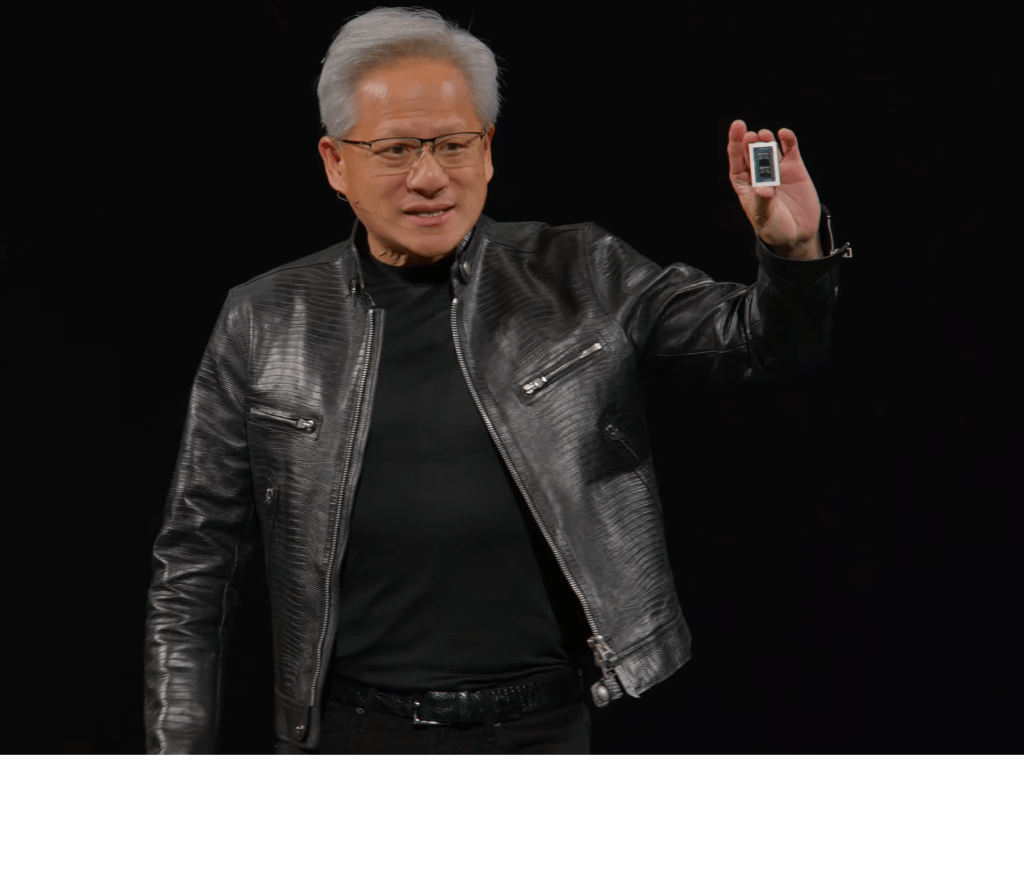
Table of Contents
Beyond the AI Agent Hype
At Computex, Nvidia CEO Jensen Huang focused his presentation on the dawn of the “personal AI agent era,” unveiling RTX Spark as the silicon engine designed to power this transition. The pitch is familiar: a Windows ultraportable that doesn’t just run apps, but employs autonomous agents to execute complex tasks on the user’s behalf. However, for those of us who have spent the last few years testing the actual utility of “AI PCs,” the promise of a digital assistant often feels secondary to the raw hardware specifications.
Under the hood, RTX Spark is a sophisticated System-on-Chip (SoC) that integrates a 20-core Nvidia Grace CPU with a Blackwell-based RTX GPU. The GPU side is particularly potent, sporting 6,144 CUDA cores—a figure that mirrors the specifications of the desktop GeForce RTX 5070. To eliminate the bottlenecks typical of mobile architectures, Nvidia has utilized its proprietary NVLINK technology to connect the CPU and GPU, offering a high-speed data pipeline that far outstrips traditional PCI Express connections.
The DLSS 4.5 Advantage
While the chip is slated for laptops and mini PCs by the end of 2026, the most critical detail for gamers is the software support. RTX Spark is the first laptop SoC to natively support DLSS 4.5. This is a strategic distinction, especially as Nvidia’s more recent DLSS 5 has faced criticism for its heavy reliance on generative AI to “hallucinate” visual details—a process that some users describe as “AI slop” due to an unnatural, overly polished look.
By sticking to DLSS 4.5, Spark-powered devices can leverage Dynamic Multi-Frame Generation, Super Resolution, and Ray Reconstruction. These tools provide a tangible performance uplift without the uncanny valley effect of the newest generative iterations. In titles like Alan Wake 2 and Cyberpunk 2077, these features have proven capable of nearly doubling framerates with minimal impact on image fidelity.
A Direct Threat to the AMD Handheld Hegemony
The most significant implication of RTX Spark isn’t for the 14-inch ultraportable, but for the handheld gaming market. Currently, the landscape is almost entirely AMD territory. The Steam Deck, Asus ROG Ally X, and Lenovo Legion Go all rely on AMD Ryzen SoCs. While AMD’s FSR (FidelityFX Super Resolution) is a capable open standard, it has historically struggled to match the stability and visual clarity of Nvidia’s DLSS.
Recent community data reflects this gap. A survey by the German technical site ComputerBase found that users overwhelmingly preferred the output of DLSS 4.5 over FSR 4 across six different titles, with some participants noting that DLSS actually looked superior to the native resolution.
Until now, the only handheld with native Nvidia silicon support has been the Nintendo Switch family via custom Tegra chips. However, the Switch exists in a different performance bracket. If Nvidia pivots RTX Spark into a handheld form factor—a move that seems logical given the chip’s efficiency and power
The Hardware Hurdle
There are, of course, significant headwinds. Transitioning from a laptop SoC to a handheld requires aggressive thermal management and battery optimization. Packing a Blackwell GPU into a 7-to-8-inch chassis without inducing thermal throttling is a formidable engineering challenge. Furthermore, Nvidia must decide if it wants to sell these chips to third-party OEMs like Valve or Asus, or if it intends to launch its own “Nvidia Shield” successor to reclaim the handheld throne.
If Nvidia can successfully migrate the RTX Spark architecture into the handheld space by 2027, the industry could see a paradigm shift. The possibility of playing AAA titles at 60+ FPS with high-end ray tracing on a handheld device is no longer a matter of software optimization, but of silicon capability. For the first time in years, AMD’s stranglehold on the handheld PC market looks vulnerable.


