The Analytical Keeper: How a Harvard Economics Degree is Reshaping USMNT Goalkeeping
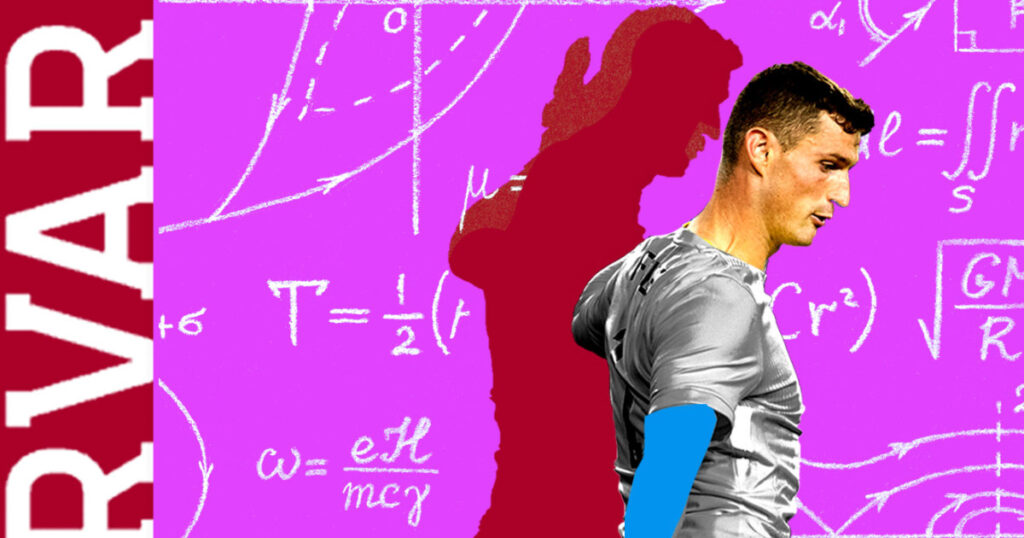
Table of Contents
A different kind of training ground
For most aspiring professional athletes, the path to the national team is a linear progression of elite academies and rigorous physical conditioning. But for Matt Freese, the battle for the U.S. Men’s National Team (USMNT) starting goalkeeper spot began not just on the pitch, but in the lecture halls of Harvard University and the margins of complex economic datasets.
Freese, now locked in a high-stakes competition with incumbent Matt Turner for the World Cup starting role, represents a shift in the modern game: the rise of the ‘analytical athlete.’ While the traditional image of a goalkeeper is that of a reactive shot-stopper, Freese views the position through a lens of probability, spatial geometry, and risk mitigation—a perspective honed during his time studying economics at Harvard.
The physics of the penalty kick
The intersection of academic rigor and athletic performance isn’t accidental in Freese’s career. During his collegiate years, Freese authored an extensive research project specifically focused on penalty kicks. Rather than relying on instinct, he treated the penalty spot as a data problem, analyzing striker tendencies and the mathematical probability of save locations based on body orientation and ball velocity.
“I think people typically, incorrectly, think that it’s a position where you’re a shot-stopper,” Freese noted. “What you’re trying to do is prevent goals.” For Freese, this distinction is critical. In his view, a save is often the result of a failure in positioning; the goal is to use proactive communication and spatial awareness to ensure the shot never reaches a dangerous area in the first place.
This approach mirrors the ‘Moneyball’ revolution seen in baseball and the advanced metrics now dominating the NFL. By treating the goalmouth as a set of coordinates to be optimized, Freese focuses on maximizing the surface area he can cover at any given micro-second, effectively applying geometric principles to high-pressure sporting moments.
A lineage of scientific inquiry
The analytical bent runs deep in Freese’s DNA. His family history reads more like a directory of the National Institutes of Health (NIH) than a sports biography. His paternal grandparents, Ernst and Elisabeth Freese, were German scientists who immigrated to the U.S. after World War II. Ernst was a molecular biologist whose work on DNA mutations provided foundational insights into cancer and neurodegenerative diseases like Alzheimer’s.
This tradition of intellectual curiosity continued with his aunt, Katherine Freese, a leading astrophysicist at the University of Texas specializing in dark matter, and his late father, Dr. Andy Freese. A Harvard alumnus and MIT Ph.D. in neurobiology, Dr. Freese was a pioneer in gene therapy. For a family dedicated to solving the mysteries of the universe and the human brain, Matt’s desire to play professional soccer was initially met with skepticism.
“I remember my uncle saying, ‘Poor Matt is going to end up sitting on the bench his whole life,'” Katherine Freese recalled. However, the same logical and analytical mind that allowed his father to map genetic mutations allowed Matt to dismantle the mechanics of professional goalkeeping.
The digital detox in a data-driven era
Interestingly, while Freese uses a scientific approach to analyze the game, he maintains a strict boundary between data and distraction. In an era where athletes are hyper-connected to social media and constant digital noise, Freese employs a rigorous “off-tech” protocol to maintain mental acuity.
His preparation involves a calculated balance: deep-dive video analysis of opponent tendencies coupled with a deliberate avoidance of cellphones and social media. This mental discipline—combining meditation and sunlight exposure with the clinical study of game film—is designed to ensure that when the two or three critical moments per game arrive, his cognitive load is minimized and his explosive capacity is maximized.
As the USMNT heads toward the World Cup, the competition between Turner and Freese isn’t just a battle of reflexes. It is a clash of philosophies: the established veteran versus the academic disruptor who views the goalmouth as a laboratory.


