Asus Bets Big on Copilot+ PCs with Snapdragon-Powered Vivobook and Zenbook Refresh at Computex 2026
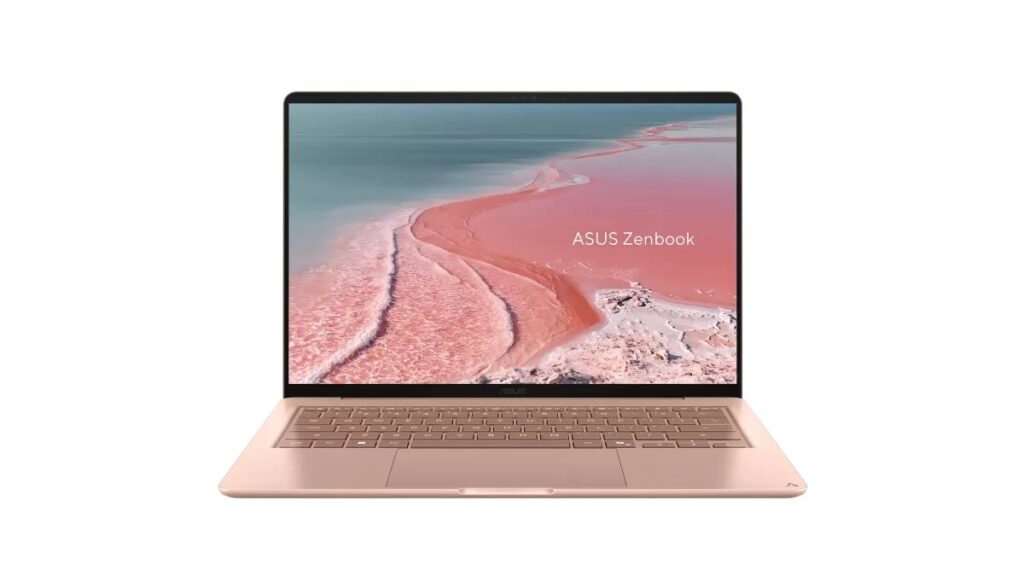
Table of Contents
A Pivot Toward ARM and On-Device AI
Asus has utilized the floor of Computex 2026 to signal a definitive shift in its hardware strategy. While the company has long balanced a variety of silicon partners, the newly unveiled Zenbook 14 and Vivobook S series are designed squarely around the current industry obsession: local AI processing. By leaning heavily into Snapdragon chipsets and the Copilot+ PC standard, Asus is attempting to solve the perennial laptop struggle—balancing high-performance NPU capabilities with battery life that doesn’t plummet during heavy workloads.
The center-piece of the announcement is the Zenbook 14. In a move that acknowledges the fragmented nature of the current processor market, Asus is offering the Zenbook 14 in three distinct flavors: Intel, AMD, and Snapdragon. This flexibility allows users to choose between the legacy compatibility of x86 architecture and the power-efficiency of ARM, but the standout is the Snapdragon variant. This model is marketed as a premier Copilot+ PC, boasting up to 50 TOPS (Tera Operations Per Second) of NPU performance. For the end-user, this means AI tasks like live captions, Cocreator, and advanced system indexing happen on-device rather than in the cloud, reducing latency and enhancing privacy.
The Vivobook S Series: Scaling AI Across Form Factors
While the Zenbook targets the premium, slim-and-light crowd, the Vivobook S series—specifically the S14 and S16—is where Asus is pushing the Snapdragon ecosystem most aggressively. Unlike the Zenbook, the new Vivobook S models are centered on Snapdragon chipsets, suggesting that Asus views the S-series as the ideal proving ground for ARM-based Windows laptops.
The diversity of the lineup is further expanded with the introduction of the Vivobook S14 Flip and S16 Flip. These 2-in-1 convertibles utilize a 360-degree hinge, allowing the devices to transition between traditional laptop mode and tablet, tent, or stand modes. Crucially, these Flip models include support for the Asus Pen 3.0, positioning them not just as consumption devices, but as tools for digital artists and students who require a tactile interface for AI-assisted sketching and note-taking.
Display Specs and Aesthetic Choices
On the hardware front, the Zenbook 14 retains a focus on visual fidelity with a 14.0-inch WUXGA OLED panel. The 16:10 aspect ratio is now the industry standard for productivity, providing more vertical real estate for coding and document editing. However, the 60Hz refresh rate may be a point of contention for users accustomed to the 120Hz panels found in many competing flagship ultrabooks.
Asus is also leaning into a more daring color palette for 2026. The Zenbook 14 departs from the safe silvers of the past, appearing in Arctic Blue and Komodo Coral. The Vivobook S14 and S16 follow a more muted professional aesthetic with Light Blue and Matte Gray, while the Flip convertibles are exclusively available in Light Blue.
The Market Context: The ARM Transition
The decision to push Snapdragon-powered machines across so many lines is a calculated risk. For years, Windows on ARM struggled with app compatibility. However, with the maturation of emulation and the direct support of major software vendors, the efficiency gains are becoming too significant to ignore. By offering the Zenbook in Intel and AMD as well, Asus is essentially hedging its bets—providing a safety net for those who still require native x86 performance while aggressively courting the early adopters of the Copilot+ era.
Despite the flurry of hardware reveals, Asus has remained tight-lipped regarding the exact pricing and regional availability of these machines. Typically, Computex serves as the global reveal, with North American and European markets seeing shipments a few months later. If Asus prices the Snapdragon Vivobooks competitively against the MacBook Air, we could see a significant shift in the mid-range student and professional market.


