AMD’s Radeon RX 9070 GRE Strategy: A Pragmatic Pivot for the Mid-Range Market
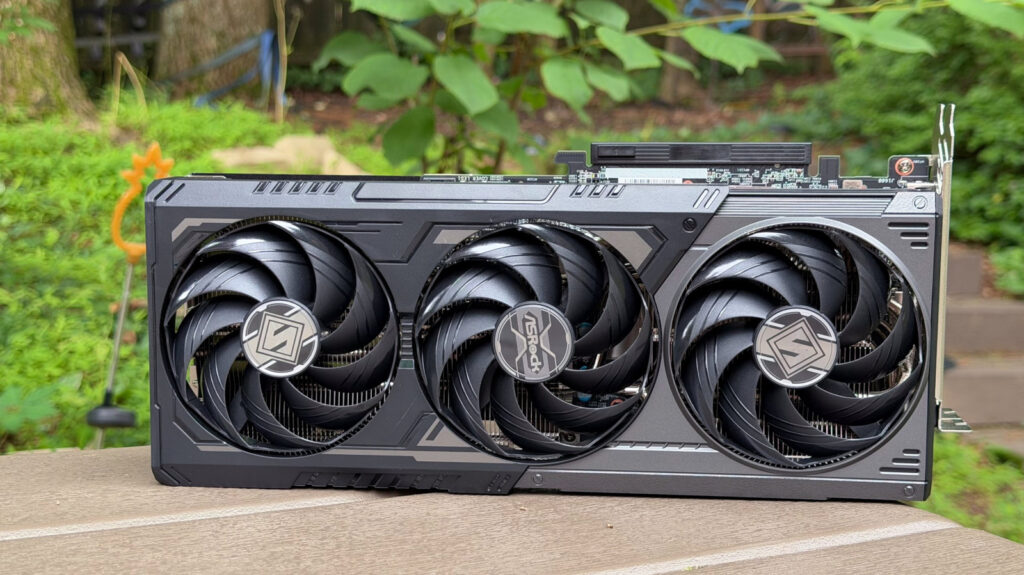
Table of Contents
The ‘Golden Rabbit’ Goes Global
In an era where the silicon supply chain is increasingly dominated by the insatiable appetite of AI data centers, gamers are often left fighting for scraps or paying a premium for mid-tier hardware. AMD is attempting to bridge this gap not with a revolutionary new architecture, but by repurposing a regional success. The Radeon RX 9070 GRE—originally the ‘Golden Rabbit Edition’ released exclusively for the Chinese market—is now making its global debut.
Positioned with a suggested retail price of $549, the GRE arrives at a curious moment. While the standard RX 9070 launched at the same price point, market volatility and demand have pushed actual retail prices for the base model upwards of $600. By introducing a slightly trimmed-down version of the chip, AMD is effectively attempting to reclaim the $500-$600 sweet spot for 1440p gaming, offering a pragmatic alternative for users who want modern performance without the ‘AI tax’ currently inflating hardware costs.
Silicon Trade-offs and Clock Speeds
The ASRock variant of the RX 9070 GRE tested here doesn’t aim for aesthetic flair; it’s a utilitarian three-fan cooler that prioritizes thermal headroom over minimalism. Under the hood, the GRE is a leaner version of its sibling. It sports 12GB of VRAM, a notable step down from the 16GB found in the standard RX 9070. Beyond memory, the chip is stripped of eight compute units and eight ray tracing accelerators.
To mitigate these hardware cuts, AMD has pushed the boost clock. The 9070 GRE can hit 2.79GHz, noticeably higher than the 2.52GHz ceiling of the standard 9070. This is a classic engineering trade-off: reducing the number of cores but running the remaining ones faster to maintain a competitive performance floor.
Benchmark Realities: The Generational Gap
In synthetic testing, the impact of the reduced compute units is evident. Using 3DMark’s Speedway—currently one of the most taxing benchmarks for modern GPUs—the GRE scored 4,334, trailing significantly behind the standard RX 9070’s 5,799. However, this gap narrows when looking at legacy titles. In Steel Nomad and TimeSpy Extreme, the performance delta was much smaller, suggesting that the GRE is highly capable of handling the vast majority of existing libraries without a perceptible loss in quality.
The real-world gaming experience tells a more nuanced story. In Forza Horizon 6, running at 1440p with ‘RT High’ settings and FSR4 frame generation enabled, the card averaged a fluid 180 fps. Even with frame generation disabled, it maintained a respectable 90 fps. Surprisingly, the card showed resilience at 4K resolution, averaging 80 fps in the same title. While the system did trigger a low-video-memory warning—a direct result of the 12GB VRAM limit—it didn’t manifest as stuttering or crashes during our testing window.
Thermal Efficiency and Value
One unexpected victory for the GRE is its thermal profile. Because it’s pushing fewer compute units, it generates less heat. Under full load, the core temperature peaked at just 58°C, and the fans remained whisper-quiet. This makes it an attractive option for Small Form Factor (SFF) builds where heat soak is a constant battle.
Curiously, the GRE actually outperformed the standard 9070 in the Geekbench 6 compute test. This suggests that for specific workloads, the higher clock speeds provide a tangible advantage over raw core count, or perhaps a more recent driver refinement has optimized the GRE’s specific silicon configuration.
Whether the RX 9070 GRE is a “buy” depends entirely on your current setup. It isn’t a leap forward for those already on the RX 6000 or 7000 series. However, for those upgrading from an ancient GTX 10-series or early RTX 20-series card, the GRE provides a stable, thermally efficient path to 1440p gaming without crossing the $600 threshold.


