Lenovo Floods MWC 2026 With Foldable Gaming Handhelds and Modular AI PC Concepts
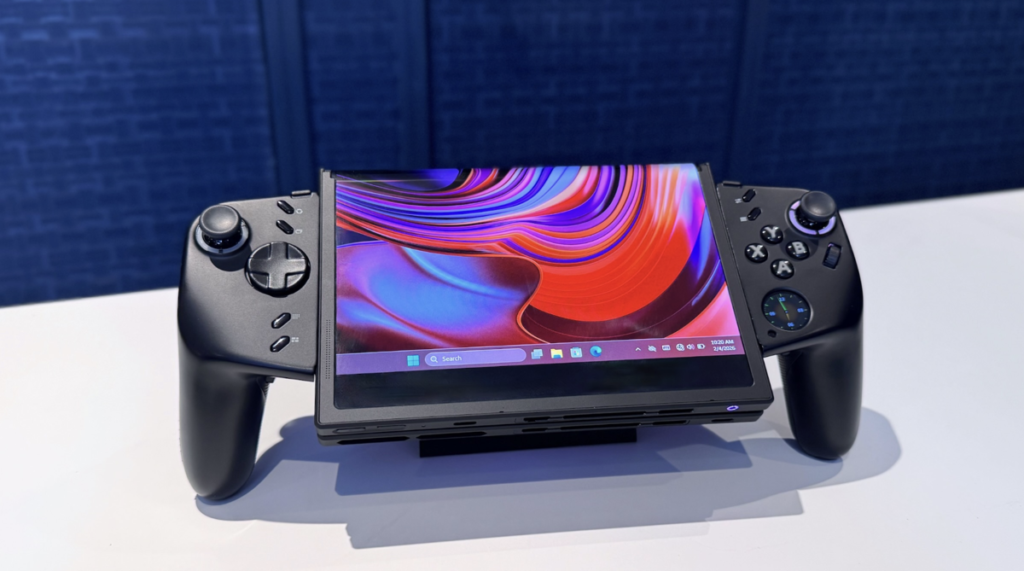
Table of Contents
A High-Stakes Hardware Blitz in Barcelona
Lenovo is not playing it safe at Mobile World Congress 2026. Following a dominant showing at CES earlier this year, the PC giant has arrived in Barcelona with a portfolio that blends aggressive product refreshes with high-concept moonshots. The centerpiece of the exhibition is a series of six prototypes that suggest Lenovo is attempting to redefine the form factor of the modern computer, moving away from the static slab and toward modular, foldable, and spatial hardware.
While the company is rolling out a massive volume of traditional laptops and tablets, the real narrative here is the tension between product utility and experimental design. From a gaming handheld that unfolds into a workstation to a laptop that allows users to swap ports on the fly, Lenovo is signaling a shift toward a more sustainable, adaptable ecosystem of devices.
The Legion Go Fold: Bridging the Handheld-Laptop Gap
The most talked-about reveal is the Legion Go Fold Concept. While leaks had already hinted at its existence, the physical prototype confirms a highly ambitious design: a 7.7-inch POLED display that unfolds into a massive 11.6-inch canvas. This allows the device to pivot between a traditional handheld gaming mode and a productivity-focused tablet or laptop layout.
Unlike many concepts that lack meaningful internals, the Legion Go Fold is surprisingly grounded in reality. It is powered by an Intel Lunar Lake chip paired with 32GB of RAM, suggesting that Lenovo is testing the thermal and power envelopes for a commercial release. The device also features a detachable wireless keyboard, effectively turning the handheld into a compact Windows clamshell. Notably, one of the controllers doubles as a vertical mouse, solving the awkward navigation issues typically associated with foldable screens.
Modularly Breaking the Cycle of Obsolescence
Perhaps more significant for the long-term health of the industry is the ThinkBook Modular AI PC Concept. In an era where laptops are increasingly glued together, Lenovo is experimenting with a design that mirrors the philosophy of Framework. The concept allows users to swap ports and peripherals via integrated pogo-pin connectors, ensuring the hardware can evolve as connectivity standards change.
The modularity extends to the display; the unit features a detachable secondary screen and keyboard, allowing the user to reconfigure their workspace on the fly. When paired with the “Space Frame” design seen in the ThinkPad X1 Carbon Gen 14 Aura Edition, it’s clear that Lenovo is pivoting toward a narrative of repairability and longevity to combat electronic waste.
Spatial Computing and AI Desk Companions
Lenovo is also doubling down on visual innovation with the Yoga Book Pro 3D Concept. Aimed at creators, the dual-display OLED machine uses advanced eye-tracking to render glasses-free 3D objects. To make the experience tactile, Lenovo added snap-on pads to the lower touchscreen that trigger specialized 3D menus, effectively turning the laptop into a spatial workstation powered by an Nvidia GeForce RTX 5070.
Rounding out the concept list are two AI-centric desktop peripherals: the AI Work Companion and the AI Workmate. The former acts as a discreet productivity hub and burnout monitor, while the Workmate—a lamp-like device with a facial screen—handles local AI processing for document summarization and spatial projections. These devices represent Lenovo’s attempt to move AI out of the browser and into physical, ambient hardware.
The Production Line: Yoga 9i and Enterprise Shifts
Beyond the prototypes, the Yoga 9i 2-in-1 Aura Edition leads the consumer charge. Updated with an Intel Core Ultra Series 3 chip and a redesigned chassis that brings back the headphone jack, it will retail for $1,949 starting in May. The device introduces a new Canvas mode via a magnetically attached Yoga Pen Gen 2.
On the enterprise side, the 2026 T-Series ThinkPads have been overhauled with a focus on maintenance. Every T-Series model now features a more repairable internal architecture and upgraded 5MP cameras, acknowledging the permanent shift toward hybrid work where video conferencing quality is non-negotiable.


