AMD Plays the Long Game at Computex 2026: New X3D Silicon and a Bold AM5 Commitment
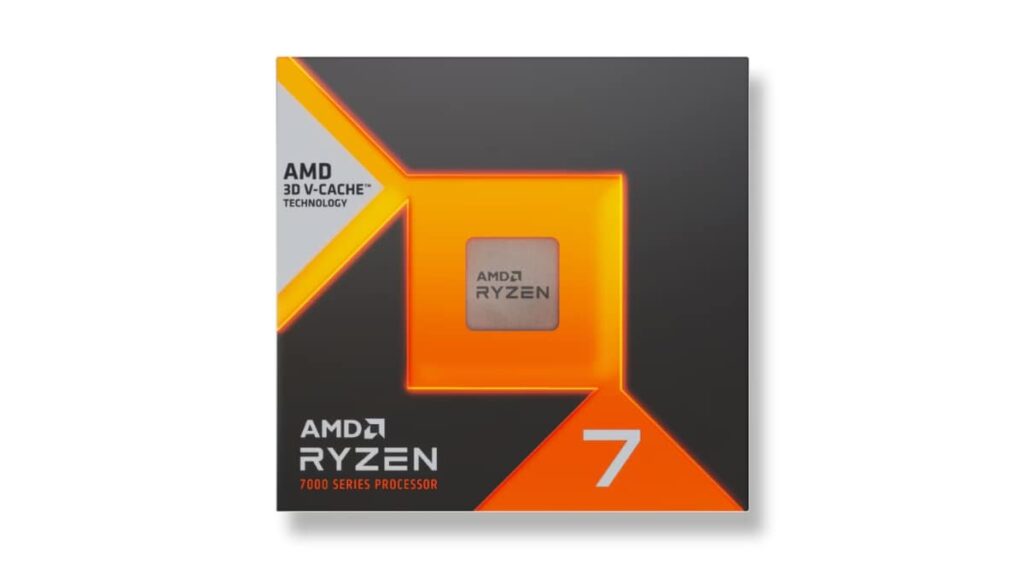
Table of Contents
The AM5 Longevity Play
While the tech industry typically moves in two-year cycles of planned obsolescence, AMD is attempting to rewrite the script. During its Computex 2026 keynote, the company didn’t just announce new silicon; it issued a strategic commitment to the AM5 platform, promising support through 2029. For builders, this is a direct shot at the volatility of motherboard transitions, effectively telling consumers that their current high-end boards won’t be e-waste by the time the next generation of Zen architecture hits the market.
This move mirrors the legendary success of the AM4 socket, which sustained a decade of growth and became the gold standard for consumer upgradability. By extending AM5, AMD is betting that stability and long-term ROI will lure enthusiasts away from Intel’s more frequent socket shifts.
Filling the X3D Gap
The centerpiece of the hardware reveal is the Ryzen 7 7700X3D. For several generations, AMD’s 3D V-Cache technology—which stacks additional L3 cache vertically to boost gaming performance—was largely reserved for the top-tier Ryzen 9 or the specific Ryzen 7 7800X3D. The introduction of the 7700X3D suggests a push to democratize the X3D advantage, offering a more accessible entry point for gamers who want the latency benefits of V-Cache without paying the premium for a flagship 16-core chip.
Accompanying the CPU launch is a push for tighter system tuning. AMD introduced new EXPO memory profiles featuring Ultra Low Latency (ULL) support. While memory timings are often viewed as a niche concern for overclockers, the integration of ULL profiles into the BIOS aims to squeeze marginal gains in 1% low frame rates, which is where the actual “feel” of gaming smoothness is determined.
GPU Strategy: The Radeon RX 9070 GRE
On the graphics front, AMD is doubling down on the “Golden Rabbit Edition” (GRE) branding with the Radeon RX 9070 GRE. The GRE series has historically served as a bridge—offering high-end performance at a price point that undercuts the flagship cards. The RX 9070 GRE is positioned to compete in the high-refresh 1440p and entry-level 4K market, focusing on raw rasterization performance to compete with NVIDIA’s mid-to-high range offerings.
Industry analysts suggest that by refining the GRE line, AMD is attempting to capture the “sweet spot” of the enthusiast market: users who want professional-grade power but aren’t willing to spend $1,600 on a top-of-the-stack GPU.
A Nod to the Past: The 5800X3D Anniversary
In a rare move of nostalgia-driven hardware, AMD unveiled the Ryzen 7 5800X3D 10th Anniversary Edition. It is an unusual product—a re-release of a legendary chip for a platform (AM4) that is technically in its twilight years. Priced at $349, this edition isn’t meant for those building new systems from scratch, but rather as a “final upgrade” path for the millions of users still clinging to their B450 or X570 motherboards.
To lean into the collector’s aspect, the anniversary chip bundles Carbice Ice Pad thermal interface material, a nod to the high-thermal demands of the 3D V-Cache architecture. The product will officially hit shelves on June 25.
Quick Specs and Availability
| Product | Platform | Key Feature | Availability |
|---|---|---|---|
| Ryzen 7 7700X3D | AM5 | 3D V-Cache | TBA |
| Radeon RX 9070 GRE | PCIe 5.0 | High-Efficiency Rasterization | TBA |
| Ryzen 7 5800X3D (Anniv.) | AM4 | Collector’s Bundle | June 25 |


