Sledgehammers vs. Sensors: Belfast Photo Festival Sparks Outrage Over ‘Camera Obsolete’ Exhibition
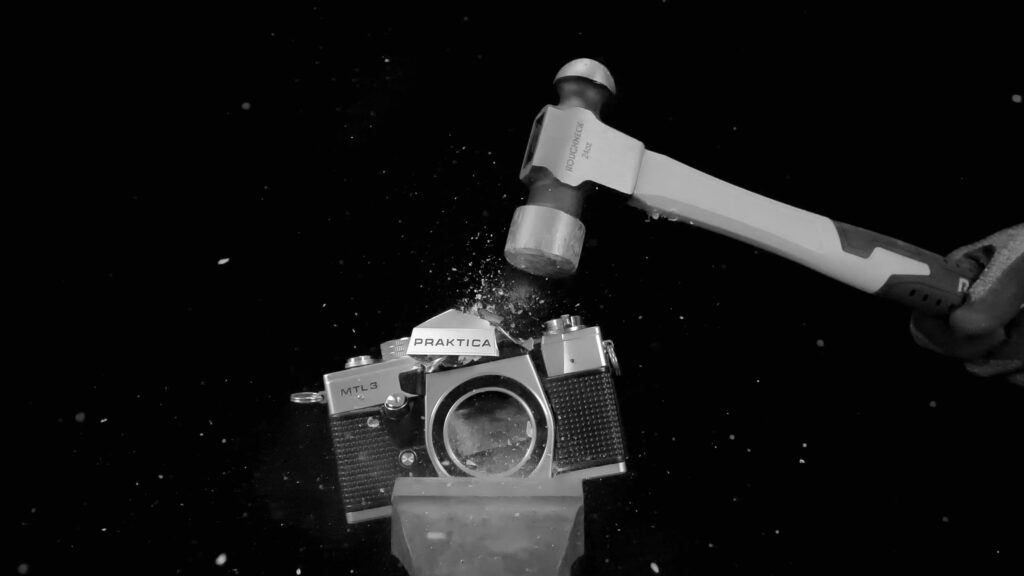
Table of Contents
A Provocation in Plastic and Glass
The Belfast Photo Festival has long been a hub for visual storytelling, but its latest installation, Camera Obsolete, is shifting the focus from the image to the instrument. In a move that has polarized the global photography community, the exhibition offers visitors a stark choice: smash a camera to pieces, carefully dismantle it, or pay a small fee to ‘rescue’ the device from destruction.
Toby Smith, the festival’s director of development and fundraising, frames the installation as a necessary confrontation. The goal, according to Smith, is to disrupt the seamless transition into a computational era. As generative AI and AI-powered imagery begin to decouple the ‘photograph’ from the physical act of capturing light, the exhibition seeks to remind participants of the mechanical reality of the medium before it is entirely eclipsed by algorithms.
However, the reaction from enthusiasts and professionals has been swift and largely negative. To many, the act of destroying functioning hardware—regardless of its age—is an affront to the craft and a waste of perfectly viable equipment that could serve collectors or students.
The Inventory of the Doomed
The hardware targeted for destruction isn’t limited to junk-bin electronics. The ‘sacrifice’ list includes a diverse array of mechanical and digital history: Ricoh 35mm rangefinders, robust Soviet-era Zenits, and early-2000s digital workhorses like the Canon EOS 300D. Even several Pentax models from a decade ago are slated for the mallet.
The presence of these specific models highlights a uncomfortable truth about the tech industry’s lifecycle. The Canon EOS 300D, released in 2006, was once a pinnacle of consumer digital technology. Its current status as ‘disposable’ in the eyes of the exhibition organizers illustrates the aggressive pace of tech churn. This cycle of planned obsolescence ensures that hardware becomes a relic not because it stops working, but because the software and sensor specifications no longer meet the perceived needs of the market.
This trajectory suggests a precarious future for current flagship gear. If a decade-old Pentax is considered obsolete enough to be smashed for art, the same fate could realistically await a Sony A7R VI or a Nikon Z9 in ten years, as AI-driven autofocus and computational processing render current hardware specs irrelevant.
Art Waste or Artistic Statement?
The exhibition isn’t simply about destruction; it is about transformation. Smith noted that the wreckage generated by visitors will be integrated into a large-scale sculpture. The festival organizers are currently in discussions with the Belfast Botanic Gardens to house this installation for the next 50 years, turning a pile of e-waste into a permanent monument to the transition from mechanical to digital imaging.
Despite the conceptual ambition, the exhibition raises critical questions about the environmental cost of the ‘bigger and better’ mentality. The production of these cameras requires the extraction of rare earth minerals and creates a significant carbon footprint, only for the devices to be replaced every three to four years by manufacturers chasing marginal gains in megapixels or ISO range.
The Modular Alternative
The controversy surrounding Camera Obsolete underscores a growing demand for a shift toward modularity in high-end electronics. Rather than the current model—where a new sensor necessitates a completely new chassis and circuit board—the industry has yet to embrace a retrofit culture. A modular approach would allow users to upgrade a sensor or a processor without discarding the entire physical unit, mirroring the longevity seen in high-end mechanical watches or professional audio gear.
While the Belfast Photo Festival intends to stoke the fire of mechanical photography to keep it from being extinguished by generative AI, the method of using destruction as a catalyst is a gamble. By promoting the smashing of tools, the exhibition may be inadvertently mirroring the very culture of disposability it claims to critique.


