The Propulsion Problem: Why ‘Golden Dome’ Depends on Commercial Space Agility
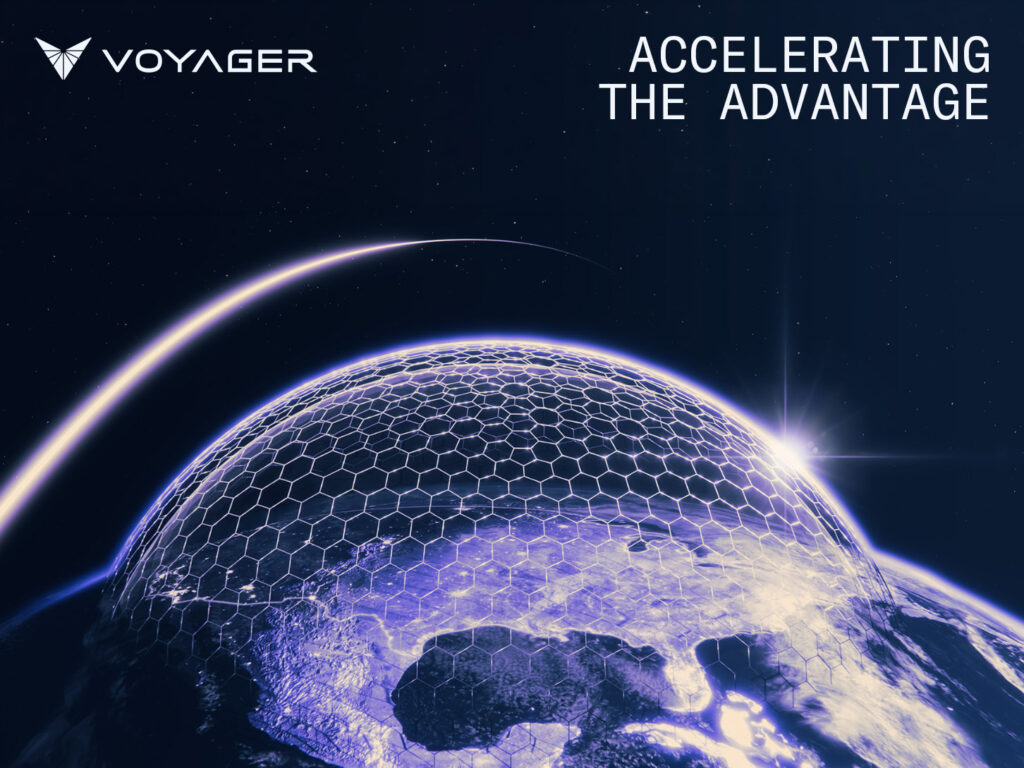
Table of Contents
A Shift in the Calculus of Space Warfare
For decades, the logic of missile defense has been a linear progression: detect, track, and intercept. However, the emerging ‘Golden Dome’ architecture is fundamentally altering that equation. Rather than focusing solely on the kill-vehicle’s final approach, the initiative is pivoting toward the distributed infrastructure that supports it, placing a premium on one often-overlooked variable: propulsion.
The vision for Golden Dome is ambitious and structurally complex. It proposes a constellation of thousands of satellites, integrating sensors and interceptors that would mark a significant shift in U.S. orbital capabilities. By pairing these assets with space-based data centers and AI-driven command-and-control networks, the U.S. aims to create a responsive, cross-domain shield. But a network of a thousand satellites is a liability if those satellites are static targets.
In a contested space environment, the ability to reposition rapidly is no longer a luxury—it is a survival requirement. If an adversary can predict a satellite’s orbit, the most advanced sensor in the world becomes irrelevant. This is where the ‘propulsion imperative’ enters the frame.
Maneuverability as a Defense Mechanism
The operational demands of Golden Dome require a level of agility that traditional satellite propulsion—often designed for simple station-keeping—cannot provide. Satellites must be able to dodge threats, shift orbital planes to cover gaps in the network, and maintain operational continuity while under pressure.
“There’s a clear signal from the government that they want to tap into commercial innovation for Golden Dome,” says Matt Magaña, president of Space, Defense and National Security at Voyager. According to Magaña, the initiative represents a strategic thrust designed to drive specific capabilities that the traditional defense industrial base has historically struggled to produce at speed.
The technical challenge is two-fold. First, interceptors require high-thrust, precise control during the final seconds of an engagement, where a millisecond of lag or a slight deviation in trajectory results in a total mission failure. Second, the parent satellites require high-efficiency electric propulsion to sustain long-term orbital agility without exhausting their fuel reserves in a few months of maneuvering.
The Industrialization of Orbit
The most significant hurdle for Golden Dome isn’t necessarily the physics of propulsion, but the economics of scale. Moving from a few dozen experimental satellites to a constellation of thousands requires a fundamental shift in how space hardware is manufactured.
Voyager is attempting to address this by treating propulsion as foundational infrastructure rather than a bespoke component. By leveraging controllable solid propulsion technologies and scalable electric systems, the goal is to close the gap between conceptual architecture and operational tempo. As Magaña notes, Golden Dome only becomes a reality if the industry can deliver at a pace that matches the threat environment.
This transition mirrors the broader trend seen in the commercialization of low earth orbit (LEO), where companies like SpaceX have proven that mass production of satellites is possible. However, defense-grade propulsion carries stricter tolerances and higher reliability requirements than consumer broadband hardware.
Beyond the Interceptor
While the headlines often focus on the ‘intercept’ part of missile defense, the success of Golden Dome will likely be decided by the supporting software and hardware. The system requires a seamless fusion of sensor data and real-time tracking algorithms, all managed by AI that can make decisions faster than a human operator could.
Yet, all those digital capabilities are tethered to the physical reality of the vehicle. Without propulsion systems engineered for endurance and responsiveness, the AI’s commands are meaningless. The satellite cannot go where the algorithm tells it to go, and the interceptor cannot adjust to a dodging target.
As Golden Dome moves toward deployment, the focus is shifting from what can be detected to how the system survives the encounter. For the U.S. space force and its commercial partners, the race is no longer just about the shield, but about the engines that keep the shield in place.


