Beatbot Tries to Solve the ‘Pool Maintenance Paradox’ With New AI-Driven Cleaning Fleet
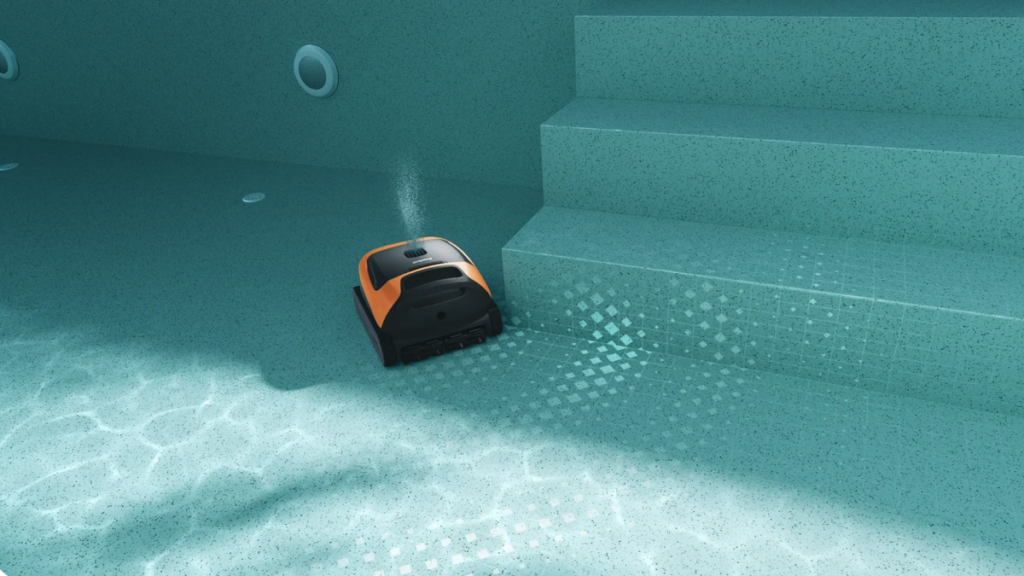
Table of Contents
The Shift Toward Autonomous Pool Care
For decades, pool ownership has been defined by a frustrating paradox: the luxury of a private oasis balanced against the tedious, manual labor of skimming and vacuuming. While basic robotic vacuums have existed for years, they have largely functioned as “dumb” devices—randomly bouncing off walls in a hope-and-pray approach to coverage. Beatbot is attempting to shift this dynamic, moving away from random patterns toward a more intentional, sensor-driven ecosystem of surface and floor maintenance.
The company’s current strategy focuses on three distinct tiers of automation, ranging from entry-level cordless units to high-end flagship models that utilize advanced spatial mapping to ensure no corner of the pool is left untouched. This move mirrors a broader trend in home robotics—similar to how iRobot transitioned from basic vacuuming to Roomba’s precision mapping—bringing a level of technical rigor to the aquatic environment that has historically been overlooked.
Precision Navigation and the AquaSense X
At the top of the hierarchy is the AquaSense X, which represents the company’s push into flagship-level engineering. Unlike the Sora series, which serves as a cordless entry point for those transitioning away from tethered cleaners, the AquaSense X is designed for users who view their pool as a technical challenge to be solved. The device leverages high-performance all-zone coverage and a more sophisticated navigation stack, reducing the “dead zones” typically found in the curved corners of residential pools.
From a technical standpoint, the AquaSense X aims to eliminate the redundancy of overlapping paths, which not only saves battery life but ensures a more consistent clean. Currently priced at $3,999 during their anniversary promotion (down from $4,250), the device positions itself as a premium appliance for the “tech-head” demographic, prioritizing precision and automation over simple accessibility.
The Solar Gamble: iSkim’s 24/7 Approach
While the AquaSense X handles the deep cleaning, the iSkim addresses the most constant nuisance of pool ownership: surface debris. Most robotic skimmers suffer from a critical flaw—battery anxiety. The iSkim attempts to solve this by integrating a 24W solar panel paired with a 10,000 mAh battery. This allows the unit to operate nearly continuously, targeting the surface of the water before organic matter sinks and becomes a floor-cleaning problem.
The hardware is bolstered by a 9L filter basket, a significant capacity increase that reduces the frequency of manual emptying. By combining solar energy with a high-volume inlet, the iSkim functions less like a gadget and more like a permanent utility. Priced at $419 (discounted from $499), it represents a lower barrier to entry but offers a high-impact result for those dealing with heavy foliage or wind-blown debris.
Market Positioning and the Path Forward
Beatbot’s current portfolio reflects a calculated tiered approach. The Sora series captures the mass market of first-time robot adopters, while the AquaSense X and iSkim target the high-end and high-utility segments respectively. This strategy acknowledges that not every pool owner needs a $4,000 mapping robot, but every owner wants a way to stop spending their Saturday mornings with a handheld net.
As AI integration becomes more commonplace in consumer electronics, the next step for these devices will likely involve smarter sensor arrays that can detect specific types of algae or debris clusters in real-time. For now, the current fleet offers a glimpse into a future where the “maintenance” part of pool ownership is finally relegated to the background, handled by a coordinated swarm of solar and sensor-driven machines.


