The End of the Glue-In Era: How EU Mandates are Forcing a Battery Renaissance
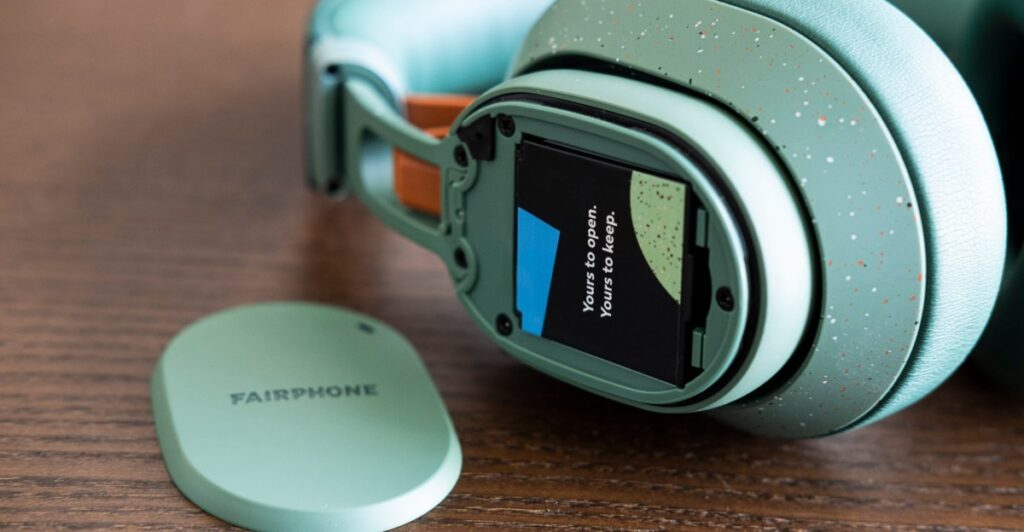
Table of Contents
The Regulatory Pivot Toward Longevity
For over a decade, the trend in consumer electronics has been toward seamless, airtight chassis—often achieved by gluing batteries deep into the motherboard, effectively turning a degraded cell into a death sentence for the entire device. However, a massive shift in design philosophy is now being mandated by the European Union through two critical pieces of legislation that aim to dismantle this “throwaway” culture.
Commission Regulation (EU) 2023/1670 has already begun targeting smartphones and tablets. But the broader impact arrives with Regulation (EU) 2023/1542, which takes full effect by February 18, 2027. Unlike previous guidelines that were often vague, these rules are explicit: users must be able to remove and replace batteries using basic tools or specialized tools provided for free. Furthermore, manufacturers must ensure compatible spare batteries are available on the market for at least five years.
This is not merely a suggestion for a ‘repair mode.’ It is a structural requirement. While the law doesn’t demand a return to the plastic snap-on backs of 2012-era smartphones, it prohibits the use of permanent adhesives that require heat guns and chemical solvents to overcome. If a user can’t swap a battery with a few standard screws, the product may find itself banned from the European market.
The Waterproofing Loophole
The transition isn’t without its friction. A significant point of contention lies in the interaction between repairability and ingress protection (IP) ratings. Under the current framework, if a smartphone or tablet maintains an IP67 rating and its battery retains 80% capacity after 1,000 charging cycles, the EU allows battery replacement to remain restricted to professional repairers.
Essentially, the EU has created a high-bar performance exemption: if a company can prove their battery is exceptionally durable and the device is sufficiently waterproof, they can avoid the user-replaceable mandate. However, this hasn’t stopped the momentum of the Right to Repair movement. Organizations like Right to Repair Europe continue to push back against further exemptions, particularly regarding wearables. While industry lobbyists argue that smartwatches and fitness trackers are too small for safe user-servicing, advocates point to the Pixel Watch 4 as evidence that modularity is possible even in miniature form factors.
From Niche to Mainstream
While most of the industry is scrambling to adapt, some players have already spent years treating repairability as a competitive advantage. Fairphone, the Dutch social enterprise, has long been the poster child for this movement. Their latest offerings, including the Fairphone 6 and the Fairbuds, demonstrate that high-performance audio and telephony can coexist with a chassis that can be disassembled in minutes.
“Our current products already match and even exceed these upcoming requirements,” Fairphone CEO Raymond van Eck stated, noting that the company actively collaborated with EU regulators to prove that a circular economy is technically viable. For Fairphone, legal compliance is a baseline; for the rest of the industry, it is a disruptive hurdle.
The ripple effects are already appearing in unexpected product categories. Sennheiser’s Momentum 5 headphones and Fender’s Mix headphones now feature battery access points that require only a Phillips-head screwdriver—a stark departure from the industry standard of soldering cells directly to the PCB. Beyond audio, leaks and code snippets suggest that Amazon is eyeing user-replaceable batteries for its Kindle lineup, and rumors persist that Nintendo’s successor to the Switch may adopt a removable battery specifically for the European SKU.
The Risk of Regional Divergence
The looming 2027 deadline creates a precarious situation for global supply chains. Manufacturers face a choice: redesign their global hardware to meet the strictest standard (the EU), or create regional variants. The latter path is risky and costly, potentially leaving North American and Asian consumers with “disposable” versions of products that their European counterparts can service at home. As the deadline approaches, the industry must decide if the cost of redesigning the internals of their gadgets is higher than the cost of fundamentally changing their business model from planned obsolescence to long-term ownership.


