DJI Osmo Pocket 4 Leaks Suggest a Two-Tier Strategy and Professional-Grade Slow Motion
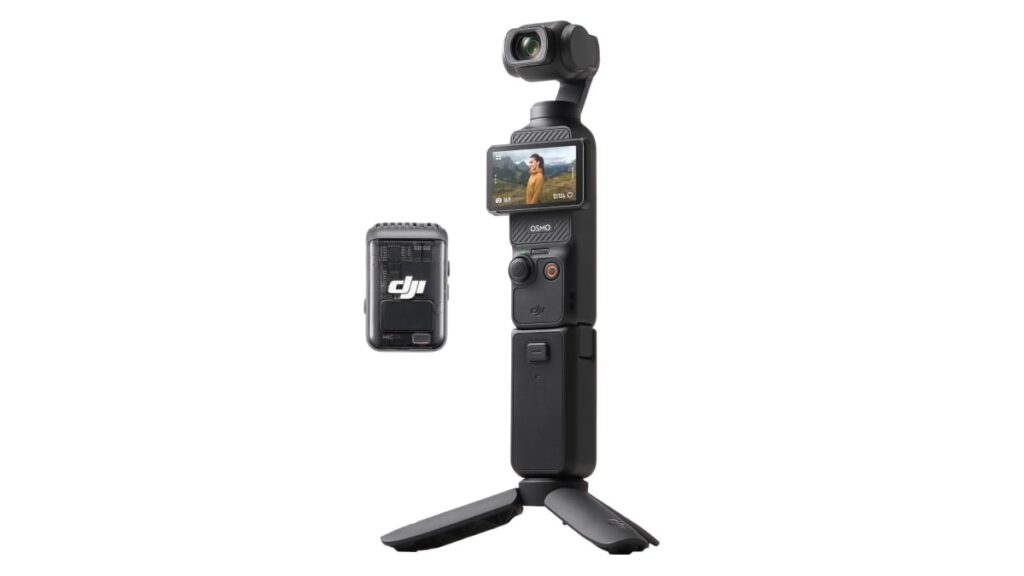
Table of Contents
A shift toward professional-grade stability
The vlogging landscape is increasingly defined by the tension between portability and image quality. For years, DJI has dominated this niche with the Osmo Pocket series, but the upcoming launch of the Osmo Pocket 4—slated for this Thursday—looks to be less of an iterative update and more of a strategic pivot. Leaked renders and specifications shared on X by tipster Igor Bogdanov (@Quadro_News) suggest that DJI is moving toward a tiered product line, potentially introducing a ‘Pro’ variant to capture the high-end creator market.
While the Osmo Pocket 3 was widely praised for its transition to a 1-inch sensor, the Pocket 4 appears to be doubling down on that hardware foundation while pushing the boundaries of frame rates. The most striking detail in the leaks is the mention of 4K 240fps support. For context, this would allow creators to capture ultra-high-definition slow motion that remains fluid and crisp, a feature typically reserved for high-end cinema cameras or specialized action cams like the GoPro Hero series, though often with significant cropping or resolution compromises.
The ‘Pro’ variable
The appearance of a DJI Osmo Pocket 4 Pro in the leaked imagery is the most significant narrative shift. Until now, the Pocket series has existed as a single-model flagship. By introducing a Pro version, DJI may be attempting to segment its audience: the standard model for casual creators and a Pro model for production houses or professional videographers who require better thermal management and perhaps more robust internal storage or connectivity options.
If the Pro model follows the pattern of DJI’s drone lineup, we can expect it to feature upgraded internals—possibly a more efficient processor to handle the massive data throughput of 4K 240fps—and perhaps a refined gimbal mechanism for even more precise tracking in high-wind environments. The base model will likely retain the core 1-inch sensor, ensuring that the entry barrier for high-quality low-light footage remains low.
Expanding the ecosystem
Beyond the chassis and sensor, the leaks highlight a comprehensive accessory ecosystem that suggests DJI wants the Pocket 4 to be a complete production kit rather than just a camera. The images show an extensive bundle that goes beyond the standard ‘Creator Combo’ seen in previous generations. This includes a hard-shell case, a padded zip case, and a dedicated battery extension—a critical addition for those filming long-form content without a power bank.
Integration with the DJI Mic 2 system remains a focal point. The leaked bundle includes the transmitter, windscreens, and a clip magnet, signaling that seamless audio integration is still the primary value proposition for the Pocket line. A wide-angle lens and a magnetic fill light also appear in the renders, suggesting that DJI is continuing to lean into modularity, allowing users to swap optics and lighting without needing to buy entirely different gear.
Contextualizing the competition
This aggressive spec bump arrives at a critical time. With smartphones continuing to improve their computational videography and the Insta360 X-series carving out a space for immersive 360-degree content, DJI is focusing on the ‘invisible’ quality of the footage—natural bokeh and genuine mechanical stabilization. By targeting 4K 240fps and potentially splitting the line into standard and Pro models, DJI is effectively telling the market that a gimbal-stabilized camera is still the superior choice for narrative storytelling over the electronic stabilization found in iPhones or Pixels.
Official confirmation is expected this Thursday, where we will likely see how DJI differentiates the two models and whether the Pro version commands a significant price premium.


