Thermal Cognitive Decline: How Rising Temperatures Are ‘Muddling’ Animal Intelligence
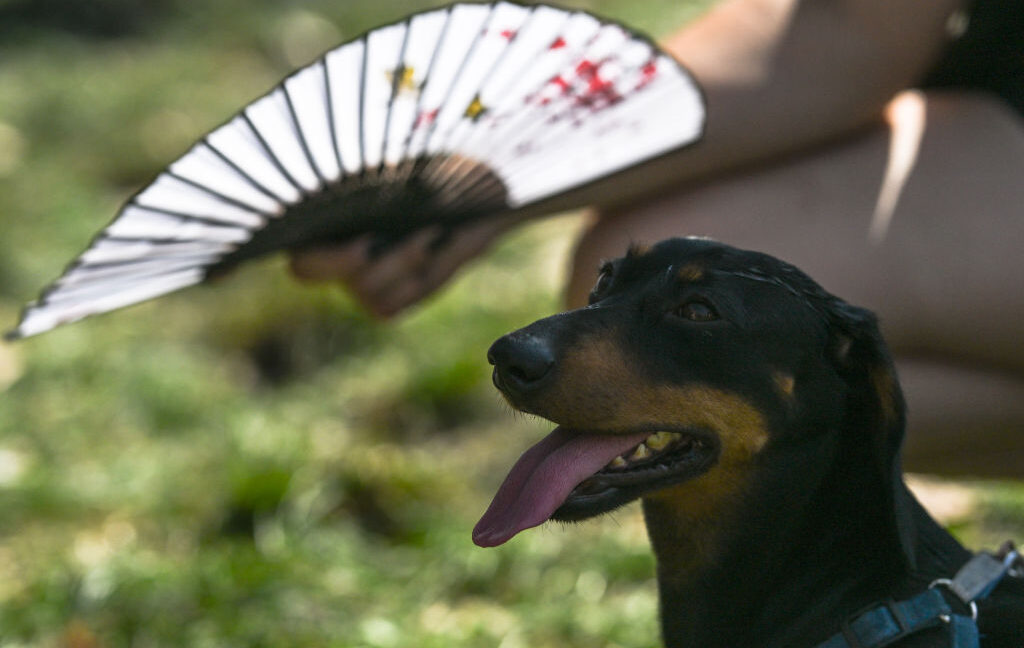
Table of Contents
The ‘Stupid Hot’ Threshold
In the scrublands of South Africa, the southern pied babbler—a medium-sized, black-and-white bird—usually demonstrates a keen ability to navigate simple obstacles to reach food. However, recent behavioral experiments have revealed a stark cognitive shift when temperatures spike. On cooler days, these birds easily identify that a transparent plastic barrier protecting mealworms can be bypassed by simply walking around it. But as the mercury rises, the birds lose this problem-solving capacity, stubbornly pecking at the impenetrable plastic in a repetitive loop of failure.
This isn’t an isolated instance of animal frustration. It is part of a burgeoning body of evidence suggesting that extreme heat induces a state of cognitive ‘muddle’ across various species. From songbirds to domestic dogs and mountain goats, the ability to learn, remember, and regulate aggression appears to degrade as environmental temperatures climb.
Neural Friction and Behavioral Shifts
For behavioral ecologist Amanda Ridley of the University of Western Australia, these findings represent a critical threat to survival. When an animal loses the cognitive agility to find food or detect a predator, its survival probability drops precipitously. In an era of accelerating climate change, where heat waves are becoming more frequent and intense, this impairment could trigger a cascade of ecosystem failures.
The physiological mechanisms are varied. Some species employ active cooling to protect their neural functions. Emily Baird, a neuroscientist at Stockholm University, notes that bees frequently splash water on their faces mid-flight to achieve convective cooling for their brains. Other animals, such as various bird species, are forced into a trade-off: they cease foraging and singing, instead spending hours panting with open beaks or retreating to burrows, effectively sacrificing caloric intake for thermal regulation.
The Aggression Correlation
Heat doesn’t just dull the mind; it often heightens volatility. A 2023 study analyzing nearly 70,000 dog-bite reports across eight U.S. cities—including Chicago and Baltimore—found that incidents were 10% more likely on a 90°F day compared to a 60°F day. While the researchers controlled for seasonal activity, they couldn’t definitively separate whether the dogs were more aggressive or if the humans, equally stressed by the heat, were more provocative.
This pattern extends to the wild. In the Italian Apennine Mountains, researchers monitoring chamois (goat-like mammals) discovered that as temperatures rose from 54° to 64°F, aggression spiked. The animals became hyper-territorial over dwindling patches of protein-rich vegetation, escalating from threatening postures to physical attacks. Projections suggest that if current warming trends continue, chamois aggression could increase by 50% by 2080.
Similar behavioral degradation is seen in aquatic environments. The golden julie, a small tropical fish, typically shows mild hostility toward its own reflection in a mirror. However, when water temperatures rise from 78°F to 84°F, the fish becomes significantly more aggressive, attempting to physically attack the glass.
The Learning Gap
The most concerning data points involve the ability to acquire new information. In experiments conducted by Ridley’s team, pied babblers were tasked with identifying which of two colored lids hid a mealworm. During heat waves, the birds required twice as many attempts to learn the pattern compared to those in cooler conditions.
Similarly, evolutionary biologist Elizabeth Derryberry of the University of Tennessee, Knoxville, observed zebra finches struggling with a transparent tube. Rather than figuring out how to extract a mealworm through the opening, the heat-stressed birds repeatedly pecked at the side of the tube—a behavior Derryberry describes as the avian equivalent of banging one’s head against a brick wall.
These cognitive lapses suggest that thermal stress creates a ceiling for intelligence. If pollinators cannot remember floral patterns or predators cannot coordinate hunts, the biological machinery of the planet begins to stall, proving that in a warming world, a sharp mind is the most essential tool for survival.