Acer Predator Atlas 8 Debuts with Intel’s First Custom Handheld Silicon
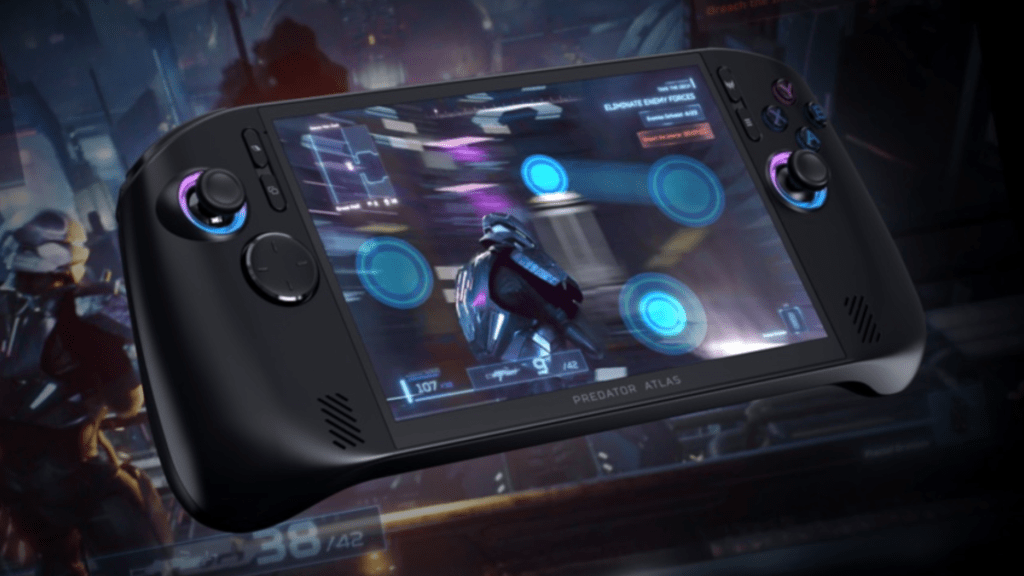
Table of Contents
A New Play for Silicon Sovereignty
Acer has officially entered the high-end handheld fray at Computex 2026 with the unveiling of the Predator Atlas 8. While the company has previously toyed with the handheld form factor via the more budget-oriented Nitro Blaze series, this is the first time Acer has attached its premium Predator branding to a portable device. The move signals a shift in strategy: Acer isn’t just looking to fill a price gap, but to compete directly with the heavy hitters like the Steam Deck OLED and the Lenovo Legion Go.
The most critical component of the Atlas 8 isn’t the chassis or the screen, but the silicon. The device debuts the Intel Arc G3 Extreme, a chip based on the Panther Lake/Core Ultra 3 architecture. This represents a pivotal moment for Intel; it is their first genuine attempt at a custom-designed chip tailored specifically for handhelds, intended to break the stranglehold AMD has maintained with its Ryzen Z series.
Decoding the G3 Architecture
Under the hood, the Arc G3 Extreme is configured with two performance cores, eight efficiency cores, and four low-power E-cores. For those opting for the standard (non-Extreme) model, Intel has trimmed the fat slightly, removing two efficiency cores. The graphics side of the equation is where the battle will be won or lost. Intel claims the G3 Extreme delivers Arc B390-level integrated graphics, while the standard version scales down to the B370. Both variants support Intel XeSS 3 upscaling, a necessary inclusion for maintaining playable framerates at 1200p.
Intel’s track record in this space is mixed. The MSI Claw, the most prominent Intel-powered handheld to date, struggled to find an audience due to inconsistent battery life and performance that didn’t quite hit the mark compared to AMD’s offerings. The Atlas 8 is essentially a litmus test for whether Panther Lake can solve the efficiency-to-power ratio that has plagued Intel’s previous portable efforts.
Premium Specs in a Crowded Market
The Atlas 8 doesn’t skimp on the hardware. It features an 8-inch IPS display with a 1200p resolution and a 120Hz refresh rate, positioning it as a high-fidelity alternative to the 7-inch or 8-inch panels found in competitors. On the input side, Acer has opted for Hall Effect analog triggers to combat the wear-and-tear common in gaming peripherals, though the company remained silent on whether the primary analog sticks utilize similar drift-resistant technology.
Internally, the Atlas 8 is a powerhouse—and a potential budget-breaker. High-end configurations will ship with 24GB of RAM and 1TB of Gen 4 storage. Power is supplied by a substantial 80 watt-hour battery, though a 60 watt-hour option will likely be available for lower-tier models. The cooling solution is equally aggressive, featuring a dual-fan setup that includes a Predator AeroBlade metal fan to keep the G3 chip from throttling during intensive AAA sessions.
The Economics of Portability
Connectivity is modern, with two Thunderbolt 4 USB-C ports, Killer Wi-Fi 7, and a MicroSD card slot. However, the timing of the launch is precarious. Acer is targeting an October release, but the market environment has shifted. Valve recently brought the Steam Deck back into steady supply, while the high-end handheld segment—now including devices like the Legion Go 2—has seen prices climb significantly, sometimes pushing the $1,500 to $2,000 range.
The industry is currently grappling with a strange paradox: while there is a clear appetite for high-end handhelds that blur the line between a console and a gaming laptop, the cost of entry is becoming prohibitive. With memory and storage shortages continuing to fluctuate across the consumer PC market, the October window remains an ambitious target.
Ultimately, the Predator Atlas 8 is more than just a new gadget; it is a strategic gamble on Intel’s ability to pivot toward ultra-efficient gaming silicon. If the Arc G3 Extreme can deliver on its promises of power efficiency and raw performance, Acer might just carve out a permanent home in a market currently dominated by the Steam Deck and AMD.