Nintendo’s New Mobile Experiment ‘Pictonico!’ Turns Your Photo Gallery Into Chaotic Microgames
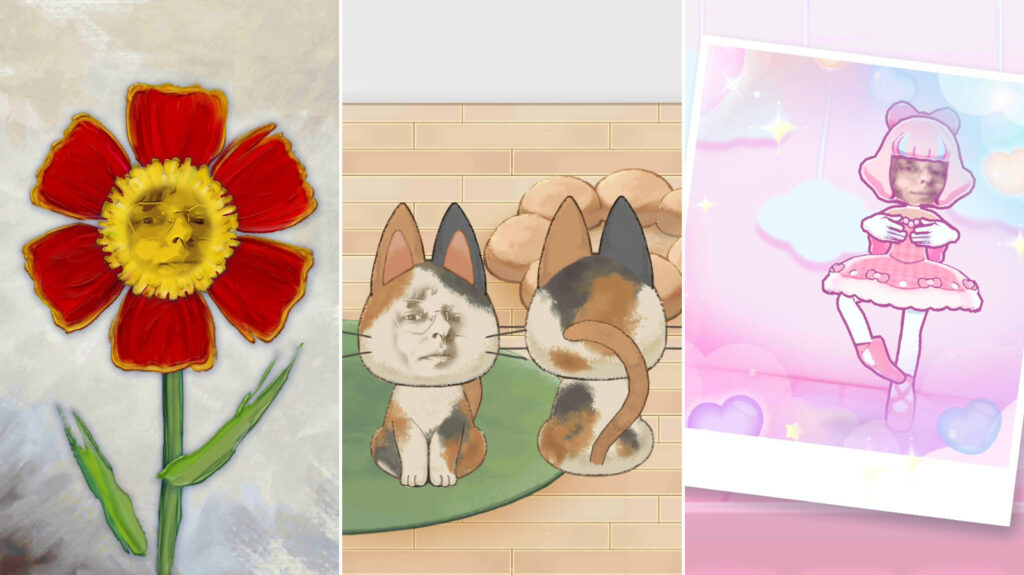
Table of Contents
A Surreal Twist on the Microgame Formula
Nintendo has a long history of experimenting with the boundaries of input and interaction, from the tactile chaos of WarioWare to the motion-heavy gimmicks of the Wii. Its latest foray into the mobile market, Pictonico!, takes this experimental spirit and applies it to the most personal piece of hardware we own: the smartphone camera roll.
At first glance, Pictonico! appears to be a spiritual successor to the WarioWare series—a rapid-fire collection of absurd, five-second challenges. However, the core hook is fundamentally different. Rather than using pre-rendered sprites, Pictonico! uses the photos in your gallery as the primary assets. By analyzing faces and shapes, the game transforms your friends, family, and pets into the protagonists of surreal digital vignettes.
The result is a game that feels deeply personal and occasionally unsettling. One moment you might be controlling a version of your own face with a nutcracker-style jaw, frantically chomping down objects to clear a level; the next, a loved one has been transformed into a flower whose petals must be plucked in a timed sequence. It is a bizarre intersection of personal memories and arcade nihilism that manages to be genuinely joyful.
The Technicality of Privacy and Local Processing
For many users, the requirement to grant a game access to their photo library is a significant friction point. In an era of pervasive data harvesting, giving an app permission to scan thousands of private images is a high-risk proposition. Nintendo addresses this by emphasizing local storage and on-device processing. According to the setup prompts, images are not uploaded to Nintendo servers or shared externally, which is a critical distinction for a game that thrives on the intimacy of a user’s gallery.
To further mitigate privacy concerns, the game allows users to select specific albums. This enables a ‘curated’ experience where users can create a dedicated folder of approved photos—or even non-human objects—to be used as game characters. While the face-detection AI is optimized for humans, it occasionally produces amusing results with inanimate objects; for instance, a potato that vaguely resembles a face can still be integrated into the gameplay loop.
For those who prefer not to dig through their archives, a ‘Snap & Play’ mode allows for real-time photo capture. When the app fails to find a usable face in a selected album, it defaults to a set of generic sample assets, such as snowmen or stuffed animals, to ensure the gameplay remains uninterrupted.
Monetization and Gameplay Loop
Nintendo is avoiding the predatory gacha mechanics common in modern mobile gaming, opting instead for a hybrid ‘demo-to-purchase’ model. While the initial download is free, the full experience is gated behind ‘Volumes.’ Volume 1, containing 20 stages, is priced at $8, while Volume 2 offers a smaller set of 12 stages for $6. Each stage requires the player to successfully navigate 10 microgames to progress.
The sensory experience is intentionally overwhelming. The game pairs bright, high-contrast visuals with a cacophony of arcade sounds and upbeat, frantic music. This environmental noise serves as a psychological pressure cooker, forcing players to rely on instinct rather than analysis. The cognitive load is high, leaving no room for hesitation—only reaction.
Pushing the Limit: Score Attack
For those seeking more than just a casual laugh, the ‘Score Attack’ tab introduces a tiered difficulty system:
- Normal: A standard progression where difficulty scales based on player performance.
- High-Speed: A faster tempo that tests raw reflex and reaction time.
- Danger Zone: A high-stakes mode where a single failure results in an immediate game over.
While Pictonico! may lack the long-term narrative depth of Nintendo’s console titles, its value lies in its social utility. It is less a solo time-killer and more of a party game for the digital age. By turning the people in the room into the stars of a chaotic digital circus, Nintendo has created a rare mobile experience that feels human, irreverent, and authentically weird.