Silicon Valley’s Nuclear Gamble: Can SMRs Solve the AI Energy Crisis?
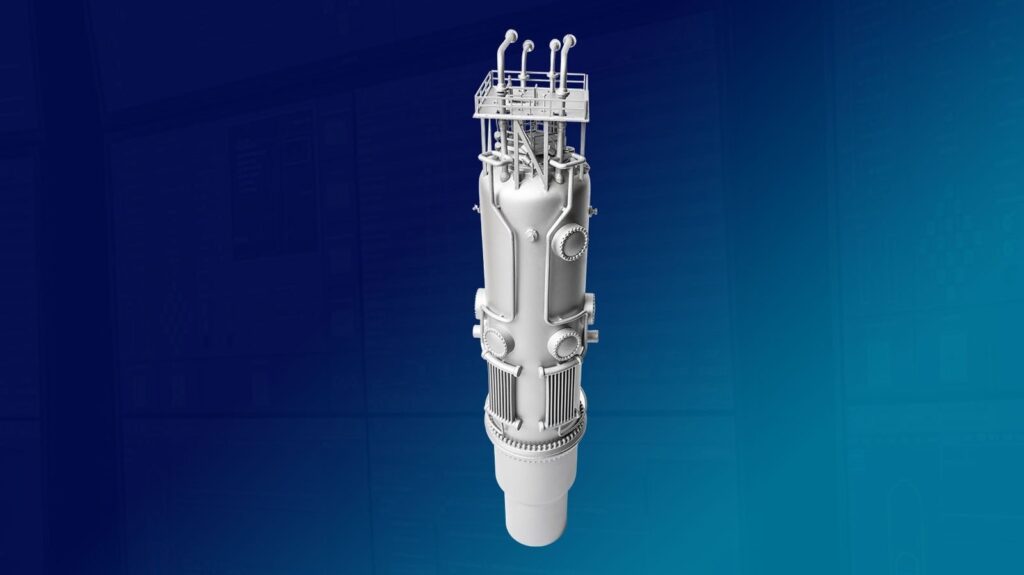
Table of Contents
The High-Stakes Pivot to Nuclear
For decades, the American nuclear industry has been defined by a paradox: immense theoretical potential hampered by a legacy of bureaucratic inertia and the lingering ghosts of Three Mile Island and Chernobyl. With the U.S. currently operating roughly 98 gigawatts of nuclear capacity, the expansion of the sector has largely stalled due to astronomical capital costs and a licensing process that often feels designed to discourage innovation.
That trajectory is now facing a violent correction. Driven by a federal push to reach 400 gigawatts by 2050, the current administration is treating nuclear energy not just as a utility, but as a national security imperative. At the center of this strategy are Small Modular Reactors (SMRs)—compact, factory-built units that promise to decouple nuclear power from the monolithic, multi-billion-dollar construction projects of the past.
AI’s Insatiable Appetite for Power
The urgency behind the SMR push isn’t just about carbon neutrality; it’s about the sudden, massive energy demands of the generative AI era. Data centers operated by the likes of Google, Meta, and Amazon are consuming electricity at a rate that threatens to outpace the grid’s capabilities. Wind and solar, while critical, struggle with the ‘baseload’ problem—they cannot provide the 24/7, high-density power required to keep thousands of H100 GPUs running.
This is why the ‘tech oligarch’ class has entered the fray. Bill Gates’ TerraPower and Sam Altman’s investments in Oklo represent a shift in strategy: moving away from massive centralized plants toward distributed energy. By utilizing microreactors, companies could theoretically place power sources closer to the data centers they fuel, bypassing the bottlenecks of an aging national grid.
Engineering a New Generation
SMRs are not a monolith; they represent several diverging technical paths. Light water reactors remain the most common, leveraging existing technology to supplement the grid. However, more exotic designs are gaining traction:
- High-Temperature Gas Reactors: Utilizing graphite moderators and helium coolant, these are geared toward heavy industrial processes.
- Molten Salt Reactors: These use liquid salts for both cooling and moderation, offering a high-efficiency profile for industrial settings.
- Sodium-Cooled Reactors: Replacing water with liquid metal allows for more efficient heat transfer and fuel consumption.
The primary selling point of these designs is “passive safety.” Unlike traditional plants that require active pumps and human intervention to prevent a meltdown, SMRs are designed to rely on natural laws—like gravity and buoyancy—to cool the core automatically if power is lost.
The Gap Between Vision and Reality
Despite the optimism and a $900 million federal investment fund, the operational reality is sobering. Currently, the only commercial SMR projects in active operation are located in Russia (the KLT-40S) and China (the HTR-PM). In the U.S., the industry is still largely hypothetical.
The ghost of NuScale looms large over the sector. The company’s ambitious project in Idaho was cancelled after costs ballooned to nearly three times those of wind and solar alternatives, raising a critical question: does the loss of economies of scale make SMRs inherently more expensive per megawatt? Critics argue that the perceived cost savings are a result of lowered safety requirements rather than genuine efficiency gains.
The Road to 2030
The momentum is now shifting toward specialized deployment. The U.S. military is currently the most aggressive adopter, with the Air Force and Army targeting operational SMR plants by 2027 and 2030, respectively. Even the maritime sector is eyeing the tech, with the Department of Transportation and MARAD exploring nuclear propulsion for commercial shipping.
A recent milestone arrived in May 2026, when the NRC found that the Dow and X-Energy project in Texas had “no significant” environmental impact. While it’s a small victory, it signals that the regulatory wall is beginning to crack. Whether these reactors can move from blueprints to the grid in time to save the AI boom remains the defining question of America’s energy future.


