Biological Warfare in the Undergrowth: New ‘Killer Fungus’ Offers Hope for UK Biodiversity
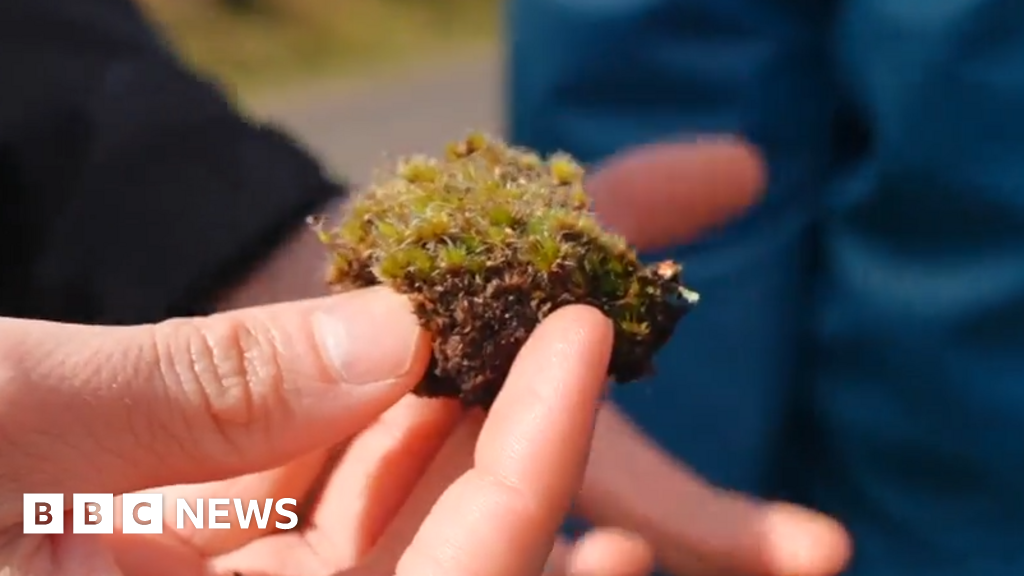
Table of Contents
A Natural Counter-Attack
In the quiet corners of the British countryside, a microscopic war is being waged that could signal a major turning point for the UK’s depleted biodiversity. Researchers have identified a new, aggressive species of fungus that is systematically dismantling the spread of heath-star moss, an invasive plant that has spent decades suffocating native habitats.
The discovery was not the result of a planned laboratory experiment, but rather the keen observation of Dr. George Greiff. While walking along a cliffside on the Isle of Wight four years ago, Greiff noticed unusual patches of decaying moss. Though the cause was initially elusive, the pattern repeated across different regions, leading to a multi-year investigation involving scientists from both the UK and France.
The culprit has been identified as a potent, previously unknown fungus now referred to as ‘moss die-back.’ For ecologists, the emergence of this pathogen is a rare instance of a native environment developing its own biological defense mechanism against an external invader.
The Invasive Threat of Heath-Star Moss
To understand why a ‘killer fungus’ is being celebrated, one must understand the damage caused by the heath-star moss. Believed to have arrived in Britain from the southern hemisphere around the 1940s, the moss expanded rapidly, becoming ubiquitous by 1990. It is an aggressively opportunistic species, capable of growing on everything from sand dunes and hillsides to tarmac.
The problem isn’t just the presence of the moss, but its efficiency at excluding other species. By forming dense, suffocating carpets, it pushes out native mosses—the very organisms that form the foundation of the UK’s most critical ecosystems, including carbon-sequestering peatlands and rare temperate rainforests.
“In the 1930s, native mosses would have been growing here instead,” Greiff noted while surveying the Bannau Brycheiniog national park in south Wales. In these heathlands, the displacement of native flora has led to localized extinctions, stripping the landscape of its natural resilience.
Technical Breakdown: A Relative of Ash Die-Back
The identification of the fungus required extensive DNA sequencing and microscopic analysis at the Amgueddfa Cymru museum in Cardiff. Under the microscope, the fungus appears as a cotton-like growth that balloons around the moss stem, eventually penetrating the cellular walls of the plant.
Interestingly, genomic analysis reveals that the moss die-back fungus is a close relative of the fungus responsible for ash die-back, which has devastated an estimated 80 million ash trees across Britain. While this kinship might raise alarms about potential cross-species contamination, Greiff’s current data suggests the fungus is highly specialized. So far, it appears to exclusively target heath-star moss, with only minimal impact on one other moss species.
The Efficacy of Biological Control
The discovery highlights the stark difference between manual intervention and natural biological control. Traditional methods of controlling invasive plants—such as manual removal or chemical application—are often prohibitively expensive and resource-intensive.
“To have a natural biological control agent doing it for us is really valuable,” Greiff explains. The visual evidence of this process is seen in the ‘fairy rings of death’ appearing in the wild: brown circles of decayed invasive moss where baby heather and other native plants are now beginning to reclaim the soil.
Archival Evidence and Environmental Recovery
At the Amgueddfa Cymru museum, Dr. Nathan Smith is now utilizing one of the UK’s oldest collections of dried moss samples, some dating back to the 1880s. By analyzing these archives, the team hopes to determine exactly when the fungus emerged and how it evolved to target the invasive moss.
This research comes at a critical juncture. With one in six species in the UK currently at risk of extinction, the potential for a self-sustaining, naturally occurring solution to habitat destruction provides a tangible reason for optimism. If the fungus continues to spread without jumping to native species, it could facilitate the restoration of unique moss landscapes that provide essential homes for mollusks, insects, and other fungi.