Nintendo’s Pictonico! Turns Your Camera Roll Into a Chaotic Microgame Fever Dream
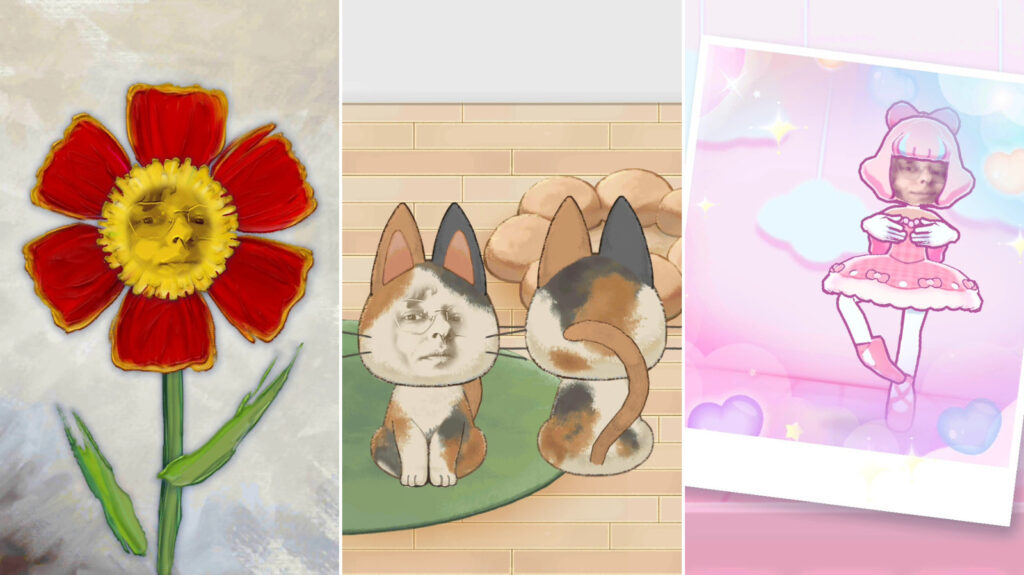
Table of Contents
A New Kind of Personalization
Nintendo has a long history of iterating on the ‘microgame’ format, most notably through the surreal, high-speed anarchy of the WarioWare series. With the release of Pictonico!, the Kyoto-based giant is attempting something far more intimate—and potentially more unsettling: turning your own photo gallery into the game’s primary asset library.
At first glance, the concept feels like a privacy nightmare. The game requires access to your device’s photos to function, using facial recognition and image processing to transplant your friends, family, and selfies into a series of absurdist challenges. However, the execution is less about data mining and more about the kind of digital slapstick that Nintendo does best. It’s not just about seeing your face on screen; it’s about seeing your face as a nutcracker chomping through a conveyor belt of items or a grumpy banana awaiting a peel.
The Mechanics of Nonsense
The gameplay loop is deceptively simple but relentlessly paced. Players move through ‘Volumes’ (game packs), with Volume 1 offering 20 stages for $8 and Volume 2 providing 12 stages for $6. Each stage is a gauntlet of rapid-fire tasks; you must succeed in 10 microgames to progress. There is zero room for contemplation. One moment you are plucking petals from a flower-version of your sibling, and the next you are reacting to a chaotic prompt that disappears in seconds.
To manage the potential awkwardness of gallery access, Nintendo has implemented a selective album system. Rather than granting the app a blanket pass to every photo ever taken, users can designate a specific album for the game to pull from. For those who prefer not to dig through their archives, a ‘Snap & Play’ mode allows for real-time photo capture. Interestingly, the facial detection is tuned for humans; while it occasionally struggles with pets, it can be fooled by inanimate objects—a potato with a face, for instance, is enough to trigger the engine’s asset generation.
Privacy and Local Processing
The most critical question for any modern mobile app requesting gallery access is where the data goes. Nintendo explicitly states during setup that photos are not uploaded to their servers or shared externally. The processing happens locally on the device, which is a necessary architectural choice given the latency requirements of such a fast-paced game. If the app cannot find a viable face in the selected photos, it defaults to generic placeholders, such as stuffed monkeys or snowmen, to keep the momentum going.
Beyond the Demo
While the initial download is free, Pictonico! avoids the predatory gacha mechanics often found in modern mobile titles. Instead, it opts for a more traditional ‘DLC’ model where you purchase specific volumes. This approach keeps the experience focused, though the pricing for Volume 1 might feel steep for a collection of microgames to some players.
For those seeking more than just a casual laugh, the ‘Score Attack’ tab introduces three distinct tiers of difficulty: Normal, where the pace ramps up incrementally; High-Speed; and the brutal ‘Danger Zone,’ a sudden-death mode where a single failure ends the run.
The Social Component
While the game is mechanically sound as a solo experience, it is fundamentally a social product. The joy of Pictonico! isn’t in the mastery of the microgames—which are intentionally absurd—but in the shared laughter of seeing loved ones distorted into bizarre digital caricatures. It transforms the smartphone from a solitary device into a centerpiece for a living room, reminiscent of the early Wii era’s emphasis on shared, low-stakes hilarity.
It is a strange, loud, and occasionally jarring experience, but it manages to capture a specific type of joy that is often missing from the hyper-optimized, reward-driven landscape of mobile gaming. By leveraging the most personal data we own—our photos—Nintendo has created a game that is not just personalized, but genuinely human in its willingness to be ridiculous.


