AMD Brings RX 9070 GRE to Global Markets, Aiming for the 1440p Sweet Spot
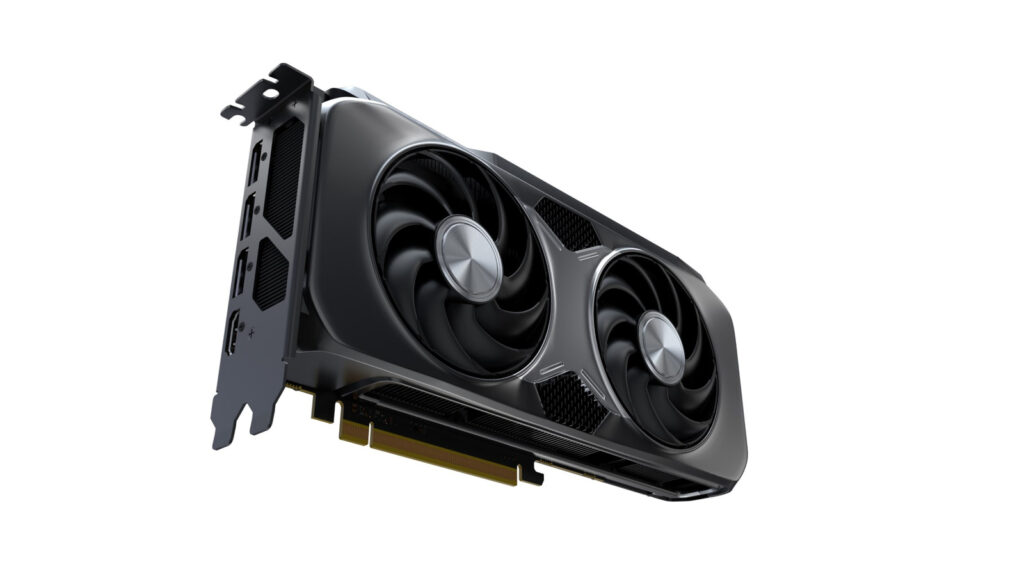
Table of Contents
The ‘Golden Rabbit’ Goes Global
AMD is officially expanding its GPU portfolio to the global market with the release of the Radeon RX 9070 GRE. While the card first appeared in China last year—where the ‘GRE’ moniker refers to the Golden Rabbit Edition—the company is now positioning it as a strategic mid-range offering for the wider international audience, sporting a retail price of $549.
The move is a calculated attempt to fill a persistent gap in the sub-$600 segment. By pivoting a region-specific success into a global SKU, AMD is leaning into a strategy of iterative refinement rather than a complete architectural overhaul, essentially treating the GRE as a streamlined version of the standard RX 9070.
RDNA 4 and the Push for 1440p
Under the hood, the RX 9070 GRE is built on the RDNA 4 architecture, which represents a pivot in how AMD handles compute and lighting. The most significant upgrade here isn’t just raw clock speed, but the integration of enhanced AI compute acceleration and a redesigned ray tracing pipeline. While AMD has historically trailed NVIDIA in the ray-tracing wars, the RDNA 4 hardware is designed to narrow that gap, making high-fidelity lighting more accessible for gamers who aren’t buying flagship $1,600 cards.
The card ships with 12GB of VRAM, a specification that is increasingly the bare minimum for modern AAA titles. While 8GB has become a bottleneck for textures at higher resolutions, 12GB provides a comfortable buffer for 1440p gaming, ensuring that users won’t hit a memory wall in open-world titles like Cyberpunk 2077 or Alan Wake 2.
Crucially, the RX 9070 GRE fully supports Fidelity FX Super Resolution 4.1 (FSR 4.1). This latest iteration of AMD’s upscaling tech is a direct response to the industry’s shift toward AI-driven frame generation and reconstruction. By leveraging the new AI accelerators in the RDNA 4 silicon, FSR 4.1 aims to provide cleaner image reconstruction and higher frame rates without the ghosting artifacts that plagued earlier versions of the software.
The Gaming Market vs. The AI Gold Rush
The launch of the RX 9070 GRE happens at a strange inflection point for the GPU industry. For the last two years, the narrative around graphics hardware has been dominated by Large Language Models (LLMs) and data center demand. NVIDIA, in particular, has seen its business model shift dramatically; a staggering 90% of the company’s revenue now flows from its data center segment, leaving a perceived vacuum in the enthusiast gaming market.
AMD is attempting to occupy that space. By offering a capable, reasonably priced 1440p card, they are catering to the ‘silent majority’ of PC gamers who are more concerned with frames-per-dollar than training a neural network. The RX 9070 GRE isn’t trying to beat the RTX 4090 in a synthetic benchmark; it is designed to make high-refresh-rate 1440p gaming a standard experience for the average consumer.
Whether this strategy pays off depends on how the 12GB VRAM limit is perceived. As game developers continue to push asset density, the line between ‘mid-range’ and ‘entry-level’ is blurring. However, at $549, the RX 9070 GRE remains one of the most competitive options for those looking to upgrade from a previous-generation 1080p build without breaking the bank.