The Long Game of Misinformation: How Modern Anti-Vax Rhetoric Recycles 300-Year-Old Tropes
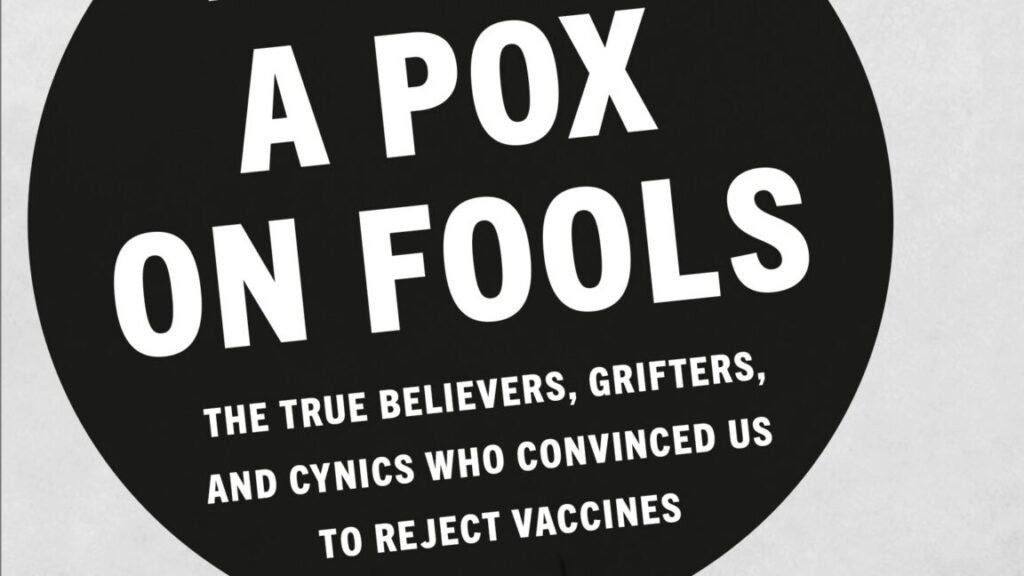
Table of Contents
The Persistence of the ‘Natural’ Fallacy
Stanley Plotkin, a titan of vaccinology at 93, recently remarked that he is beginning to regret his longevity because the world seems to be moving backward. His frustration isn’t with the science—which has reached unprecedented heights—but with the public’s relationship to it. The current digital deluge of vaccine skepticism is often treated as a byproduct of the social media era, but historical analysis suggests we are simply seeing a high-definition replay of a centuries-old script.
In his recent work, A Pox on Fools, author Thomas Levenson categorizes the opposition into three distinct archetypes: the true believers, the grifters, and the cynics. By tracing these figures back to the 18th century, a clear pattern emerges. When Lady Mary Wortley Montagu and Cotton Mather first introduced smallpox inoculation in London and Boston in 1721, the backlash was immediate and visceral. It wasn’t based on clinical data—which didn’t exist in the modern sense—but on a moral framework that viewed disease as divine ordination.
The argument was simple: to thwart a virus was to defy God’s will. While the religious fervor of the 1700s has largely been replaced by the “wellness” rhetoric of the 21st century, the underlying logic remains identical. Modern Transcendentalists and proponents of “clean living” have substituted ‘Nature’ for ‘God,’ arguing that a pure lifestyle is a sufficient substitute for immunization. This narrative leverages a dangerous cognitive gap: because vaccines have been so successful at erasing the visibility of childhood mortality, the risk of the disease has become abstract, while the risk of the vaccine—however infinitesimal—feels tangible.
The Architecture of the Grift
Beyond the philosophical objections lies a more opportunistic layer of opposition. The “grifters” operate by weaponizing the apparent versus the invisible. A vaccine’s side effects, such as a sore arm or a mild fever, are immediate and observable. Conversely, the millions of deaths prevented by these interventions are a negative space—an absence of tragedy that is difficult to quantify to a layperson.
Figures like Robert F. Kennedy Jr. have built platforms by amplifying this discrepancy, claiming that the body’s innate ability to heal is superior to pharmaceutical intervention. However, this perspective ignores the brutal reality of pre-vaccine history, where roughly 40 percent of children died before age five from infectious diseases. By framing the vaccine as the primary risk and the pathogen as a manageable nuisance, grifters pivot the conversation from immunology to a perceived battle for bodily autonomy.
The Legal Clash: Autonomy vs. The Collective
While much of the anti-vaccine movement focuses on efficacy and safety, a separate, more complex thread concerns the role of the state. This is not a biological argument, but a political one centered on mandates. The tension between individual liberty and collective safety is not a modern phenomenon; it was codified in the U.S. legal system long before the internet.
The landmark Supreme Court case Jacobson v. Massachusetts (1905) serves as the definitive blueprint for this conflict. Henning Jacobson refused a mandatory smallpox vaccination, arguing that such laws were hostile to a freeman’s right to care for his own body. The Court, however, ruled that individual liberties are not absolute. Justice John Marshall Harlan noted that the Constitution protects the rights of all, which necessitates the occasional curtailment of individual freedom to prevent a public health catastrophe.
Today, this legal precedent is the primary battleground for those who claim that vaccine mandates are an overreach of government power. It represents the final pillar of opposition: a shift from arguing that the technology is “bad” to arguing that the requirement to use it is “tyrannical.”