Oil Volatility and Geopolitical Friction Push U.S. Gas Prices Toward Critical Thresholds
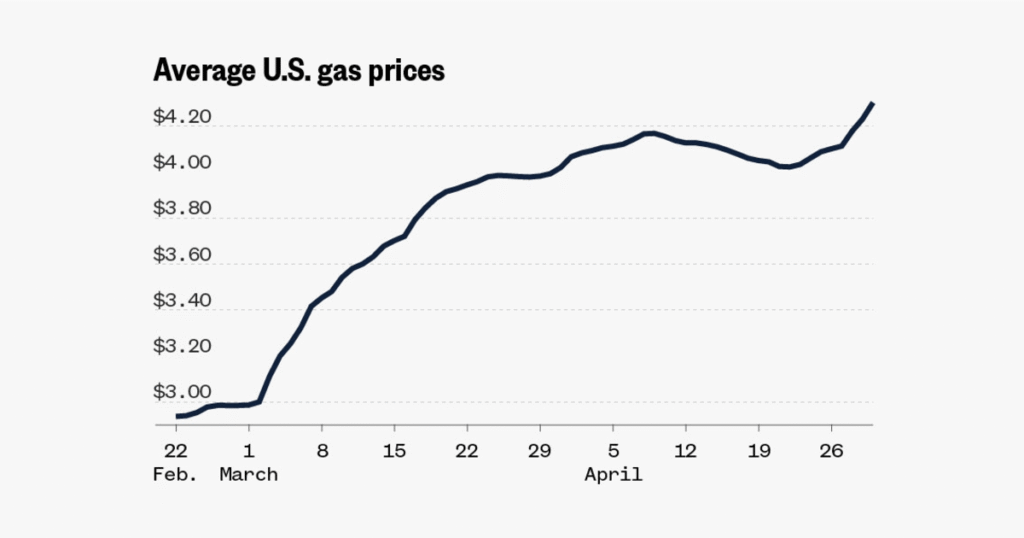
Table of Contents
The Cost of Geopolitical Friction
The American consumer is feeling the immediate impact of escalating tensions in the Middle East, as gas prices across the United States have surged by 50% following the onset of military actions involving the U.S., Israel, and Iran. According to the latest data from the American Automobile Association (AAA), the national average for a gallon of gasoline has climbed to nearly $4.50, marking a significant deviation from the relative stability seen in previous quarters.
This price hike is not a uniform phenomenon across the country, but rather a reflection of regional logistics and state-level taxation. In California, prices have already eclipsed the $6 mark, the highest in the nation. Meanwhile, six states—Alaska, Hawaii, Illinois, Nevada, Oregon, and Washington—are seeing averages hover near $5 per gallon. Conversely, the central U.S. remains a relative sanctuary, with states in the Midwest reporting the lowest costs in the country, though even these regions are not immune to the upward trend.
Analyzing the Supply Chain Squeeze
The primary driver behind this volatility is the constriction of the global oil supply. When key transit corridors in the Middle East are threatened by conflict, the market reacts with immediate risk-premium pricing. While the U.S. has increased domestic production to offset some of these dependencies, the global nature of crude oil pricing means that instability in the Persian Gulf inevitably translates to higher costs at local pumps.
The market has experienced a series of erratic movements over the last few months. Oil prices spiked sharply, followed by brief periods of decline as ceasefire announcements and extensions provided temporary psychological relief to traders. However, these dips proved ephemeral; after several weeks of gradual decline, prices shot back up to new highs, erasing any gains for the average driver.
Beyond the Pump: The Aviation Domino Effect
The impact of this energy crisis extends far beyond passenger vehicles. The aviation sector is currently grappling with a surge in jet fuel costs, which are intrinsically linked to the same crude oil benchmarks that dictate gasoline prices. For low-cost carriers operating on razor-thin margins, these overhead increases are catastrophic.
Spirit Airlines has become the primary example of this vulnerability. The surge in fuel costs, combined with existing debt and a shift in consumer travel patterns, has put immense pressure on the carrier, leading to its recent move toward shuttering operations. Other major airlines have responded by increasing airfares, effectively passing the cost of geopolitical instability directly to the traveler.
The Macroeconomic Outlook
Economists had initially predicted that prices might begin a sustainable descent in April, but the unpredictability of the U.S.-Israel-Iran dynamic has rendered those forecasts obsolete. The current trend suggests a market that is pricing in long-term instability rather than short-term diplomatic wins.
As household budgets are further stretched, the ripple effect is expected to hit other sectors of the economy. Higher transportation costs for goods generally lead to increased retail prices, potentially fueling the very inflation that the Federal Reserve has been fighting to subdue. For now, the only consistent metric is the upward trajectory of the pump price, which remains tethered to the volatility of a region in turmoil.