Google’s Screenless Gamble: The Fitbit Air and the Vatican’s War on Algorithmic Dominance
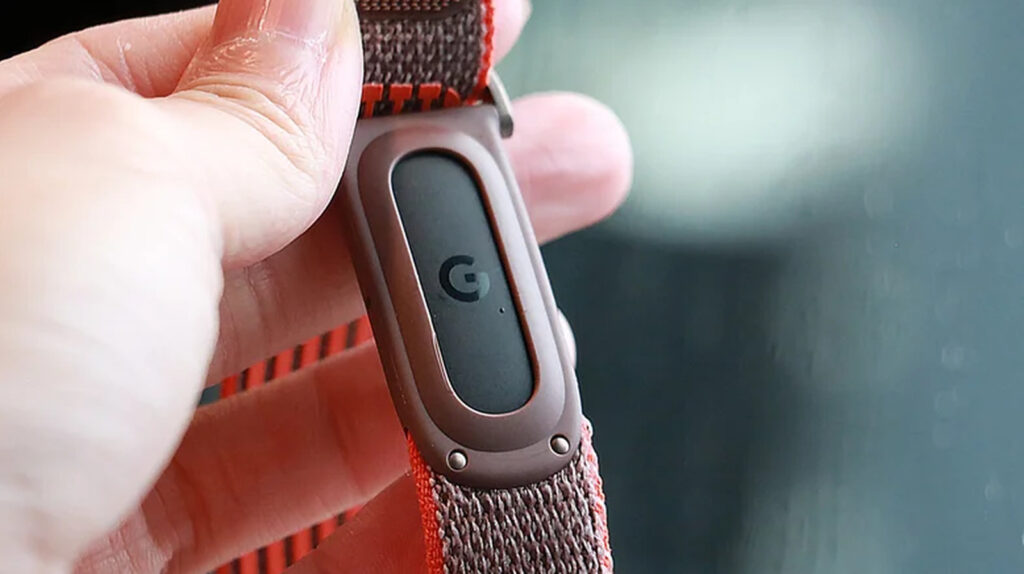
Table of Contents
The Pivot to Invisible Tech: Google’s Bet on the Fitbit Air
For years, the wearable market has been an arms race of increasingly vibrant OLED displays and complex notification systems. However, Google is attempting to reverse that trend with the Fitbit Air, a screenless wearable designed to shift the focus from active interaction to passive biometric monitoring. By stripping away the display, Google isn’t just simplifying the hardware; it’s positioning itself to compete directly with the high-performance, subscription-heavy ecosystem of Whoop.
The Fitbit Air represents a fundamental shift in user philosophy. While traditional Fitbits served as wrist-mounted dashboards for steps and heart rate, the Air is designed to disappear into the user’s wardrobe. The goal is to eliminate ‘notification fatigue’—the constant psychological pull of a glowing screen—and instead deliver deep-dive health analytics via a companion app. For Google, this is a strategic move to capture the ‘hardcore’ fitness enthusiast who views a smartwatch as a distraction rather than a tool.
However, the transition to a screenless experience creates a new dependency on the smartphone. Without a quick-glance interface, the utility of the device is entirely contingent on the software’s ability to push actionable insights. If the AI-driven health suggestions aren’t precise, the Fitbit Air risks becoming a sophisticated piece of jewelry rather than a health instrument.
The Vatican’s Digital Line in the Sand
While Google seeks to integrate technology more deeply into the human body, the Catholic Church is attempting to create a profound distance between human dignity and algorithmic control. A new Encyclical from the Vatican marks a significant escalation in the Church’s critique of Artificial Intelligence and the concentrated power of Big Tech.
The document doesn’t merely address the technical risks of AI—such as deepfakes or job displacement—but tackles the metaphysical implications of outsourcing human judgment to machines. The Encyclical argues that the dominance of a few tech giants over the global information flow is not just a market failure, but a threat to human agency. It calls for a framework where humanity is prioritized over the efficiency of the model, suggesting that the ‘optimization’ of human life through AI may actually lead to a loss of the very essence of human experience.
This isn’t a sudden pivot for the Holy See. According to Father Robert Ballecer, known as the “Digital Jesuit,” these ideas have been percolating within the Vatican for years. Ballecer, who has observed the intersection of faith and technology from within the Church’s inner circles, notes that the Vatican views the current trajectory of AI as a potential catalyst for a new kind of digital divide—one where the gap is not just about access to technology, but about who retains the power to define truth.
The Tension Between Integration and Autonomy
The juxtaposition of the Fitbit Air and the Pope’s AI criticism highlights a growing tension in modern digital culture. On one hand, the industry is moving toward “ambient computing,” where sensors like the Fitbit Air monitor our every heartbeat and sleep cycle to optimize our biology. On the other, there is a rising institutional pushback against the idea that humans should be “optimized” by proprietary code.
Google’s move into the screenless space is an attempt to make technology invisible and frictionless. Yet, as the Vatican’s Encyclical suggests, the more invisible the technology becomes, the harder it is to challenge the biases and controls embedded within it. When the interface disappears, the power dynamics of the platform become even more opaque.