The Quad’s Pacific Gambit: Port Infrastructure in Fiji Signals Shift in Tech and Logistics War
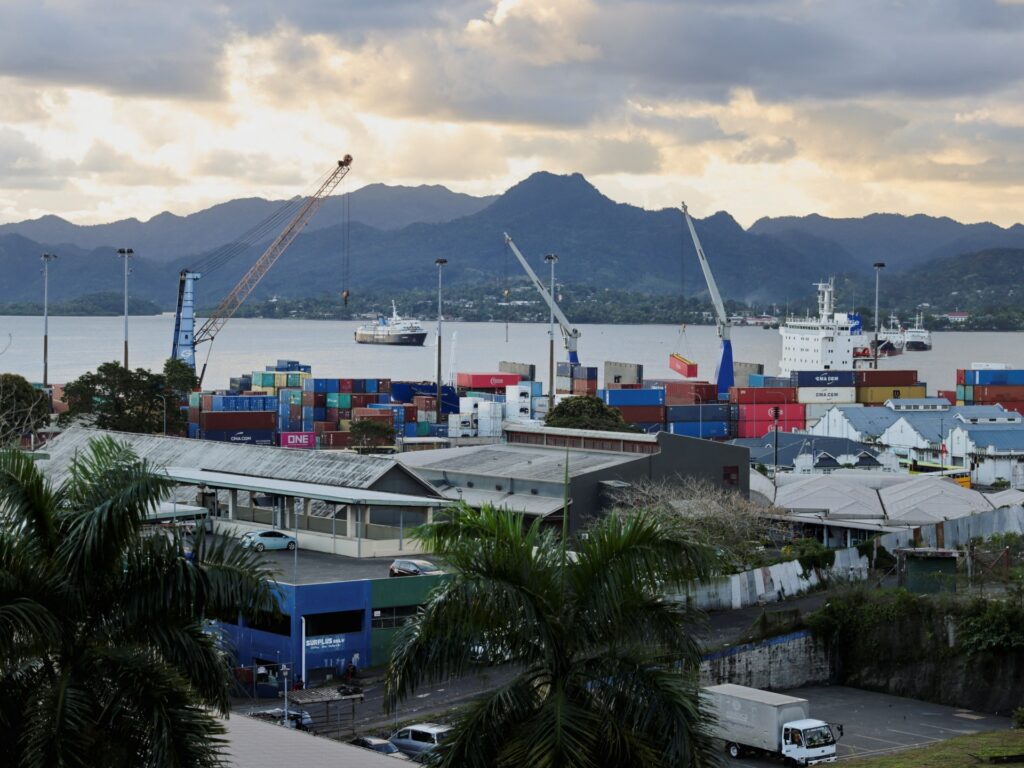
Table of Contents
A New Blueprint for Pacific Influence
In a strategic move to counter Beijing’s expanding footprint in the Pacific, the foreign ministers of India, the United States, Australia, and Japan—the Quad alliance—have announced a joint initiative to develop port infrastructure in Fiji. The announcement, following high-level talks in New Delhi, marks the debut of the “Quad Ports of the Future Partnership,” a pilot project specifically designed to modernize maritime hubs in a region where logistics and connectivity have become the primary currency of geopolitical leverage.
The focus is currently centered on the ports of Suva and Lautoka. Suva, the capital’s primary gateway, is already the nation’s busiest port, while Lautoka serves as a critical hub in the northwest. According to Fijian Foreign Minister Sakiasi Ditoka, the project will begin with these two anchors before potentially expanding to Vanua Levu and Levuka. While the Quad has previously collaborated on security and health, this represents a tangible shift toward hard infrastructure—a domain where China’s Belt and Road Initiative has traditionally dominated.
The Logistics of Digital Sovereignty
This is not merely a project of concrete and cranes. The “Ports of the Future” framework suggests an integration of advanced maritime technology and digital oversight. The initiative aligns with the Indo-Pacific Partnership for Maritime Domain Awareness (IPMDA), which leverages satellite data and AI-driven analytics to help Pacific nations track illegal fishing and smuggling. By upgrading these ports, the Quad is effectively installing a technological layer of surveillance and efficiency that integrates Fiji more deeply into the Western digital ecosystem.
The financial structure of the project also serves as a calculated contrast to the “debt-trap diplomacy” often attributed to Chinese loans. Prime Minister Sitiveni Rabuka recently informed the Fijian parliament that the infrastructure studies are being conducted via the US Millennium Challenge Corporation, emphasizing that funding would come through grants rather than loans. This distinction is critical for small island nations wary of compromising their sovereignty for short-term capital.
The Suva Port Paradox
The scale of the ambition is becoming clear through local reporting. The Suva port agency has reportedly discussed upgrades valued at $181 million, and even a more radical $1.82 billion plan to relocate the Suva Port entirely. Suresh Prasad, the Fiji Ports acting CEO, noted that if the Quad is leading the charge, the project will likely be a “mega project” centered on Suva.
This pivot is particularly poignant given that Rabuka had previously discussed the redevelopment of Suva port with Chinese officials in 2023. That those plans stalled in favor of a Quad-backed model highlights a shifting appetite within the Pacific islands for diversified partnerships and more transparent financing.
Strategic Friction and the China Response
Beijing has viewed the Quad not as a partnership for development, but as an exclusive bloc designed for containment. Chinese Foreign Ministry spokesperson Mao Ning warned that cooperation in the region “should not target any third party,” reiterating Beijing’s opposition to “bloc confrontation.”
From a technical and strategic standpoint, the Quad’s move is an attempt to secure critical supply chains. Beyond ports, the alliance is cooperating on the procurement of lithium and rare-earth minerals, quantum computing, and cybersecurity—sectors where China currently holds a significant lead. By securing the physical nodes of trade in Fiji, the Quad is ensuring that the hardware of the Pacific’s future isn’t owned exclusively by one power.
The project arrives at a complex moment for Washington. With domestic shifts in priority toward the Western Hemisphere and the Middle East, the Quad’s infrastructure push serves as a way for the US to maintain a strategic presence in the Pacific without relying solely on direct military deployment. As the Malabar Exercises continue to refine anti-submarine and maritime interoperability, the development of these ports provides the necessary logistical backbone to support such operations.


