Precision Diving and Real-Time Comms: The High-Stakes Rescue of Five Trapped Villagers in Laos
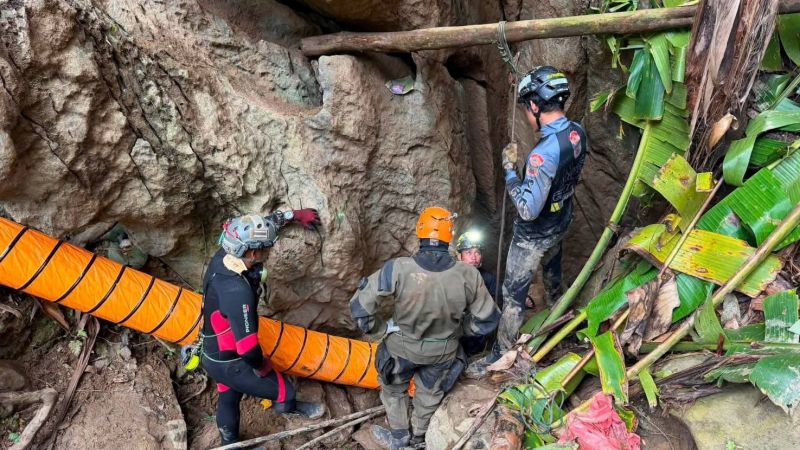
Table of Contents
A Race Against Hypoxia and Hunger
In a remote region of Laos, a multinational team of specialist cave divers is currently engaged in a high-stakes extraction operation to rescue five villagers trapped in a subterranean system for over a week. The operation, characterized by extreme environmental hazards and technical complexity, reached a critical turning point on Friday night when rescue divers reported breakthrough contact with the survivors.
The trapped men were discovered huddled together in a pitch-black chamber, situated above murky, rising waters. While early reports indicate the survivors are physically stable, the psychological toll of prolonged isolation and severe hunger has become a primary concern for the medical teams awaiting them at the surface. Two additional individuals believed to have entered the cave system remain missing, complicating the mission’s parameters as rescuers balance the immediate extraction of survivors with the search for the disappeared.
The Geometry of a Nightmare
The technical difficulty of this rescue is dictated by the cave’s brutal topography. The survivors are located more than 800 feet (approximately 240 meters) from the entrance. More concerning than the distance is the 45-degree downward gradient of the tunnel, which creates a treacherous path for both the divers entering and the exhausted survivors being escorted out.
In such an environment, traditional rescue methods are useless. The team is relying on specialized side-mount diving configurations—which allow divers to carry tanks along their sides to squeeze through narrow apertures—and highly calibrated buoyancy control to navigate the silt-heavy waters. The visibility in these chambers is often near zero, meaning the divers are essentially navigating by touch and high-intensity LED arrays, while managing precise gas mixtures to avoid nitrogen narcosis or oxygen toxicity at depth.
Communication in the Deep
One of the most harrowing aspects of the operation surfaced during a phone interview with CNN on Friday night, where the sounds of divers screaming “they are coming out” could be heard in the background. This moment of breakthrough highlights the critical role of communication logistics in modern cave rescues.
Establishing a reliable comms link between the deep interior of a limestone cave and the surface is an engineering challenge. Because radio waves do not penetrate solid rock and water, rescue teams typically employ a combination of hard-wired field telephones—running cables hundreds of meters into the system—and acoustic signaling. The ability to maintain a tether of information between the dive leads and the surface command center is the only way to coordinate the logistics of the “extraction chain,” where divers rotate in shifts to prevent exhaustion during the grueling trek back to the 45-degree incline entrance.
Comparing the Logistics to Previous Extractions
Industry observers note that this operation mirrors the technical rigor seen in previous global cave crises, such as the 2018 Tham Luang rescue in Thailand. The reliance on a multinational coalition suggests that the expertise required for this specific cave system—likely involving complex sump navigation and precision dive planning—exceeds the capacity of any single national agency.
As the team works to bring the five men to safety, the focus remains on the stability of the cave’s air pockets and the unpredictable nature of the floodwaters. With two people still missing, the mission has now transitioned into a dual-phase operation: a tactical evacuation of the found and a forensic search for the lost, all while fighting a clock defined by the survivors’ dwindling caloric reserves.