OPPO Pad 6 Debuts with Dimensity 9500s and a Sub-6mm Chassis
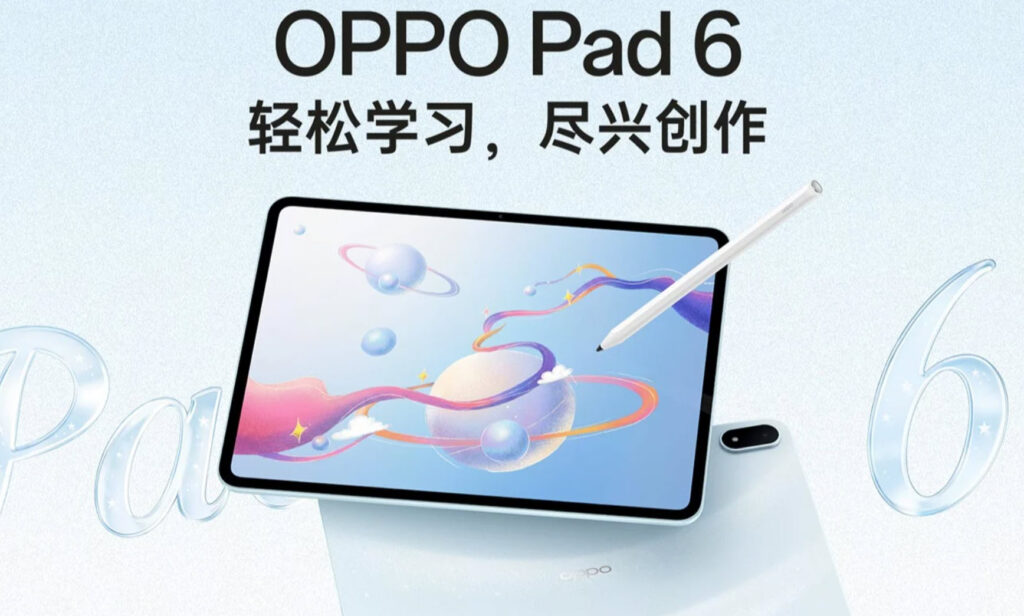
Table of Contents
Thinness as a Feature
OPPO has officially pulled the curtain back on the Pad 6 in China, positioning the new slate as a productivity-first device that prioritizes portability without sacrificing screen real estate. The most immediate takeaway from the hardware reveal is the device’s footprint; at just 5.99 mm thick and weighing 577 grams, the Pad 6 is aggressively thin, aiming to compete in a market where tablets are increasingly tasked with replacing laptops for light professional work.
The chassis is available in three distinct finishes: Starlight Blue, Galaxy Silver, and Deep Space Gray. While the aesthetic is clean, the real story is the display. OPPO has opted for a 12.1-inch 3K LCD panel. In an era where OLED is the gold standard for flagship phones, the choice of LCD here is likely a move to maintain a high 144Hz refresh rate while keeping the device thin and managing power draw more efficiently across a larger surface area.
Tackling the Glare Problem
One specific detail that stands out in the technical briefing is the “Soft Light” screen design. Rather than a standard glossy finish that turns a tablet into a mirror under office fluorescent lighting, OPPO is utilizing a specialized coating intended to diffuse reflections. This isn’t just a marketing buzzword; it’s a direct response to the “reading fatigue” often cited by users who utilize tablets for long-form document review or digital sketching.
Silicon and Sustenance
Under the hood, the Pad 6 is powered by the MediaTek Dimensity 9500s. This is the same silicon recently spotted in the POCO X8 Pro Max, and the performance metrics are substantial. According to internal benchmarks, the chip is pushing past the 3 million point mark on AnTuTu, suggesting that the Pad 6 can handle heavy multitasking, video editing, and high-fidelity gaming without significant thermal throttling.
To support this processing power, OPPO has integrated a 10,420 mAh battery. While the capacity is large, the 67W fast charging is the more critical spec here. Given the ultra-slim 5.99mm profile, managing heat during rapid charging is always a challenge, but 67W should theoretically bring the device from zero to a usable state in under an hour, provided the thermal management system can keep up with the Dimensity chip’s peaks.
The Ecosystem Play
Hardware aside, OPPO is leaning heavily into the “interconnectivity” trend seen across the Android ecosystem. The Pad 6 introduces a streamlined method for sharing a nearby OPPO phone’s 5G connection directly with the tablet, reducing the friction of mobile hotspots.
The software skin focuses on bridging the gap between a mobile OS and a desktop experience. This includes a PC-style file management system and an expanded suite of floating windows, allowing users to keep multiple apps active simultaneously. The device also retains full stylus support, which, when paired with the 144Hz panel, should offer the low-latency experience required for professional illustration and note-taking.
When compared to the preceding Pad 5, the Pad 6 represents an iterative rather than revolutionary leap. The jump in processing power via the Dimensity 9500s and the refined chassis are the primary draws, but the core experience remains centered on high-end media consumption and light productivity. For those already owning a Pad 5, the upgrade may feel incremental; however, for those seeking a thin-and-light alternative to a Chromebook, the Pad 6 makes a compelling case.


