Carney Pushes for ‘New Partnership’ With US Amid Critical Mineral Pivot and Trade Rupture
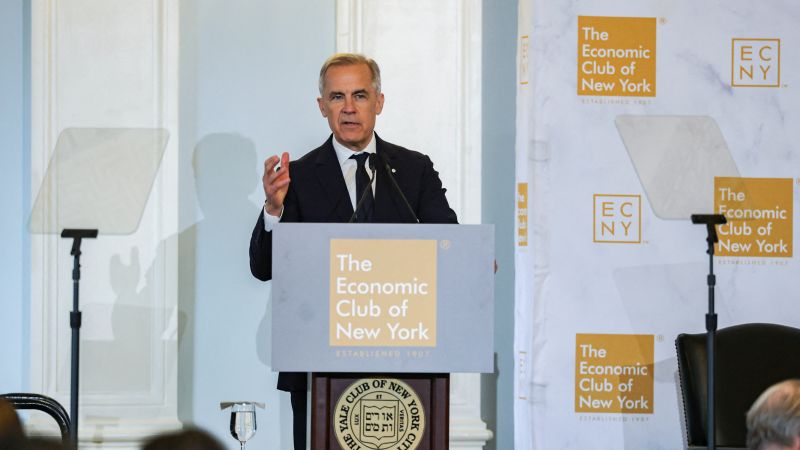
Table of Contents
A Strategic Reset in a Period of ‘Rupture’
Speaking at the Economic Club of New York on Thursday, Canadian Prime Minister Mark Carney laid out a vision for a “new partnership” with the United States, attempting to navigate a geopolitical landscape he described as being in a state of “rupture.” The speech comes at a precarious moment for Ottawa, as the U.S. aggressively transforms its commercial relationships and shifts toward a more protectionist trade posture.
Carney’s rhetoric signaled a delicate balancing act: praising the United States as the most “dynamic, resilient and inventive country the world has ever known” while simultaneously acknowledging that Canada’s historical reliance on the U.S. has created systemic vulnerabilities. The Prime Minister argued that a more independent Canada is not a threat to the relationship, but rather a more capable ally.
Leveraging the Critical Mineral Wedge
Central to Carney’s pitch is the concept of mutual interdependence, specifically within high-tech and industrial sectors. He pointed to aluminum, automobiles, and critical minerals—the building blocks of the modern energy transition—as the primary levers for a strengthened bilateral bond.
As the U.S. seeks to decouple its supply chains from China, Canada’s reserves of lithium, cobalt, and nickel have transitioned from mere commodities to strategic assets. Carney emphasized that Canada provides the “reliable power and critical minerals” essential for fueling American industrial growth, effectively positioning Canada as the secure, North American alternative to East Asian sourcing.
Hedging Against Hegemony
Despite the conciliatory tone in New York, Carney’s broader strategy is one of aggressive diversification. The Prime Minister revealed a long-term goal to double Canadian exports to non-U.S. markets over the next decade, a move designed to insulate the Canadian economy from the volatility of American trade policy. This shift is already manifesting in procurement; earlier this week, Carney announced a pivot away from U.S. aerospace manufacturers, opting instead to purchase a fleet of military aircraft from Sweden.
This strategy reflects a philosophy Carney first outlined at the World Economic Forum in Davos in January, where he warned against the dangers of “American hegemony.” At the time, he argued that over-integration with a single superpower creates “vulnerabilities to be exploited,” famously noting that for middle powers, “if we’re not at the table, we’re on the menu.”
The USMCA Vacuum and the China Factor
The urgency of Carney’s outreach is underscored by the current diplomatic climate. While he spoke in New York, U.S. trade officials were concurrently meeting with Mexican counterparts in Mexico City to discuss overhauling the US-Mexico-Canada Agreement (USMCA). Notably, Canada was excluded from these initial discussions, raising fears that the U.S. may seek a bilateral deal with Mexico that leaves Canada marginalized.
This tension is compounded by Canada’s evolving relationship with Beijing. Carney confirmed that his January visit to meet Chinese President Xi Jinping resulted in a “basic reset” of ties that had collapsed under the administration of Justin Trudeau. However, Carney maintained a firm line on global financial stability, privately telling Xi that China must assume greater responsibility for the global monetary system and accelerate the internationalization of its currency to move away from the economic margins.
For Carney, the path forward requires navigating a world where trade is no longer just about tariffs, but about national security, technological sovereignty, and the strategic control of the materials that power the next industrial revolution.


