Valve Hikes Steam Deck Prices as AI-Driven Component Shortage Hits Consumer Hardware
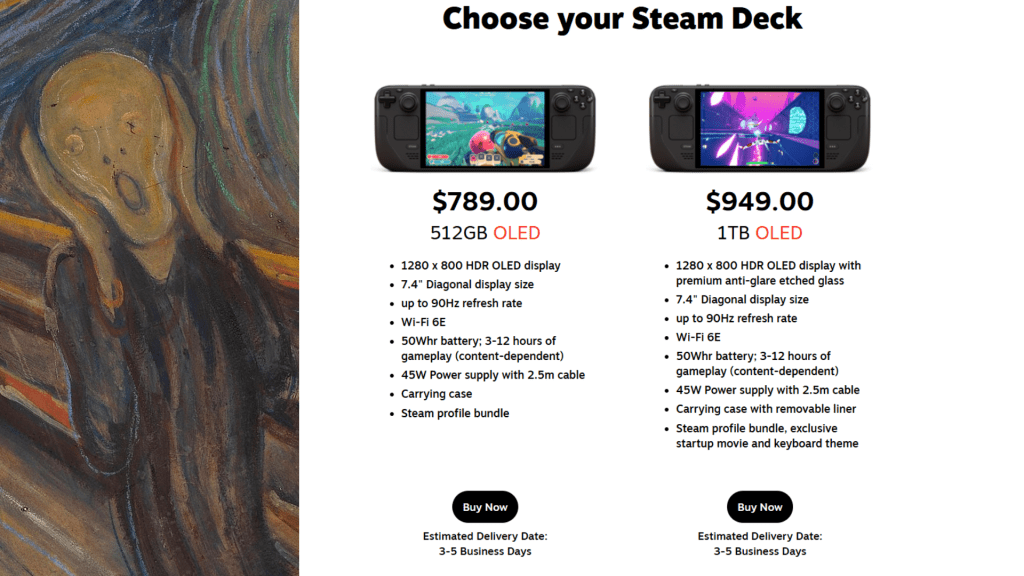
Table of Contents
The End of the Affordable Handheld Era
Valve has brought the Steam Deck back into stock after a three-month hiatus, but the return comes with a steep price correction that signals a troubling trend for the portable PC market. The 512GB OLED model now carries a price tag of $789 USD, while the 1TB variant has climbed to $949. For those remembering the original LCD model’s $399 debut, the shift represents a fundamental change in how Valve positions its flagship handheld—moving from a disruptor in affordable gaming to a premium luxury device.
The price hikes are not isolated to the U.S. market. In Canada, the 512GB OLED model has reached $1,129 CAD, while European users are seeing prices of 779 euro and 649 pounds in the UK. Australia’s pricing is even steeper at $1,199 AUD. This global upward trend suggests that the cost of doing business in the handheld space has shifted permanently, leaving consumers to foot the bill for an aging architecture.</n
The core of the issue is technical and economic. The Steam Deck continues to rely on AMD’s integrated graphics based on the Zen 2 generation—hardware that is now six years old. In any other product cycle, six-year-old silicon would result in price drops. Instead, the cost of the supporting infrastructure—specifically RAM and flash storage—has surged, decoupling the price of the device from the actual performance of its processor.
The AI Tax on Consumer Electronics
In an official announcement, Valve attributed the price increases to rising memory and storage costs. While this sounds like a standard supply chain excuse, the underlying cause is a systemic pivot in the semiconductor industry. Chip producers are increasingly prioritizing high-margin AI data centers over consumer-grade electronics. As companies like NVIDIA, Samsung, and SK Hynix pivot their production lines toward HBM (High Bandwidth Memory) to fuel Large Language Models, the supply of standard DDR memory for PCs and handhelds has tightened.
This “AI tax” is ripple-effecting across the entire category. The Lenovo Legion Go series has seen similar escalations, with the more “affordable” Go S model—which notably ships with SteamOS instead of Windows—now approaching the $1,000 mark. For the first time in years, the barrier to entry for a competent gaming PC, whether handheld or desktop, is crossing a psychological threshold that may alienate a significant portion of the core gaming demographic.
The scarcity of consumer-packaged RAM has made DIY PC builds surprisingly expensive, to the point where pre-built machines are occasionally cheaper due to bulk corporate sourcing. This imbalance has created a historically strange market where the most efficient way to get into PC gaming is no longer the most budget-friendly path.
Collateral Damage: The Steam Machine and VR
The component crisis isn’t just affecting current inventory; it’s delaying the next generation of hardware. Industry reports indicate that Valve’s upcoming projects—including a console-style Steam Machine featuring a discrete GPU and a Meta Quest-style “Steam Frame” VR headset—have been pushed to an uncertain timeline in late 2026.
The primary concern for these upcoming releases is the price point. Given that the Steam Deck’s cost has nearly doubled since its inception, the prospect of a Steam Machine launching under $1,000 seems increasingly unlikely. Valve is effectively fighting a war against a supply chain that no longer views the individual gamer as a priority compared to the enterprise AI client.
A Potential Correction on the Horizon?
There are slight flickers of a market correction. Some memory producers that previously served only the Chinese domestic market are beginning to seek international opportunities as the giants like Micron and Samsung ignore the low-end consumer sector. Some Corsair RAM modules have recently begun shipping with memory produced by CXMT, though these are currently limited to the Chinese market.
Ultimately, the stability of consumer hardware pricing now seems tethered to the AI bubble. Until the frantic build-out of data centers reaches a saturation point—or faces enough regulatory and environmental opposition to slow down—consumers should expect the “AI premium” to remain baked into the cost of every gigabyte of RAM and every terabyte of SSD storage they buy.


