Lenovo’s MWC 2026 Strategy: Foldable Gaming, Modular PCs, and the Push for Repairability
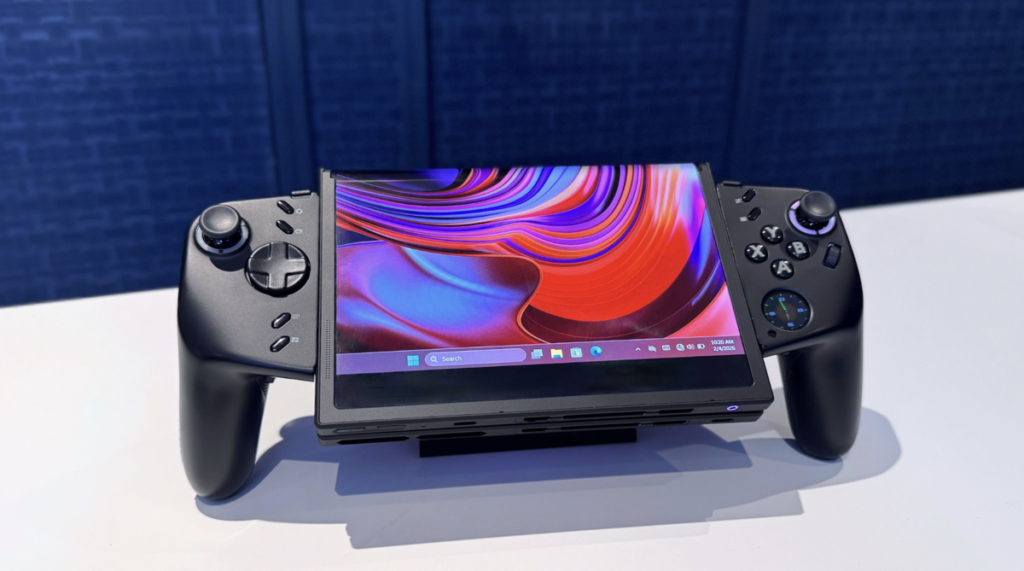
Table of Contents
Beyond the Laptop: Lenovo’s Hardware Experimentation in Barcelona
Lenovo arrived at Mobile World Congress (MWC) 2026 not just to refresh its existing product lines, but to signal a fundamental shift in how it views the PC. While the company continues to dominate the volume market, its latest showcase in Barcelona leans heavily into “concept” hardware—devices that challenge the traditional clamshell form factor and the industry’s long-standing resistance to user-serviceable parts.
The center of attention is the Legion Go Fold Concept. Following a series of leaks, Lenovo has confirmed a gaming handheld that attempts to bridge the gap between a portable console and a productivity machine. The device features a 7.7-inch POLED display that unfolds into a massive 11.6-inch canvas. Unlike previous attempts at foldable screens in the handheld space, the Legion Go Fold integrates a detachable wireless keyboard, effectively transforming the handheld into a compact Windows laptop. Under the hood, Lenovo is utilizing Intel Lunar Lake chips paired with 32GB of RAM, suggesting that while it is a prototype, the performance targets are aimed at real-world viability.
The Return of Modular Hardware
Perhaps more significant for the long-term health of the ecosystem is the ThinkBook Modular AI PC Concept. For years, the industry has moved toward soldered components and glue-heavy assemblies. Lenovo appears to be pivoting, introducing a system inspired by the philosophy of Framework, where users can swap ports and modules on the fly.
The modularity extends beyond the I/O. The concept features a detachable secondary display and keyboard, connected via integrated pogo-pin connectors for power and data transfer. This isn’t just about customization; it’s a direct nod to extending the device’s lifecycle. When coupled with the “Space Frame” design seen in the ThinkPad X1 Carbon Gen 14 Aura Edition—which emphasizes easily replaceable internals—it is clear that Lenovo is hedging its bets on a future where repairability becomes a competitive advantage rather than a niche enthusiast request.
Creative Workflows and AI Integration
For creators, the Yoga Book Pro 3D Concept pushes the boundaries of spatial computing without the need for a headset. The dual-OLED setup uses eye-tracking technology to render 3D objects in real-time, which Lenovo is positioning as a tool for 3D artists. The inclusion of an Nvidia GeForce RTX 5070 suggests that the processing overhead for glasses-free 3D is finally reaching a point where it can be handled by a mobile workstation without crippling battery life.
On the software side, the company’s AI agent, Qira, is expanding its footprint. Initially teased at CES, Qira is now slated to roll out to over 20 devices in the coming weeks. This software layer is being paired with two new tabletop concepts: the AI Work Companion and the AI Workmate. While the former acts as a discreet secretary managing schedules, the latter is a more aggressive foray into spatial AI, capable of scanning physical documents and projecting content onto nearby surfaces using on-device processing.
Consumer and Enterprise Rollouts
While the concepts steal the headlines, the Yoga 9i 2-in-1 Aura Edition is the primary driver for the consumer market. Pricing is set at $1,949 with a May release date. The update brings an Intel Core Ultra Series 3 chip and, notably, the return of the headphone jack—a small but significant win for professional users.
The enterprise segment sees a broader refresh of the ThinkPad T-Series. In a move that aligns with the modular concept’s goals, Lenovo has redesigned the T-Series for better repairability, updated the speaker arrays, and introduced a new 5MP camera option to meet the demands of modern hybrid work environments.


