Tragedy at Utumishi Girls’ Academy: 16 Students Dead in Dormitory Fire
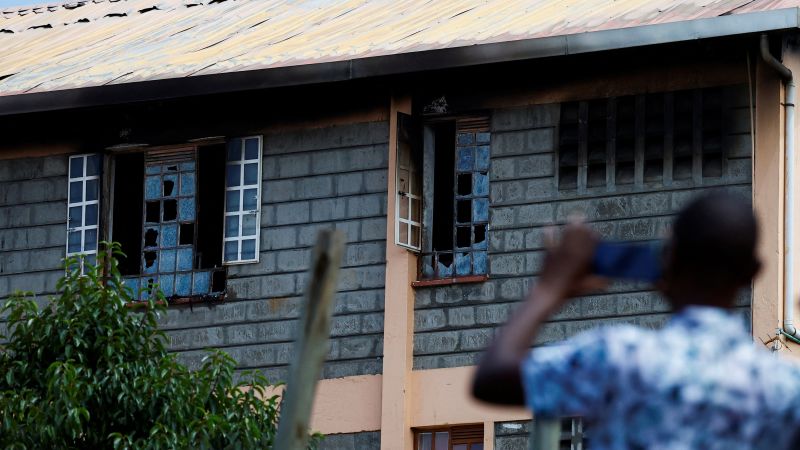
Table of Contents
Midnight Inferno in Gilgil
A catastrophic fire ripped through a dormitory at Utumishi Girls’ Academy Senior School in Gilgil, west-central Kenya, claiming the lives of 16 students. The blaze, which broke out shortly after midnight on Thursday, raged for over two hours, trapping students in their sleep and leaving a community in shock.
Education Minister Julius Migos confirmed the death toll to reporters, stating that the fire’s origin and cause remain under active investigation. While 16 fatalities have been confirmed, the scale of the disaster extended beyond the deaths; 79 other students sustained injuries. According to official reports, 71 of those injured have since been discharged from local hospitals, though the psychological trauma remains profound.
Footage broadcast on Kenyan television depicted a scene of absolute devastation: smoke-stained walls, shattered window panes, and the skeletal remains of the dormitory structure. Outside the school gates, desperate family members gathered in crowds, some waiting for confirmation of their children’s fates, others embracing survivors who had narrowly escaped the flames.
Structural Failures and Escape Routes
Survivors describe a terrifying scramble for exits. Eunice Mureithi, whose daughter was among those who escaped, spoke to NTV television, describing how the fire appears to have started in an upper dome of the building before spreading rapidly across the facility.
“It had barricaded a part of the dome to one side, and to the other side the students were unable to come out,” Mureithi explained, suggesting that the architectural layout of the dormitory may have inadvertently created death traps, hindering the students’ ability to evacuate as the fire intensified.
The incident underscores a recurring and deadly pattern in Kenya’s boarding school system. The government has recorded more than 100 school fires in 2024 alone. While some are accidental, researchers and local observers have noted a disturbing trend of arson used by students as a desperate form of protest against harsh disciplinary measures and deteriorating living conditions.
A Pattern of Systemic Negligence
The tragedy at Utumishi Girls’ Academy is not an isolated event, but part of a wider crisis of school infrastructure and safety in the region. Earlier this year, a primary boarding school in nearby Nyeri County suffered a similar disaster that killed 21 students. Despite investigations, the exact cause of that fire was never conclusively established, pointing to a gap in forensic capabilities and accountability within the education sector.
The historical precedent for such disasters is grim. The most severe incident in recent memory occurred in 2001 at Kyanguli Secondary School outside Nairobi, where 67 schoolboys perished in a fire that authorities attributed to arson. Two decades later, the repetition of these tragedies suggests that the lessons from Kyanguli and Nyeri have not been effectively translated into revised building codes or better safety protocols.
As security officers maintain a perimeter around the ruins of the Utumishi dormitory, the focus now shifts to the government’s ability to implement systemic changes. With over a hundred fires reported this year, the question is no longer whether these incidents occur, but why the boarding school environment remains so volatile and the structures so lethal when disaster strikes.