Samsung Pushes Pixel Density Boundaries with New 6K Odyssey G8 Gaming Monitor
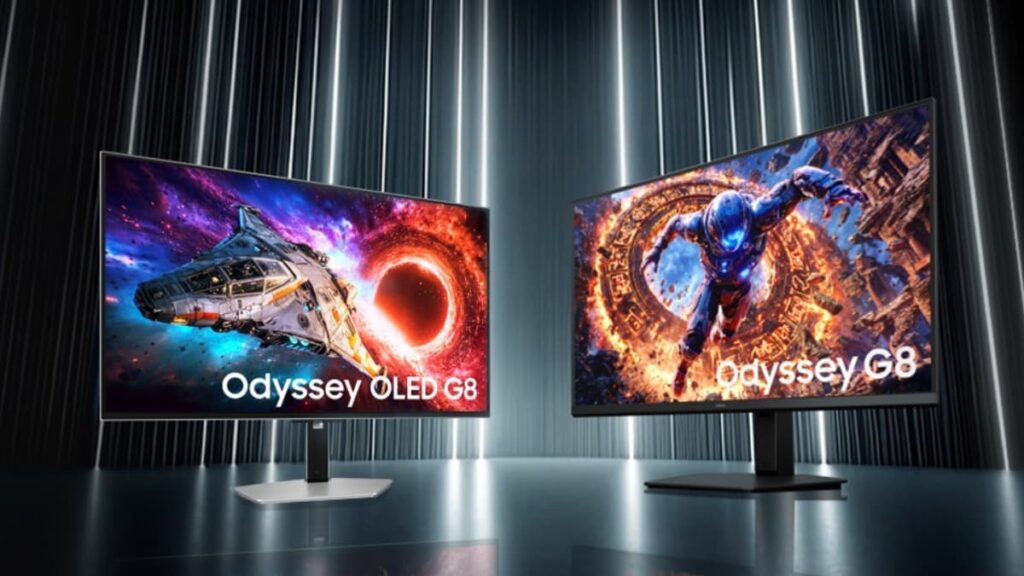
Table of Contents
A Strategic Bet on Ultra-High Resolution
Samsung is making a definitive play for the high-end enthusiast market with the unveiling of its 2026 monitor lineup. The centerpiece is the Odyssey G8 (LS32HG806), a 6K powerhouse that signals a shift in how the company views the intersection of productivity and gaming. While 4K has long been the gold standard for premium displays, the jump to 6K suggests Samsung is targeting a demographic that refuses to choose between professional-grade clarity and gaming fluidness.
The Odyssey G8 6K arrives with a 165Hz refresh rate, a specification that places it in an awkward but ambitious middle ground. It is designed for users who need the immense screen real estate for creative work—likely mirroring the workflow of Mac Studio or high-end workstation users—but want the low latency required for modern titles. This move coincides with the industry’s gradual adoption of DisplayPort 2.1, which is essential for driving these higher resolutions and refresh rates without relying on heavy compression techniques.
The OLED Expansion and ‘Dual Mode’ Flexibility
Beyond the 6K flagship, Samsung is refining its OLED strategy to cover more price points. The new Odyssey OLED G7 (LS32HG732S) brings 4K resolution at 165Hz, positioning itself as the entry point for gamers who want perfect blacks and near-instant response times without the price premium of the G8 series. For those chasing maximum frames, the Odyssey OLED G8 (LS32HG802S) pushes the envelope further with a 240Hz refresh rate.
A critical technical addition across the new range is the inclusion of “Dual Mode” display options. This feature allows users to toggle the monitor’s native resolution and refresh rate based on the content being consumed—switching from a high-resolution mode for cinematic experiences to a lower-resolution, higher-refresh mode for competitive eSports. It is a pragmatic solution to the bandwidth limitations of current GPUs, allowing a single panel to serve two distinct purposes.
Connectivity Shifts: Thunderbolt 5 and ViewFinity
The hardware updates aren’t limited to the panels. Samsung is integrating Thunderbolt 5 support into its latest professional and high-end gaming offerings. This is a significant leap in data throughput, promising faster peripheral connectivity and more reliable docking solutions for creators. This focus on connectivity extends to the updated ViewFinity S8 monitors, which are tailored for the professional market where color accuracy and stability outweigh raw refresh rates.
The ViewFinity S8 continues to compete in the “productivity first” space, likely targeting the architectural and graphic design sectors where Samsung’s panel quality competes directly with Dell’s UltraSharp and Apple’s Studio Display lineups.
Market Positioning and Pricing
Initial pricing leaked from the South Korean market provides a glimpse into how Samsung is segmenting this high-end tier. The top-tier 6K Odyssey G8 (LS32HG806) is listed at KRW 1,757,700 (approximately $1,250 / ₹1,12,400), marking it as a luxury investment. The more accessible 5K variant of the G8 (LS27HG806) sits at KRW 1,130,000 (approximately ₹72,300), while the 4K OLED G7 is priced more competitively at KRW 1,292,000 (approximately ₹82,600).
By diversifying the Odyssey line into 5K and 6K tiers, Samsung is effectively acknowledging that the market is fracturing. We are seeing a divide between the “competitive gamer” (who prioritizes 240Hz+ OLED) and the “power user gamer” (who demands extreme pixel density). Whether the current generation of GPUs can actually drive 6K at 165Hz without significant scaling remains the biggest question for potential buyers.


